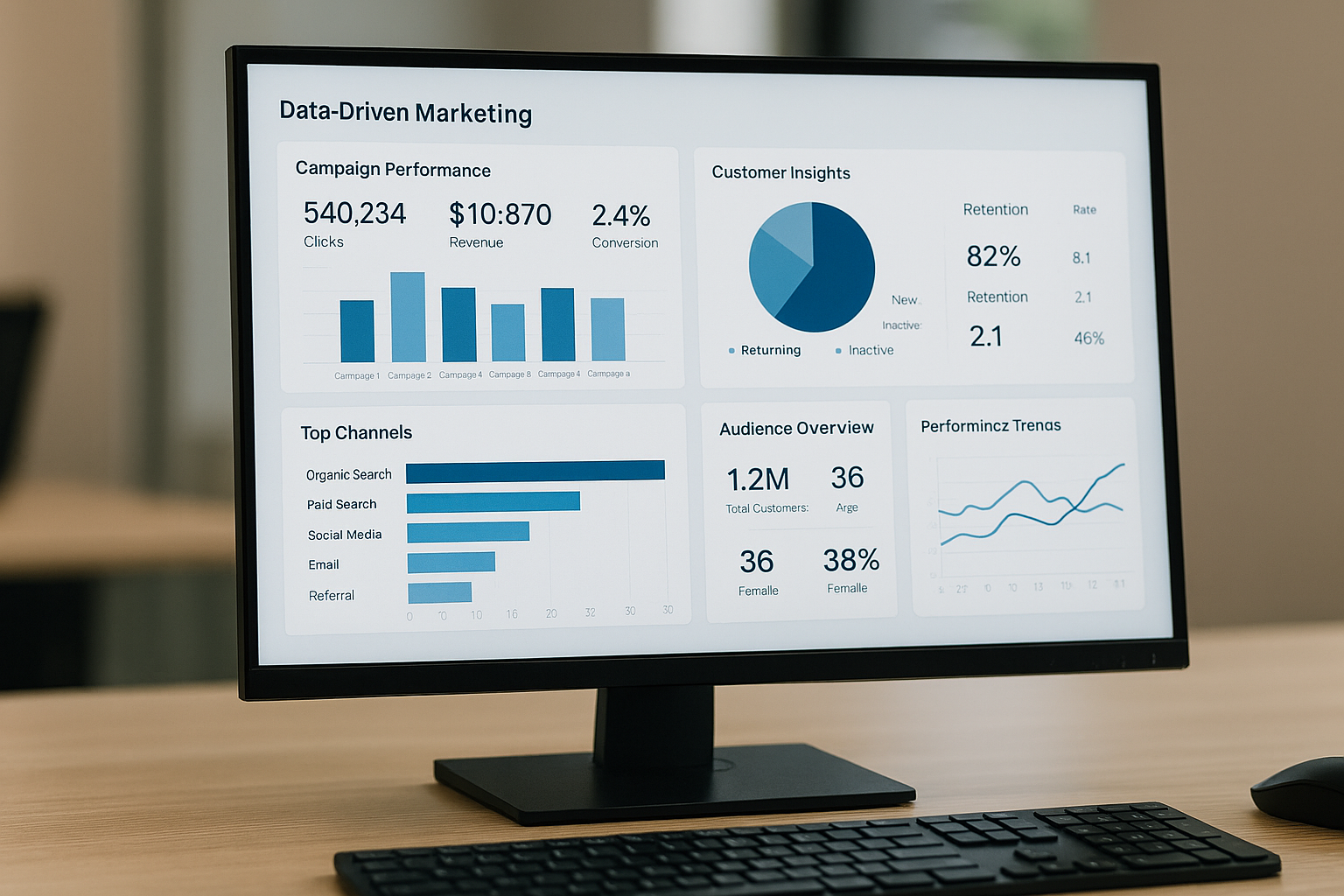
Data-driven marketing is one of those phrases everyone uses, but not everyone agrees on what it actually means. In plain terms, it’s marketing that uses real evidence – customer behaviour, campaign performance, and commercial outcomes – to make better and faster decisions.
It’s also the opposite of “we think this will work.” The best data-driven marketing replaces guesswork with a simple habit: learn what’s happening, act on it, then improve what you do next.
Want to turn messy marketing data into clear actions and measurable growth? Seek Marketing Partners can help you build a practical data-driven marketing strategy, from tracking to optimisation.
What Exactly is Data-Driven Marketing?
Data-driven marketing is the process of gathering and using data to guide marketing decisions and improve the customer experience. In practice, that often means using demographics and behaviour data to reach the right people, in the right place, at the right time – and then adjusting based on performance.
Different sources and guides phrase it differently, but the theme is consistent. It’s about using customer information and insights to predict needs, personalise communications, and improve return on investment (ROI) over time.
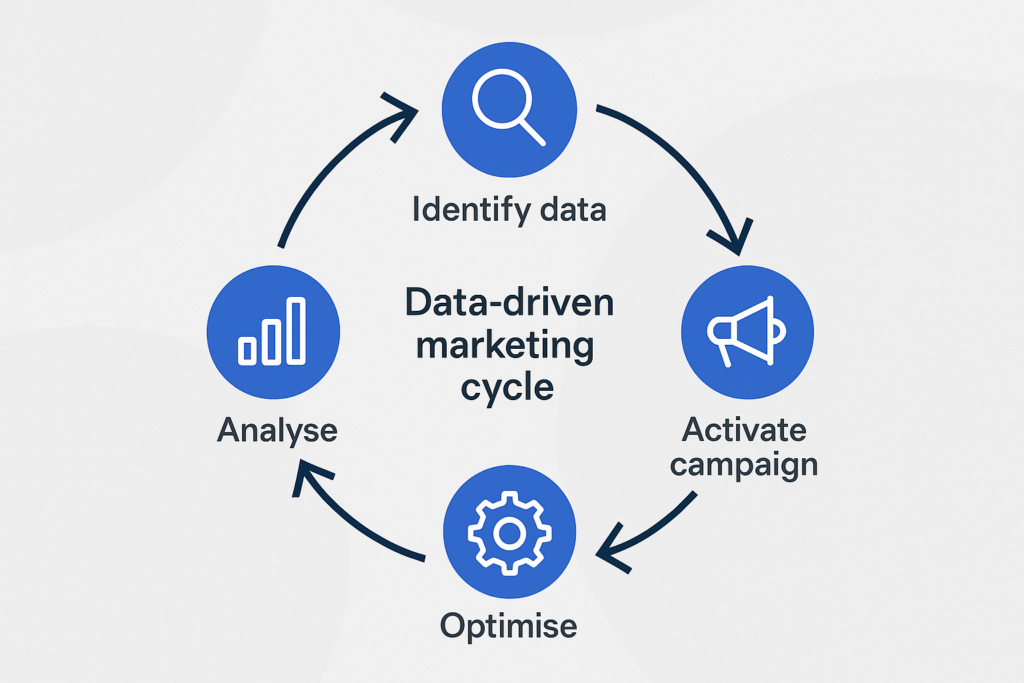
A helpful way to think about it is as a loop. Deloitte summarises it as Identify, Capture, Analyse, Activate, and Optimise – meaning you decide what you need, collect it responsibly, turn it into useful insights, use those insights in campaigns, and keep improving through a test-and-learn mindset.
Data-Driven Marketing vs Traditional Marketing
Traditional marketing can absolutely use research, focus groups, and experience. The limitation is often scale, speed, and feedback – because many offline channels don’t give you granular performance data in real time.
With data-driven marketing, digital technologies make it easier to collect large-scale data, monitor performance as it happens, and automate actions based on what the data shows. That’s why data-driven approaches are often faster to optimise and easier to justify internally.
Why Data-Driven Marketing is Important
One of the biggest benefits is better targeting and segmentation. When you understand who your customers are and how they behave, you can tailor messaging to smaller, clearer segments instead of sending the same message to everyone.
Personalisation is another major driver. Research from McKinsey & Company has found that 71% of consumers expect personalised interactions, and 76% get frustrated when it doesn’t happen – so the “generic blast” approach increasingly feels out of step with expectations.
It also helps teams allocate budget and effort more intelligently. When you track the right KPIs, you can see what’s actually working, whether that’s organic search growth, email revenue, paid media efficiency, or on-site conversion rate – and shift resources accordingly.
What Data Do You Need for Data-Driven Marketing?
Most marketers already have useful data – they just don’t always connect it. Semrush lists common sources like CRM platforms, website analytics, email marketing tools, and social media platforms, and it also notes that surveys and experiments can generate valuable first-party data.
To make it clearer, think about data in three buckets:
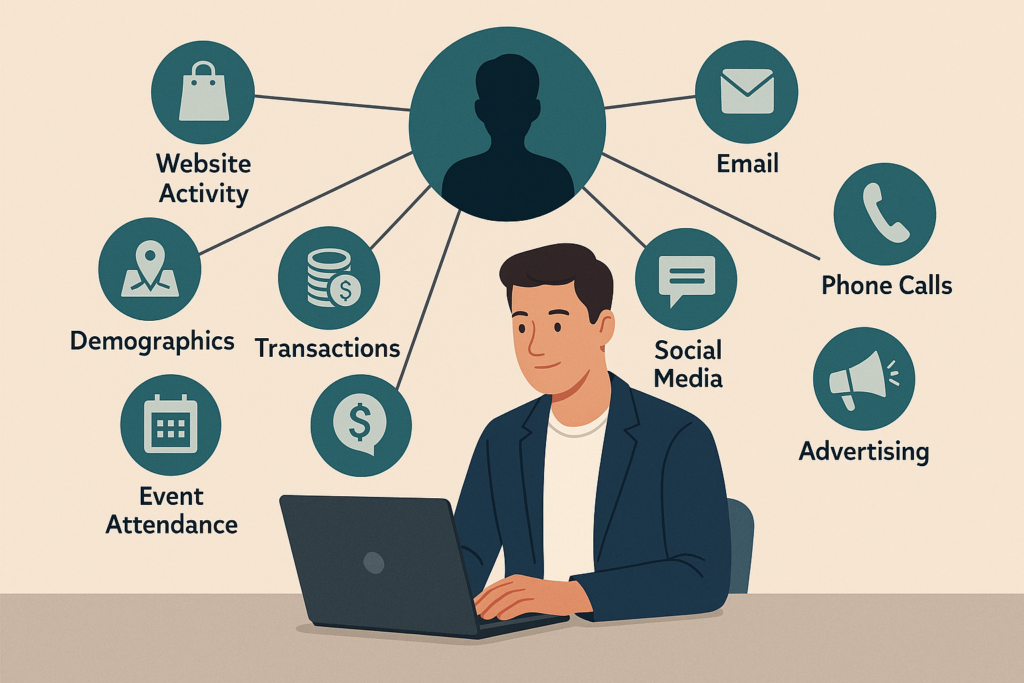
You have customer and lead data (for example, what people bought, what they enquired about, and what stage they’re in).
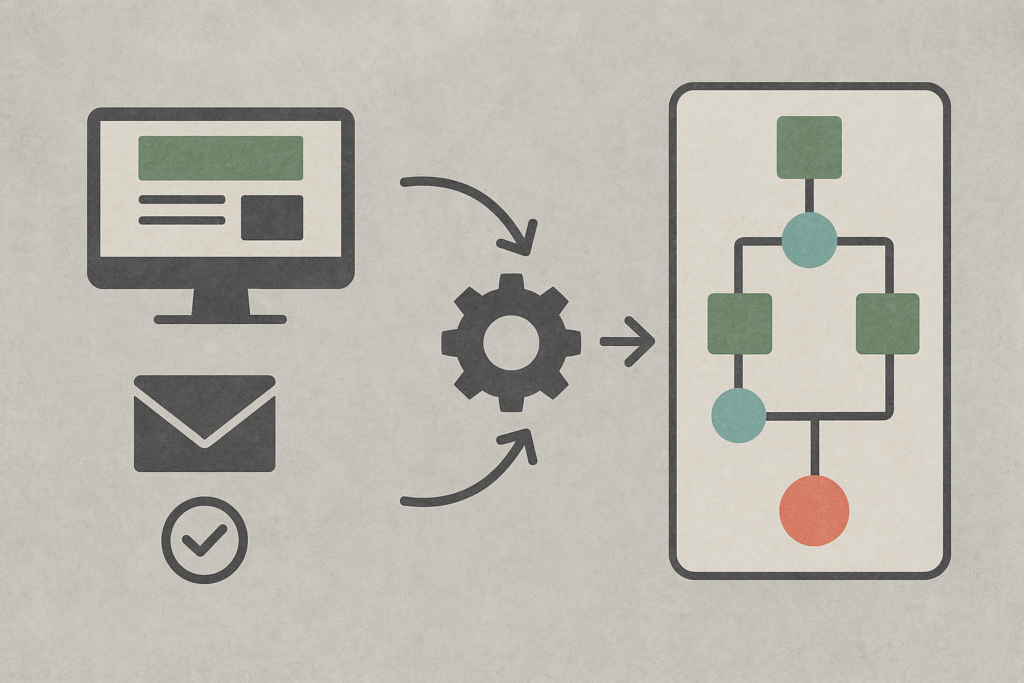
You have behaviour data (what people do on your website, in your emails, or across your conversion journey).
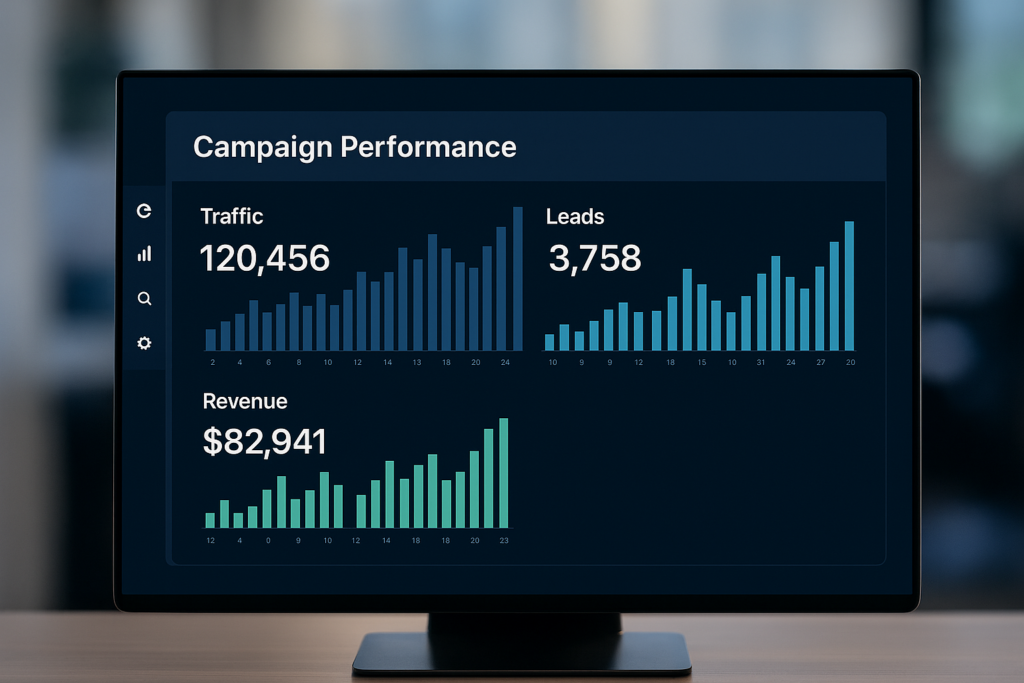
And you have campaign performance data (what drove traffic, leads, revenue, or retention).
You do not need “all the data.” You need the right data for the decisions you’re trying to make, and you need enough consistency that you can trust the trend you’re seeing.
Here are the Three Analytics Types that Show Up in Real Marketing Teams
Coursera breaks marketing analytics into descriptive, predictive, and prescriptive approaches, and this is a useful shorthand for planning.
- Descriptive analytics tells you what happened (for example, which channel drove the most qualified leads last quarter).
- Predictive analytics helps you anticipate what might happen (for example, which audience segment is likely to convert if you adjust the offer).
- Prescriptive analytics pushes towards recommendation and decisioning (for example, adapting content and targeting to maximise a specific outcome).
Learn How to Build a Data-Driven Marketing Strategy
A data-driven marketing strategy works best when you treat it like an operating system, not a one-off project. Semrush summarises the core flow as: set goals, collect data, analyse it, develop the strategy, launch, measure, and optimise.
Here’s the same idea in a more “do-this-on-Monday” version.
Step #1:
Start with one or two clear goals that matter commercially, then define the KPIs you’ll use to judge success. We recommend choosing metrics that align with your marketing goals and treating them as SMART – specific, measurable, achievable, relevant, and time-bound.
Step #2:
Next, map your customer journey and decide what you need to measure at each stage. Salesforce explicitly calls out building a data-driven customer journey map across touchpoints so you can collect and analyse data where decisions need to be made.
Step #3:
Then, connect your data sources so you can see performance in one place. One of the biggest practical problems is having data spread across tools and teams, which makes it harder to build a single view of performance.
Step #4:
Finally, run the strategy as a loop: launch, measure, learn, and refine. That “test and learn” habit is the difference between “data-informed” and truly data-driven.
What Does Data-Driven Digital Marketing Look Like?
Data-driven digital marketing is simply data-driven marketing applied across your digital channels with a strong measurement discipline. It’s the same idea – use evidence to choose, improve, and scale what works – but with the advantage that most digital channels are measurable.
In SEO and content, it often means using search performance data, page engagement metrics, and conversion tracking to decide which topics to create, which pages to refresh, and which queries to prioritise.
In paid media, it means watching performance signals like cost per click, conversion rate, and return on ad spend, then adjusting targeting and creative based on what’s driving profit rather than just clicks.
In email, it often shows up as behavioural automation and personalisation – like sending cart reminders or tailoring content based on what people have done.
The Common Challenges in Data-Driven Marketing
Data-driven marketing sounds simple, but it can feel complicated in real life. Adverity describes how new data-driven marketers often get overwhelmed by collecting data and struggle with “isolated” data across tools.
Semrush highlights another common blocker: lack of data literacy – meaning people can’t confidently interpret the data, explain it, or act on it. Their advice is practical: invest in training, choose tools that make outputs clearer, and regularly review outcomes so you catch errors early.
There’s also the compliance layer. Semrush explicitly calls out that teams need to collect, store, and use data responsibly and to understand which regulations apply in their region.
That’s the reason many teams benefit from narrowing the initial scope. Start with one clear goal and one channel, prove you can measure and improve it, then expand.
A Tracking Reality Check for 2026
Measurement is still one of the biggest advantages of digital marketing, but the environment has changed. Reuters reported that Google decided not to roll out a standalone prompt and will retain third-party cookies in Chrome, after years of shifting plans and ecosystem pressure.
At the same time, Google’s own Privacy Sandbox documentation is explicit about preparing for user experiences “whether or not third-party cookies are available,” and even suggests testing behaviour when cookies are blocked by user choice. In other words, “business as usual” tracking assumptions are risky.
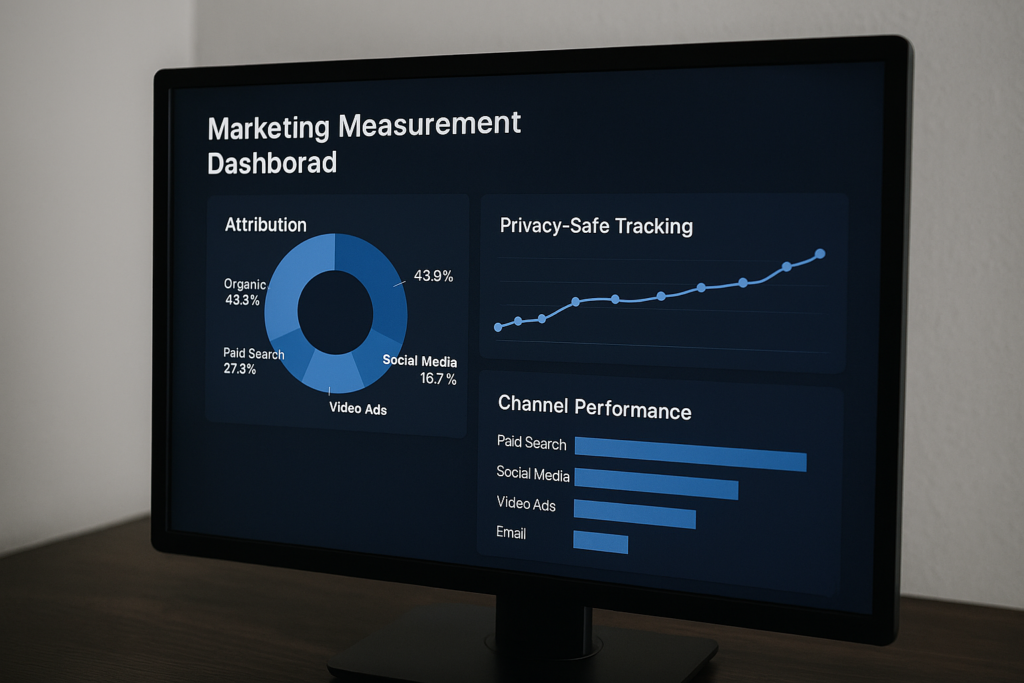
For marketers, the practical takeaway is straightforward: tighten your first-party measurement, reduce reliance on any single tracking method, and make sure your reporting is resilient enough to guide decisions even with imperfect attribution.
When to Hire a Data-Driven Marketing Agency
A data-driven marketing agency should do more than run ads and send reports. The value is in connecting your marketing activity to customer behaviour and commercial outcomes, then improving it through consistent testing and optimised execution.
When you’re evaluating an agency, look for signs they can handle the full loop: clarify goals and KPIs, connect or audit tracking, build decision-ready dashboards, and run a test-and-learn optimisation process.
Ready to make your marketing easier to measure and improve? Seek Marketing Partners can help you turn data into better decisions and stronger results.