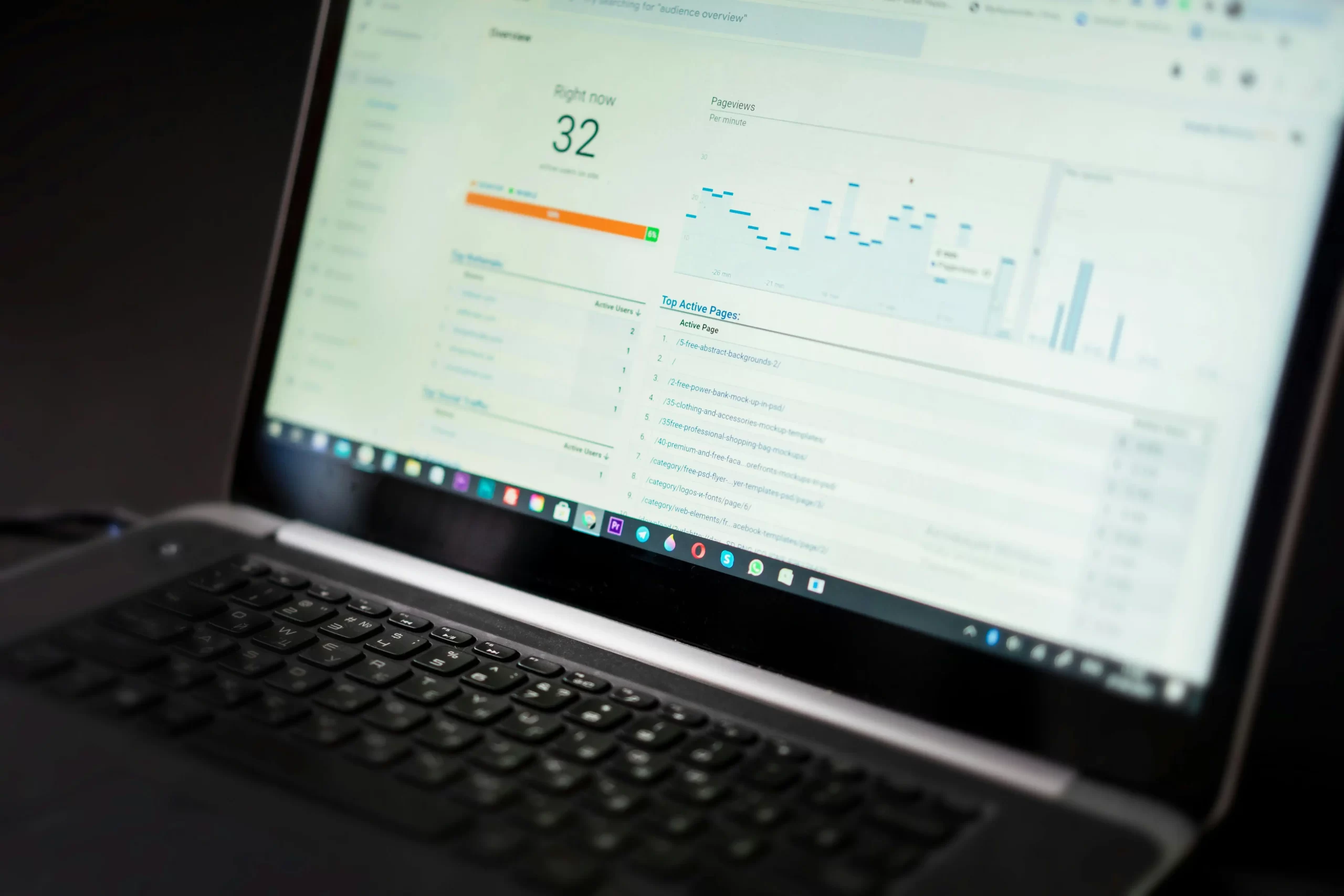
Attracting more visitors to your site starts with understanding how traffic is generated and where the real opportunities lie. Organic search remains one of the most powerful and scalable acquisition channels, while paid ads play a supporting role when used strategically.
If your website isn’t easy to find, fast to use, and structured properly, you’re leaving visibility and revenue on the table. Below, we break down the practical actions that boost website traffic and consistently drive measurable growth, from auditing performance to improving content, technical SEO, and promotion.
8 Essential Tactics on How to Improve Website Traffic
1. Audit Your Current Traffic and Set Goals
Before taking action, analyse your baseline performance. Use tools like Google Analytics and Search Console to see how many visitors you have, where they come from and which pages they visit. Review key metrics such as bounce rate, session duration and conversion rates.
High bounce rates or very short visits can signal issues with content relevance or user experience. Identify underperforming pages and technical issues such as broken links, crawl errors and missing meta tags.
- Track sources: Determine whether most traffic comes from search, social media or referral sites. This guides you on what to focus on. For example, if search traffic is low, SEO should become the primary area of improvement.
- Set measurable targets: Based on your audit, define specific, outcome-driven goals. Use dashboards for structured, ongoing monitoring.
By understanding your starting point, you’ll know which actions will have the greatest impact. If analytics show limited organic visibility, prioritise SEO optimisation. If organic traffic is strong but sales are low, focus on improving conversion performance.
Around 90% of search clicks go to organic results, which is why improving your organic rankings should be a priority for sustainable traffic growth.
2. Optimise Technical SEO and Site Performance
A technically sound website ranks better and retains visitors. Ensure your site loads quickly, is secure, and displays correctly on all devices. Google’s Core Web Vitals emphasise user experience, meaning page loading speed, interactivity and visual stability should meet recommended performance thresholds.
Aim for pages that perform well in Google’s PageSpeed Insights and Lighthouse.
- Speed up your site: Compress and properly size images, use browser caching and minimise code. Faster pages keep users engaged and reduce bounce rates.
- Mobile-friendly design: With around 60% of global web traffic coming from mobile devices, responsive design is essential. Use a responsive layout so content adapts to phones and tablets. Test on multiple devices and resolve any usability issues.
- Secure and accessible: Use HTTPS for security. Create and submit an XML sitemap and robots.txt file so search engines can crawl your pages efficiently. Fix broken links and duplicate content that can confuse crawlers.
Good technical SEO lays the foundation for growth. Even the best content will struggle to rank if your site is slow, insecure or difficult for search engines to index.
Want an expert second opinion?Seek Marketing Partners can spot the quickest fixes in an SEO audit. |
3. Research Keywords and Optimise On-Page SEO
Effective SEO starts with understanding what your audience is actively searching for. Use keyword research tools such as Google Keyword Planner, Ahrefs or Search Atlas to identify high-relevance terms. Aim for a balanced mix of broader phrases and more specific long-tail queries aligned with search intent.
For example, if targeting “boost website traffic,” also consider related queries such as “how to improve website traffic” or variations focused on gaining more visitors.
Once you have target keywords:
- Incorporate them naturally: Place your primary keyword in the page title (H1), key headings, URL and meta description. Ensure it appears early in the content. Avoid keyword stuffing by prioritising clarity and logical flow. Search engines reward relevance and usability over forced density.
- Craft clear headings: Use descriptive H2 and H3 subheadings to structure content logically. This improves readability and helps search engines interpret page hierarchy.
- Optimise images: Use descriptive file names and include relevant alt text. This supports accessibility and improves visibility in image search.
- Internal linking: Link to relevant pages within your site. This helps distribute authority, supports navigation and signals content relationships to search engines.
On-page SEO ensures search engines can accurately interpret and rank your pages. When each page is clearly focused on a defined topic, supported by strong structure and unique metadata, your chances of ranking for relevant searches increase significantly.
4. Create High-Quality, Engaging Content
Content drives sustainable traffic growth. Publish useful, targeted content that addresses your audience’s needs – whether that’s in-depth guides, insightful blog posts, videos or infographics. The more value you provide, the more likely visitors are to return and engage.
For example, businesses that blog regularly can see about 55% more website visitors than those that don’t. Consistently publishing strong content increases visibility and earns backlinks over time, resulting in higher traffic levels and stronger domain authority.
- Solve problems and answer questions: Think from the reader’s perspective. What questions do customers ask? What solutions do they need? Create content that fully addresses those queries. Evergreen topics (those that remain relevant) can generate steady traffic long term.
- Rich formatting: Use short paragraphs, bullet lists, tables and images to break up text and illustrate key points. Clear, scannable content improves engagement and retention. Visual elements such as charts or infographics can make complex information easier to digest and share.
A presentation api can help automate the creation of visually structured content, making it easier to deliver consistent and engaging materials at scale. - Multimedia: Incorporate relevant images, charts or short videos. Video content can appear in both YouTube and Google search results, expanding your visibility. If using video, apply basic YouTube SEO principles.
- Content refresh: Update and republish older posts with improved data, insights or structure. Search engines favour accurate, up-to-date content, and strategic refreshes can help recover lost rankings. In case updating isn’t possible, you can at least rewrite the content in a new way, either manually or using Editpad’s AI rewriter.
By focusing on quality over quantity, you build authority. A well-structured, valuable guide will consistently outperform multiple thin or unfocused articles.
5. Build Links and Promote Your Site
To increase website traffic, you need both strong content and a deliberate promotion strategy. One of the most effective approaches is link building, which includes earning links from reputable, relevant websites. High-quality backlinks signal authority and trust to search engines.
- Guest blogging: Contribute articles to credible industry blogs or partner sites. This expands your reach and earns authoritative backlinks. Prioritise relevance and quality over volume.
- Social sharing: Promote new content across social platforms such as LinkedIn, X (formerly Twitter) or Facebook. Tailor messaging to each channel and use concise copy or visuals to improve engagement.
- Email newsletters: If you maintain an email list, send regular updates featuring your latest insights, guides or offers. Even when not driving entirely new traffic, email strengthens retention and encourages repeat visits.
- Influencer and PR outreach: Identify relevant industry voices or media outlets and collaborate through interviews, commentary or co-authored content. A well-placed mention can generate highly targeted referral traffic.
- Forums and Q&A: Participate in relevant online communities such as Reddit, Quora or LinkedIn groups. Provide thoughtful, value-led responses and reference your content only where genuinely helpful. Authority builds visibility.
Combining SEO with active promotion expands your reach beyond search alone. If budget allows, targeted paid campaigns, such as Google Ads or paid social, can accelerate visibility for priority content while organic performance builds over time.
6. Leverage Social Media, Email and Advertising
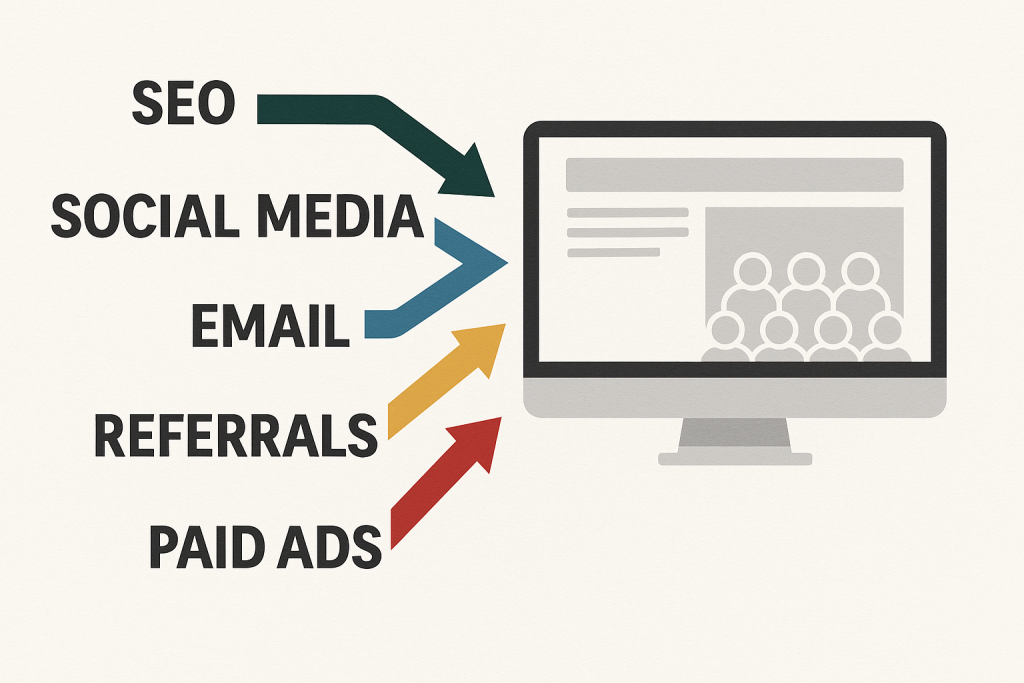
Modern traffic growth goes beyond SEO alone. For many organisations, social media and email are important supporting channels for driving qualified visitors and reinforcing brand visibility.
- Social media presence: Share strategic snippets of your content on platforms where your audience is most active (e.g. Instagram for visual content, LinkedIn for B2B insights, X for timely updates). Tailor messaging to each platform and use relevant hashtags where appropriate to expand reach.
- Targeted ads: Promote high-value content or offers through paid campaigns. Platforms such as Facebook, Instagram and LinkedIn allow precise targeting by interests, behaviours and demographics. Even controlled budgets, when deployed strategically, can drive highly relevant traffic.
- Local SEO and directories: If you operate in specific regions, optimise your Google Business Profile and maintain consistent local listings. Ensure your name, address and phone details are accurate across platforms, and encourage authentic reviews. Local searches such as “(service) near me” often indicate strong purchase intent.
- Partnerships: Collaborate with complementary businesses through co-marketing initiatives. This could include shared newsletters, joint campaigns or reciprocal content promotion. Strategic partnerships expand reach without relying solely on paid channels.
Email marketing and social channels support long-term visibility and repeat engagement. The key is consistency and alignment – tailor content to each channel’s format and to your audience’s expectations.
7. Optimise User Experience and Conversion
Driving traffic is only half the equation. The real impact comes from converting visitors into leads or customers. Improve usability and clarity to ensure traffic translates into measurable outcomes.
- Clear calls to action (CTAs): Every page should guide the next step. Make actions obvious, reduce friction and use direct, outcome-focused language.
- Simple navigation: Use a logical menu structure and internal linking so visitors can easily find relevant information. A well-organised site architecture reduces confusion and supports deeper engagement.
- Trust signals: Display testimonials, case studies or recognised accreditations where appropriate. For e-commerce, product reviews strengthen credibility. Trust directly influences engagement and conversion.
- Mobile usability: Ensure forms, buttons and interactive elements function seamlessly on mobile devices. Fields should be easy to complete and pages should load quickly. Friction on mobile often leads to immediate drop-off.
- Test and refine: Use A/B testing to evaluate variations in headlines, layouts or calls to action. Incremental improvements can compound into meaningful conversion gains.
Ultimately, performance is not just about attracting clicks. It’s about delivering a seamless experience that encourages action. Even strong content underperforms when usability or clarity is compromised.
8. Monitor Results and Iterate
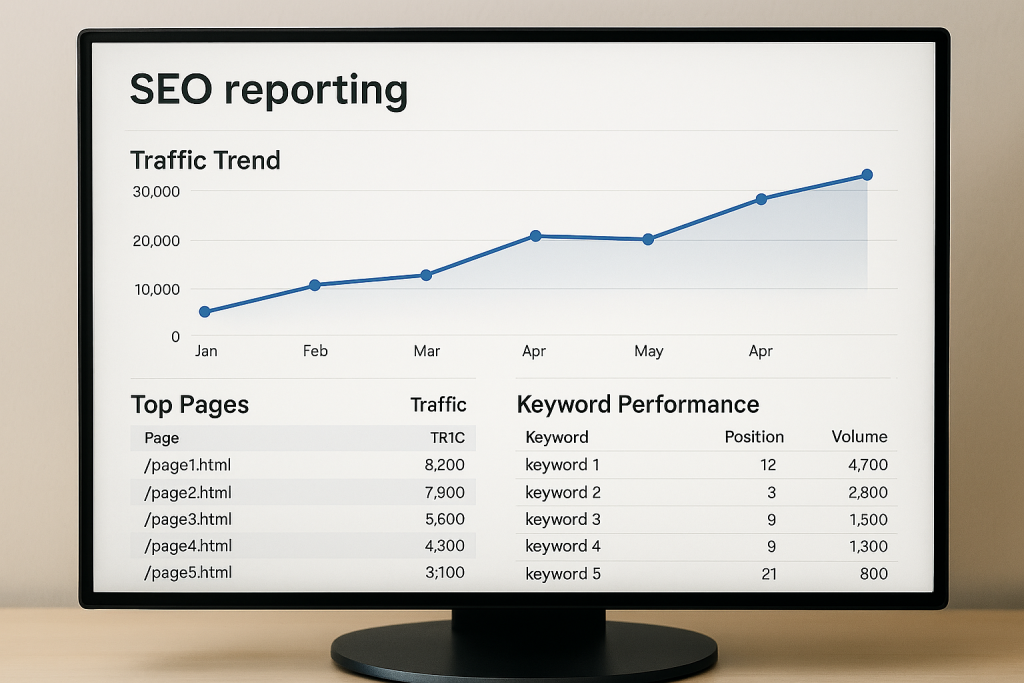
SEO and traffic growth require ongoing evaluation. Regularly review analytics to understand what is driving performance and where improvements are needed. Use Google Analytics and Search Console to track landing pages, high-performing keywords and user behaviour patterns.
- Measure key metrics: Monitor organic sessions, goal completions, engagement metrics and bounce rate. When a tactic delivers measurable results, scale it. When performance declines, investigate and optimise.
- SEO tools: Platforms such as Semrush, Ahrefs or Search Atlas can analyse rankings, identify content gaps and monitor backlink profiles. Even tools like Google Looker Studio (formerly Data Studio) or keyword planners can surface performance trends.
- Stay updated: Search algorithms and SERP features evolve continuously. Follow reputable industry sources and adapt accordingly. If Google introduces new result formats or features, evaluate how your content can compete within them.
By consistently analysing and refining your approach, performance improves over time. Incremental monthly gains compound, and a well-optimised, high-ranking page can generate traffic for years. Sustainable growth comes from discipline, not short-term spikes.
Bottom Line
These actions provide a clear framework to steadily boost your website’s traffic. By auditing performance, strengthening technical and on-page SEO, creating high-value content and promoting it strategically, you position your site for sustainable growth. Consistent optimisation and refinement will build visibility, authority and long-term results.
Need a hand boosting your website traffic?If you want to boost website traffic the right way (without guesswork), get in touch and tell us what you’re aiming to achieve.And if you want more practical tips first, head to our digital marketing blog for more insights on how to get traffic to your website. |