
Even well-run websites suffer from hidden SEO issues that cap rankings, throttle traffic, and blur reporting. Some are technical (speed, crawl, duplication), and others are strategic (weak intent match, thin pages, poor internal links).
The upside? Every one of them is fixable with a clear checklist and consistent follow-through.
This guide from an experienced SEO agency in the UK walks through nine problems we diagnose most often, explains how to spot them, and gives you practical fixes you can implement this week. Use it as a working playbook, not just a read-once article.
9 SEO Issues That Could Be Holding Your Website Back
Problem #1: Targeting the Wrong Queries (Misaligned Intent)
The symptom: Pages chase head terms with high volume but vague intent. You rank occasionally, clicks rarely convert, and reporting looks noisy. Typical problems with SEO often begin here.
How to confirm: Compare your target terms with the live SERP: Are the top results guides when you built a product page (or vice versa)? Check Google Search Console for keywords with impressions but weak CTR.
Fixes that work
- Rebuild your keyword set around audience jobs-to-be-done. Map each page to one primary intent (learn, compare, buy) and reflect that in format and headings.
- Prioritise long-tail phrases that signal context, budget, and use case, then win those while you build authority for broader terms.
- Consolidate overlapping pages that cannibalise each other.
Quick win: Re-title your pages to match intent (e.g., ‘How to…’, ‘Compare…’, ‘Pricing for…’) and update the first paragraph to answer the query upfront. This can deliver a fast lift in CTR and dwell time.

Problem #2: Slow Pages and Unstable Core Web Vitals
The symptom: Mobile bounce rates are high, layout shift is visible, and Google PageSpeed Insights shows red scores. These search engine optimisation issues hurt both user experience and crawl efficiency.
How to confirm: Check Core Web Vitals in Search Console (per template), then run a lab test with Lighthouse. Note which scripts and images block rendering.
Fixes that work
- Compress and serve images as WebP/AVIF, and lazy-load below-the-fold assets.
- Minimise and defer non-critical JavaScript, and remove unused CSS.
- Set a performance budget in your build pipeline. Block deploys that exceed it.
- Use a CDN and enable server-side caching. Upgrade hosting if the time-to-first-byte is slow.
Quick win: Optimise your top 10 landing pages first – small speed gains there usually return the biggest revenue lift.
Problem #3: Mobile Experience That Frustrates
The symptom: Tap targets are tiny, forms are fiddly, and content stacks awkwardly. With mobile-first indexing, these SEO issues suppress rankings even when the desktop looks fine.
How to confirm: Use a mobile usability testing tool to review issues, and check analytics for device-level conversion gaps. Watch a couple of real-user recordings on mobile per key template.
Fixes that work
- Design for thumb use: larger buttons, generous spacing, readable type.
- Simplify navigation and keep critical actions within one tap from the hero.
- Reduce intrusive pop-ups and interstitials, and ensure dismissal is obvious.
Quick win: Strip every non-essential field from mobile forms. Fewer fields can lead to more completions.
| Ready to fix your mobile UX? Get in touch and let’s make it work for both users and Google. Get a Digital Marketing Consultation |
Problem #4: Indexing and Crawlability Gaps
The symptom: Great pages simply don’t appear in results. Sitemaps are stale, robots.txt rules are overly broad, or templates ship accidental noindex.
How to confirm: Use site:yourdomain.com to eyeball index size. Compare it with your CMS count. In Search Console, inspect sample URLs for indexing state and reasons.
Fixes that work
- Generate clean XML sitemaps per content type and submit them in Search Console.
- Tighten robots.txt to block only what should never be indexed (cart, search, admin).
- Remove accidental noindex/nofollow. Repair redirect chains and loops.
- Ensure every important page receives at least one internal link from an indexed page.
Quick win: Build a “What’s new” hub that links to all fresh content – great for crawl discovery and user orientation.
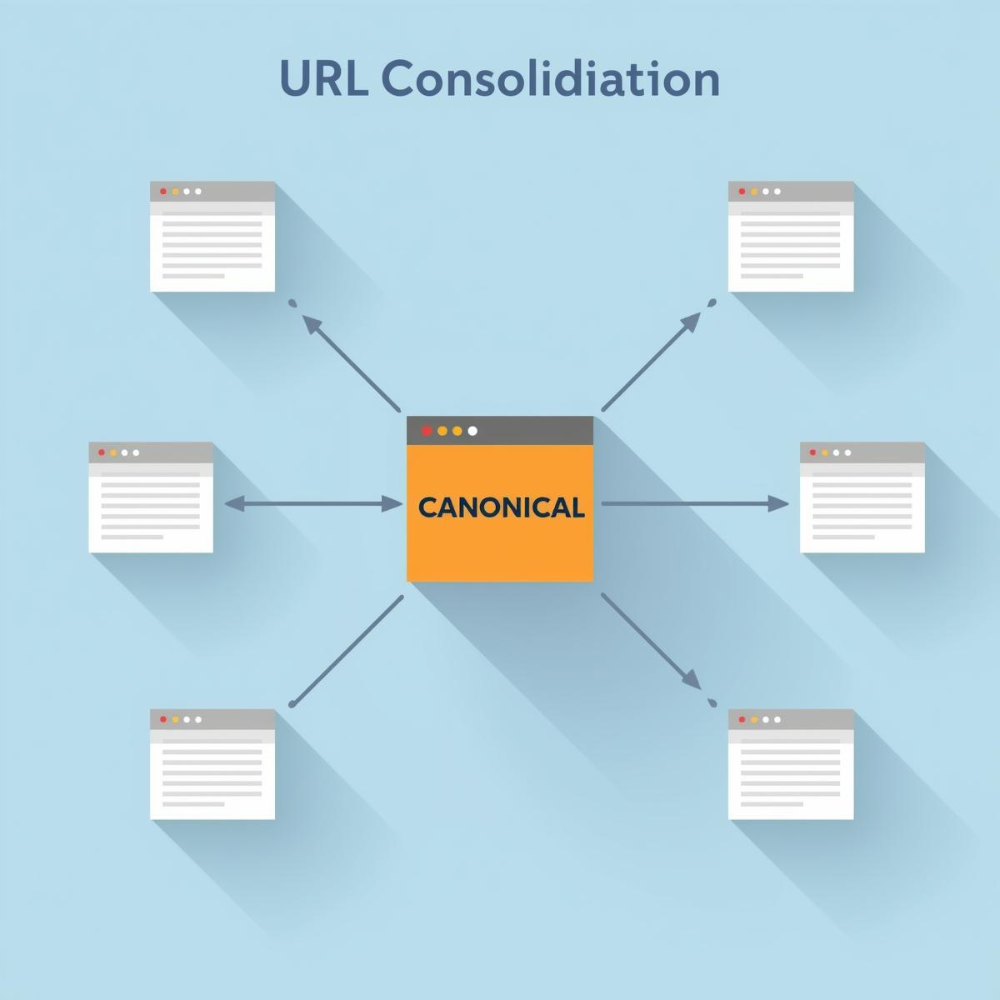
Problem #5: Duplicate, Thin, or Near-Duplicate Pages
The symptom: Multiple URLs say the same thing (parameters, print views, copied city pages). Authority is diluted; Google ranks the wrong version. These are classic search engine optimisation issues on large sites.
How to confirm: Crawl the site to find duplicate titles/descriptions and similar content clusters. Check canonical tags for consistency.
Fixes that work
- Pick a canonical for each cluster and enforce it with <link rel=”canonical”> and 301s.
- Normalise URL variants (HTTP→HTTPS, www→non-www, trailing-slash policy).
- Merge thin pages into a single authoritative resource. Add unique proof (data, images, local specifics) where variants must exist.
Quick win: Redirect parameter-driven duplicates to clean URLs and add self-referencing canonicals across templates.
Problem #6: On-Page Fundamentals Left on the Table
The symptom: Generic titles, missing meta descriptions, no H1s, and images without alt text. These problems with SEO depress CTR and muddle topical relevance.
How to confirm: Export a title/meta inventory; flag blanks, duplicates, and over-length items. Manually review the first 100 words on key pages: Do they state the purpose clearly?
Fixes that work
- Write unique, benefit-led titles (~50-60 characters) and persuasive metas (~140-160 characters).
- Use one H1 per page and structure content with descriptive H2s/H3s.
- Add concise, descriptive alt text to meaningful images.
- Improve internal linking with contextual anchors from high-authority pages.
Quick win: Rework snippets for pages with high impressions but low CTR – fast wins without changing rankings.
| Small on-page tweaks can drive big results. Speak to our team and let’s make it happen. Get a Digital Marketing Consultation |
Problem #7: Content That Doesn’t Satisfy
The symptom: Short, surface-level copy fails to answer the question; users bounce, and links never arrive. You’re publishing, but value is thin – one of the most common SEO issues we see.
How to confirm: Compare your page to the top results: do you cover the same subtopics with clearer structure and fresher data? Check engagement metrics and scroll depth.
Fixes that work
- Align to search intent first; lead with the answer, then deepen with evidence.
- Demonstrate E-E-A-T: name experts, cite sources, include examples and screenshots.
- Add FAQs, tables, and visuals that reduce cognitive load.
- Refresh winners quarterly – update stats, tighten copy, add internal links.
Quick win: Add a crisp summary box at the top (“In 30 seconds…”) – helps humans and can earn snippet visibility.
Problem #8: Weak Information Architecture and Internal Links
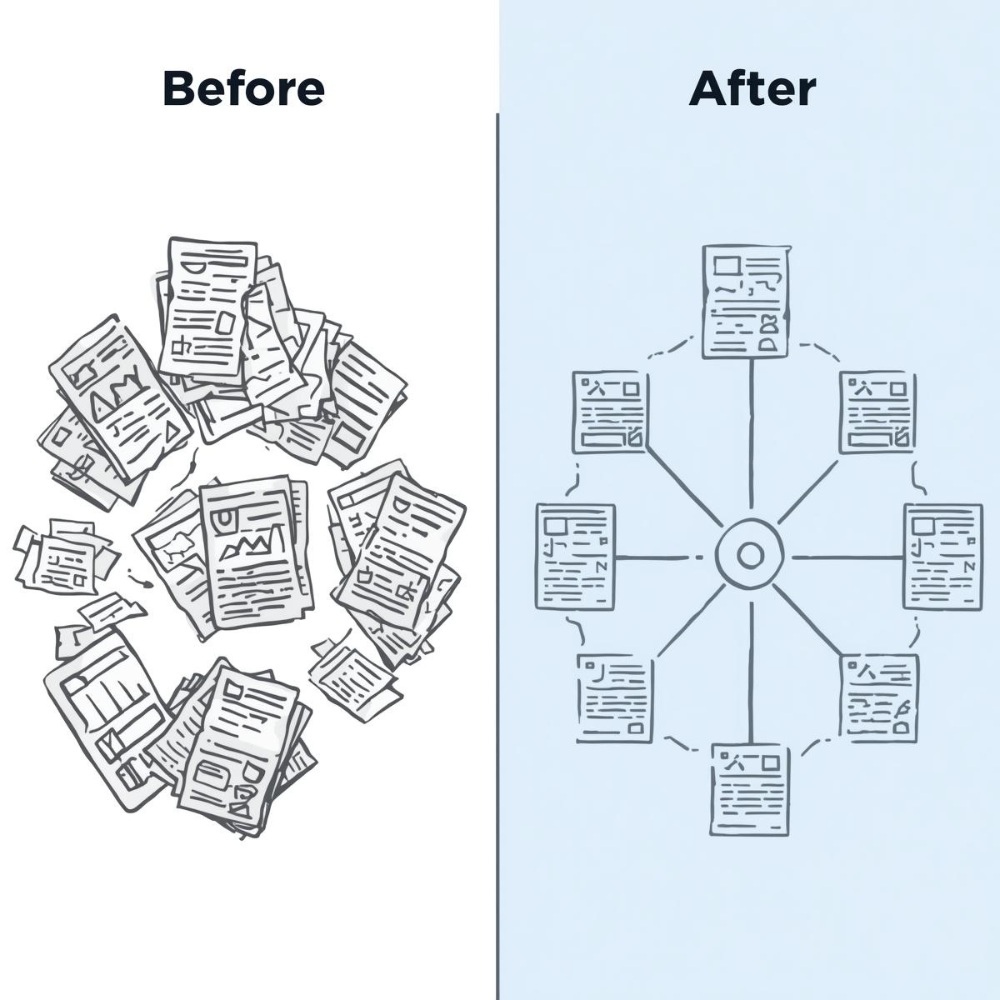
The symptom: Important pages are four clicks deep, and related articles don’t reference each other. There’s no hub explaining a topic end-to-end.
How to confirm: Visualise click depth from the homepage. List orphan pages. Identify topics with many spokes but no hub.
Fixes that work
- Build hub-and-spoke clusters: one comprehensive hub, focused spokes, and rich cross-links.
- Add breadcrumbs and consistent nav labels; surface priority journeys in menus.
- Link from high-traffic pages to under-linked commercial pages using descriptive anchors.
Quick win: Create a “Start here” hub for your highest-value theme and link it site-wide.
Problem #9: Set-and-Forget Operations
The symptom: No routine for monitoring, updates ship without QA, and algorithm changes go unnoticed. Over time, tiny cracks become traffic-sapping SEO issues.
How to confirm: Ask: When was our last technical or content audit? Which alerts fire on traffic drops, 404 spikes, or speed regressions? Who owns the fixes?
Fixes that work
- Schedule quarterly technical and content reviews with clear owners.
- Track leading indicators (impressions, CTR, index coverage) alongside revenue.
- Pilot changes on a small set of pages; document what worked and scale.
Quick win: Set automated alerts for Core Web Vitals, 4XX/5XX rates, and ranking swings on revenue pages.

Why Choose Us as Your SEO Agency
Choose Seek Marketing Partners when you want senior attention, clear diagnostics, and measurable progress. We pair analytics-led audits with specialised content and technical work that improves the metrics that matter – visibility, conversions, and revenue, without fluff.
Our consultants embed with your stakeholders, set priorities by commercial impact, and report in plain English. If bottlenecks are technical, we surface and solve them quickly.
Putting It Into Practice
Tackle high-impact templates first (home, category, top blog, top conversion pages). Fix speed and indexing, then strengthen on-page signals and architecture. Finally, upgrade content quality and promotion so you earn references naturally. This staged approach resolves the most stubborn problems with SEO without overwhelming your team.
If you’d like expert eyes on your stack, our team at Seek Marketing Partners is an experienced SEO agency. We can help prioritise, implement, and report results that your stakeholders will trust. Start with a no-nonsense audit or a focused sprint, then compound gains over the quarter.
Frequently Asked Questions
What are the most common causes of ranking drops?
Speed regressions, index bloat, template changes that alter headings or internal links, and intent mismatch. Check Search Console for coverage and performance deltas first.
Do I need to rewrite everything?
Usually not. Improve the intro, structure, evidence, and internal links on existing pages before creating net-new content.
How long until fixes show results?
Technical and snippet improvements can move metrics within weeks; competitive terms and link-earning take longer. Expect steady momentum as the ship changes.
Should we outsource or hire in-house?
If velocity is critical or skills are thin, bring in specialists to set foundations and coach your team. A hybrid model often works best with an SEO agency guiding the roadmap.