Category: PPC Strategy & Scaling

  • What Are Meta Ads and Are They Worth It?

    What Are Meta Ads and Are They Worth It?

    What are Meta Ads? Simply put, they are digital advertisements that run on platforms owned by Meta, including Facebook, Instagram, Messenger, and WhatsApp. These ads help businesses reach their target audience effectively by leveraging powerful targeting and analytics tools. 

    Let’s explore Meta Ads in detail, including how they function, their benefits, and whether they are the right investment for your business.

    Hand holding a smartphone showing a bright orange free delivery advert.

    Key Points: What Are Meta Ads?

    • Meta Ads are digital advertising tools for Facebook, Instagram, Messenger, and WhatsApp
    • They offer precise targeting options based on user demographics, interests, and behaviours
    • Meta Ads include various formats like image, video, carousel, and story ads
    • They provide detailed analytics and reporting for campaign optimisation
    • Meta Ads can be cost-effective for businesses of all sizes when used strategically
    • When used strategically, Meta Ads can be cost-effective for businesses of all sizes.
    • Wondering “Are Meta Ads worth it?”—their success depends on the right targeting and budget allocation.
    • Understanding how Meta Ads work can help businesses maximise ROI and audience engagement.

    What Are Meta Ads?

    With Meta Ads, you can create customised campaigns that align with your business goals, whether you want to increase brand awareness, drive website traffic, or boost sales. 

    These ads are designed to integrate seamlessly into users’ social media experiences, appearing naturally in their feeds, stories, and even video content. This non-intrusive approach helps businesses engage with potential customers in a way that feels organic rather than disruptive.

    Meta’s advertising ecosystem is built on advanced data analytics, ensuring that businesses can optimize their campaigns for better engagement and conversions. Whether targeting first-time visitors, re-engaging past customers, or finding new lookalike audiences, Meta Ads work to ensure that your message reaches the right people at the right time.

    Different Formats of Meta Ads

    • Image ads: Static visuals that can quickly convey your message and brand identity.
    • Video ads: Engaging motion content that captures audience attention and encourages interaction.
    • Carousel ads: Multiple images or videos within a single ad, allowing businesses to showcase multiple products or tell a brand story.
    • Collection ads: A mobile-optimized format that combines video, images, and product catalogues for a more interactive shopping experience.
    • Instant Experience ads: Fullscreen, immersive mobile ads that load instantly and provide an engaging way for users to explore your brand.

    Each format offers unique advantages, allowing businesses to showcase their products or services in visually compelling ways. The variety of these formats means that Meta Ads work effectively across industries, from e-commerce and real estate to hospitality and entertainment. 

    A Meta Ads agency can help you determine the best format for your specific goals, ensuring that your ads perform at their best and deliver measurable results.

    How Do Meta Ads Work?

    If you’re wondering, “How do Meta Ads work?”, they function through the Meta Ads Manager, a tool that allows advertisers to create, manage, and track their campaigns. This platform provides an intuitive interface where businesses can define their audience, set their budget, and optimize ad performance based on real-time insights.

    Meta Ads use advanced targeting options, including:

    • Demographics: Age, gender, education, relationship status, and more
    • Interests: Hobbies, activities, likes, and pages followed
    • Behaviours: Purchase history, device usage, and online activities
    • Custom audiences: Based on your existing customer data or website visitors
    • Lookalike audiences: Finding users similar to your best customers
    • Engagement Targeting: Focus on users who have liked, commented, or shared similar content.
    • Device and Platform Targeting: Optimize ads for mobile, desktop, or specific devices.

    This precise targeting ensures that your ads reach the most relevant audience, increasing the likelihood of engagement and conversions. Meta’s algorithm analyses user data to show your ads to those most likely to be interested in your offerings, making your ad spend more effective and improving ROI.

    Our PPC management services for small businesses can help you improve your targeting strategy for better results, making sure your budget is used wisely to reach the right people at the right time. With a proper strategy, Meta Ads work effectively to drive engagement, generate leads, and increase sales.

    The Benefits of Meta Ads

    Blue bar chart with an orange arrow showing upward growth.

    Why Are Meta Ads Worth It?

    Many businesses ask, “Are Meta Ads worth it?” The answer is yes—when executed properly. Here’s why:

    • Extensive reach: With over 3 billion monthly active users across Meta platforms, your potential audience is huge and diverse.
    • Advanced targeting: Reach the right people at the right time accurately, making your ad spend more efficient.
    • Versatile ad formats: Choose from various formats to best show off your offerings and engage your audience effectively.
    • Detailed analytics: Track your performance and make data-based decisions with comprehensive reporting tools.
    • Integration with other Meta platforms: Create a consistent marketing strategy across multiple channels for maximum impact.
    • Cost-effective advertising: Set your own budget and optimize campaigns for the best return on investment.
    • Retargeting capabilities: Re-engage users who have shown interest in your products or services.

    Laptop showing Google Analytics reports beside a mug and pens.

    One of the biggest advantages of Meta Ads is their highly advanced targeting capabilities. By leveraging data on user demographics, interests, and online behaviour, businesses can reach the right audience with precision. This means that your advertising budget is spent efficiently, increasing the chances of conversions and maximising ROI.

    Another key benefit is the flexibility in ad formats. Whether you choose image ads, video ads, or carousel ads, Meta Ads offer dynamic ways to showcase your products and services. This flexibility makes them an excellent choice for businesses looking to create engaging and interactive campaigns.

    Meta Ads also provide detailed analytics, allowing you to track performance metrics such as reach, engagement, and conversion rates. With this data, businesses can refine their strategies and improve campaign effectiveness.

    Working with a Meta Ads agency can further enhance your results by providing expert insights and optimisation techniques.

    Challenges and Considerations

    While Meta Ads offer numerous benefits, businesses must also be aware of the challenges involved in running successful campaigns. Understanding these potential hurdles can help you make informed decisions and optimize your ad strategy effectively.

    • Ad fatigue: Users may get tired of seeing ads over time, requiring frequent creative updates.
    • Privacy concerns: Changing rules may affect targeting capabilities and data usage.
    • Increasing competition: As more businesses use Meta Ads, costs may go up, and visibility may become harder.
    • Algorithm changes: Meta’s frequent updates can affect ad performance and require strategy adjustments.
    • Ad blockers: Some users use ad-blocking technology, potentially limiting your reach.
    • Platform-specific limitations: Each Meta platform has its own rules and best practices to follow.

    Dealing with these challenges requires expertise and ongoing improvement. Our SEO audit services can help ensure your overall digital strategy stays effective in the face of these challenges. By regularly checking your digital presence and adapting to changes in the digital world, you can stay competitive and get the most out of your Meta Ads campaigns.

    Are Meta Ads Worth It?

    The answer to “Are Meta Ads worth it?” depends on your specific business goals, target audience, and industry. However, for many businesses, the answer is yes. Meta Ads offer a unique mix of reach, targeting accuracy, and flexibility that can provide significant value when used strategically.

    Factors that Make Meta Ads a Good Investment

    • Cost-effective: With proper optimisation, Meta Ads can deliver a strong return on investment, often at a lower cost per acquisition than traditional advertising methods.
    • Measurable results: Detailed analytics allow you to track and improve your performance, ensuring your marketing budget is spent efficiently.
    • Flexibility: Adjust your campaigns in real-time based on performance data, allowing for agile marketing strategies.
    • Brand awareness: Increase visibility and recognition among your target audience, even if they don’t convert immediately.
    • Lead generation: Capture valuable leads and nurture them through your sales funnel with targeted content and offers.
    • Remarketing opportunities: Re-engage users who have interacted with your brand, increasing the likelihood of conversion.
    • Scalability: Start with a small budget and scale up as you see positive results, making it suitable for businesses of all sizes.

    Our insights on the future of SEO can help you understand how Meta Ads fit into a comprehensive digital marketing strategy. By combining the immediacy of paid advertising with the long-term benefits of SEO, you can create a robust digital presence that drives both short-term results and sustainable growth.

    Best practises for Meta Ads Success

    To get the most out of your Meta Ads campaigns, consider these Best practises for Meta Ads Success:

    • Define clear campaign objectives: Align your ad goals with your overall business objectives.
    • Create compelling ad content: Develop visually appealing and engaging ads that resonate with your target audience.
    • Optimize your landing pages: Ensure a seamless user experience from ad click to conversion.
    • Implement A/B testing: Continuously test different ad elements to refine your approach and improve performance.
    • Monitor and adjust your campaigns regularly: Stay proactive in optimizing your ads based on performance data.
    • Use audience segmentation: Create tailored messages for different segments of your target audience.
    • Leverage retargeting: Re-engage users who have shown interest in your products or services.
    • Maintain brand consistency: Ensure your ads align with your overall brand identity and messaging.

    By following these best practises, businesses can maximise their reach and drive better engagement. So, are Meta Ads worth it? When executed strategically, they can be a powerful tool to boost brand awareness and generate leads efficiently.

    The Role of a Meta Ads Agency

    While it’s possible to manage Meta Ads in-house, many businesses find value in partnering with a Meta Ads agency. An experienced agency can:

    • Develop a comprehensive strategy aligned with your business goals and target audience.
    • Create compelling ad content that resonates with your target audience and drives engagement.
    • Optimize campaigns for maximum performance and ROI, leveraging industry best practices.
    • Stay up-to-date with platform changes and best practices, ensuring your campaigns remain effective.
    • Provide detailed reporting and insights for continuous improvement and strategic decision-making.
    • Manage complex campaigns across multiple platforms and ad formats efficiently.
    • Conduct in-depth competitor analysis to inform your strategy and maintain a competitive edge.
    • Handle ad account issues and communicate with Meta’s support team when necessary.
    • A history of successful campaigns across various industries, demonstrating expertise in Meta Ads.
    • Keeps up with Meta’s evolving algorithms, ad formats, and policies.
    • Provides detailed performance reports, helping businesses track ROI and make informed marketing decisions.
    • Continuously adjusts campaigns based on market trends and audience behaviour to ensure sustained success.
    • Regularly tests different ad variations to identify the best-performing content.

    Our PPC agency services include expert management of Meta Ads campaigns, ensuring you get the most out of your advertising budget. Our team of specialists stays at the forefront of digital advertising trends and technologies, providing you with cutting-edge strategies to drive results.

    Harness the Power of Meta Ads with Seek Marketing Partners

    At Seek Marketing Partners, we specialize in creating tailored Meta Ads strategies that align with your business goals and target audience. Our team of experts stays up-to-date with digital marketing trends, ensuring your campaigns use the latest best practices and technologies.

    Ready to unlock the full potential of Meta Ads for your business? Contact us today to learn how we can help you create a winning Meta Ads strategy that drives real results. Our team is ready to help you navigate the world of Meta advertising, from initial strategy development to ongoing campaign optimisation and performance analysis.

    Let’s work together to take your digital marketing to the next level and achieve your business objectives through the power of Meta Ads.


  • 8 Expert Tips for Top-Notch Paid Advertising Online

    8 Expert Tips for Top-Notch Paid Advertising Online

    In the dynamic landscape of digital marketing, mastering the art of paid advertising online is pivotal for businesses striving to stand out in the virtual crowd. As the experts at Seek Marketing Partners, we’re eager to share invaluable tips from our seasoned PPC pros. This comprehensive guide unveils strategies that can elevate your online presence and drive meaningful results, ensuring your business thrives in the competitive digital arena.

    1. Understanding Your Audience

    In the world of paid advertising online, knowing your audience is paramount. Thorough research to understand demographics, interests, and online behaviours is key. This knowledge forms the bedrock of a successful paid advertising campaign.

    Know Your Target Demographics

    Dive deep into analytics tools to discern age groups, geographic locations, and interests of your audience. This insight enables tailoring ads that resonate, creating a more personalised experience and increasing the likelihood of conversions.

    2. Crafting Engaging Ad Copy

    Compelling ad copy is the heartbeat of any paid advertising online. Tailor messages to resonate with your audience’s pain points and desires. Utilise persuasive language and a clear call-to-action to encourage clicks and conversions.

    The Power of Persuasion

    Crafting persuasive ad copy involves storytelling that connects emotionally with your audience. Address their challenges, offer solutions, and create a sense of urgency. A compelling narrative can captivate your audience, increasing the chances of them taking the desired action.

    3. Strategic Keyword Selection

    A well-researched keyword strategy is the backbone of successful paid advertising online. Utilise tools to identify high-performing keywords relevant to your business. Regularly update and refine your keyword list based on performance data.

    Unveiling the Right Keywords

    Beyond basic keyword research, consider user intent and long-tail keywords. This approach ensures that your ads are not only visible but also highly relevant to users actively seeking your products or services.

    4. Optimising Landing Pages

    Ensure that your landing pages align seamlessly with your ads. Optimise for both user experience and relevance. A cohesive journey from ad click to conversion improves your Quality Score and enhances the overall effectiveness of your campaign.

    Seamless User Experience

    A seamless user experience involves not only responsive design but also clear navigation and relevant content. Minimise load times and ensure that the landing page delivers on the promises made in the ad, increasing the likelihood of conversions.

    5. Implementing Ad Extensions

    Take advantage of ad extensions to provide additional information to potential customers. Whether it’s site links, callouts, or structured snippets, these extensions enhance your ad’s visibility and provide more value to users.

    Boosting Visibility

    Ad extensions not only provide additional information but also make your ads more prominent on the search results page. Use them strategically to highlight unique selling propositions, promotions, and other relevant details.

    6. Monitoring and Adjusting in Real-Time

    Stay on top of your campaign’s performance by regularly monitoring key metrics. Use real-time data to identify trends and adjust your strategy promptly. This agility ensures you make the most of your advertising budget.

    Dynamic Campaign Management

    Digital landscapes evolve rapidly, and so should your paid advertising online strategy. Regularly check performance metrics such as click-through rates, conversion rates, and cost per conversion. Use this data to adjust bids, refine targeting, and optimise ad creatives for ongoing success.

    7. A/B Testing for Continuous Improvement

    Don’t settle for the status quo. Conduct A/B tests to identify what resonates best with your audience. Experiment with different ad creatives, headlines, and calls-to-action to refine your approach continuously.

    Experimenting for Success

    A/B testing allows you to compare different elements of your ads to see which performs better. Test one variable at a time, whether it’s the headline, ad copy, or imagery. This iterative approach helps you fine-tune your campaigns for optimal performance over time.

    8. Harnessing the Power of Remarketing

    Implementing remarketing tactics keeps your brand in front of users who have interacted with your website. Craft personalised ads to re-engage these prospects, nurturing them towards conversion.

    Staying Top of Mind

    Remarketing is a powerful tool for staying on the radar of potential customers. Craft specific messages for users who have visited certain pages on your site but haven’t converted. Tailor your approach to their previous interactions with your brand.

    Frequently Asked Questions

    How can I determine the success of my paid advertising online?

    Track key performance indicators (KPIs) such as click-through rates, conversion rates, and return on ad spend (ROAS). Analysing these metrics provides insights into your paid advertising online’s effectiveness.

    Is paid advertising online suitable for small businesses?

    Yes, paid advertising online can be tailored to fit any budget. With strategic planning and targeting, small businesses can achieve significant results.

    What role do visuals play in paid advertising online?

    Visual elements, such as high-quality images and engaging videos, can capture attention and boost the effectiveness of your ads. Incorporate visuals that align with your brand and evoke the desired emotions.

    Conclusion

    In the dynamic landscape of digital marketing, mastering paid advertising online is a game-changer. Seek Marketing Partners’ PPC pros have shared these eight tips to guide you towards success. To take your online presence to new heights, contact us today. Our expertise extends beyond PPC, encompassing SEO, local and global SEO, on-page and off-page SEO, eCommerce SEO, content marketing, social media marketing, email marketing, web development & web design, graphic design, and white label services.
    Connect with us on social media – follow us on Facebook, LinkedIn, and TikTok. For personalised insights and strategies, reach out to Seek Marketing Partners. Let’s elevate your digital presence together. Contact us for a consultation tailored to your business needs, and discover how we can integrate the power of paid advertising with a holistic digital marketing approach.

  • The 7 Best PPC Management Strategies for Small Businesses

    The 7 Best PPC Management Strategies for Small Businesses

    Are you a small business owner wanting to boost your online presence? Pay-per-click (PPC) advertising could be the key to achieving just that. In today’s digital age, PPC management for small businesses is an essential tool for reaching new customers, increasing sales, and growing your brand. The beauty of PPC is that it allows you to control your advertising spending while targeting the right audience, which is especially crucial when you’re working with a limited budget. A well-managed PPC campaign can level the playing field and allow your business to compete alongside larger competitors.

    PPC, or pay-per-click advertising, is when you pay each time someone clicks on your online ad. It’s a great way for small businesses to get noticed quickly. But to make it work well, you need to be smart about how you use it.

    This guide provides seven practical tips to help you make the most out of your PPC campaigns. Whether you’re a newcomer or looking to improve your existing campaigns, these actionable tips will help you fine-tune your approach, maximise your ROI, and achieve meaningful growth for your small business. By setting clear goals, doing effective keyword research, crafting compelling ads, and optimising landing pages, you can ensure your PPC efforts drive the best possible results. With the right strategy in place, even small businesses can see big rewards from their PPC advertising.

    Key Points for PPC Management for Small Businesses

    • Set clear and measurable goals for your PPC campaigns
    • Conduct thorough keyword research to target the right audience
    • Create compelling ad copy that resonates with your target market
    • Optimise landing pages for better conversion rates
    • Monitor and adjust campaigns regularly for optimal performance
    • Utilise ad extensions to enhance visibility and click-through rates
    • Implement conversion tracking to measure ROI accurately

    Set Clear Goals and KPIs

    Before starting a PPC campaign, it’s essential to define exactly what you want to achieve. Setting clear, measurable goals helps you stay focused and ensures your PPC efforts align with your broader business objectives. These goals should be specific, measurable, achievable, relevant, and time-bound (SMART). For example, if you own a local coffee shop, your goal might be to increase foot traffic by 25% within the next three months. If you’re running an online store, you might want to boost sales by 20% within the next quarter. By establishing such clear goals, you’ll know exactly what success looks like.

    It’s also important to set Key Performance Indicators (KPIs) to track your progress. KPIs are metrics that will help you measure how effectively your campaign is meeting its objectives. These could include metrics such as:

    • Click-through rate (CTR): See how many people are clicking on your ads.
    • Conversion rate: How many clicks lead to sales, sign-ups, or other desired actions.
    • Cost per click (CPC): How much you’re paying for each visitor to your website.
    • Return on ad spend (ROAS): How much revenue you’re generating for every dollar spent on PPC.

    Know Your Audience Well

    Understanding who you’re trying to reach is really important for small business PPC success. Use tools like Google Analytics to learn about your website visitors. This information helps you make ads that speak directly to what your potential customers need and like. You should also look into things like age, interests, and online behavior to create detailed pictures of your ideal customers.

    For example, if you run a local bakery, you might want to reach people searching for “fresh bread near me” or “birthday cakes in [your city]”. The more specific you can be, the better chance you have of reaching the right people. You can also create customer personas based on these insights which can help you craft ads that feel more personal and directly relevant to their needs. The more targeted your ads are, the higher your chances of driving conversions.

    Do Good Keyword Research

    Keywords are super important for any PPC campaign. Start by listing words related to your business, then use tools like Google’s Keyword Planner to find more ideas and see how often people search for them. Think about why people might be searching for these words – are they just looking for information, trying to find a specific website, or ready to buy something?

    Don’t forget about long-tail keywords – these are longer, more specific phrases. They might not be searched for as often, but people who use them are often more likely to buy. For example, “affordable handmade leather wallets” are likely to attract more serious buyers than just “wallets”. As you run your campaigns, be sure to regularly review and adjust your keyword list based on the performance data. Some keywords may bring in high-quality leads, while others might underperform. By consistently analysing this data, you can refine your keyword strategy and ensure that you’re targeting the most relevant audience for your business.

    Write Good Ad Copy

    Your ad needs to grab attention and make people want to click. Here are some tips to make your ads stand out:

    • Use your main keyword in the headline
    • Highlight what makes your business special
    • Include a clear call-to-action (CTA) that tells people what to do next
    • Try different types of ads to see what works best
    • Use words that connect with your audience emotionally
    • Include numbers and facts to make your claims more believable

    Testing different versions of your ads can help you find what works best. Keep improving your ads based on how well they perform to get more clicks and sales over time. Split testing, also known as A/B testing, is a great strategy to identify which ad copy resonates best with your audience. Keep refining your approach to continually improve ad performance and engagement.

    Make Your Landing Pages Better

    Getting clicks is only part of the job. Once people get to your website, you need to convince them to take action. Make sure that your landing pages are:

    • Relevant to the ad they clicked on
    • Fast to load
    • Easy to use on mobile phones
    • Clear and easy to navigate
    • Focused on one main action you want people to take
    • Include things that build trust, like customer reviews

    Remember, a good landing page can make a big difference in how well your PPC campaign works. Keep testing and improving your landing pages to get more people to take action. If users are landing on your page and leaving quickly, it may be a sign that your message, page layout, or user experience needs some adjustments. A well-designed landing page can significantly improve your conversion rates and ROI.

    Watch and Adjust Your Campaigns

    PPC management for small businesses isn’t something you set up and forget. You need to regularly check how your campaigns are doing and make changes. Keep an eye on things like:

    • How many people click on your ads
    • How many of those clicks turn into sales or leads
    • How much each click cost you
    • How Google rates your ads
    • How much money you’re making compared to what you’re spending

    If something’s not working, change it. You might need to adjust how much you’re paying for clicks, try new keywords, or improve your ad text. Use the data you collect to guide your decisions and keep making your PPC strategy better. Adjusting your campaigns in real-time is key to staying competitive and ensuring that you’re getting the most value from your ad spend.

    Use Ad Extensions

    Ad extensions are extra bits of information you can add to your ads, like your phone number, address, or links to specific pages on your site. They make your ads bigger and more informative, which can lead to more people clicking on them. Some useful ad extensions include:

    • Links to other pages on your site
    • Your phone number for easy calling
    • Your location to help local customers find you
    • Prices of your products or services
    • Highlights of specific features or categories

    Using ad extensions well can give you an advantage over other businesses that might not be using them. They give potential customers more information and can really improve how well your ads perform in search results. They also provide users with more options to engage with your business, helping to increase click-through rates and drive more qualified traffic to your site.

    Conclusion: Effective PPC Management for Small Business Growth

    PPC advertising for small businesses can be a powerful tool when used correctly. By setting clear goals, understanding your audience, doing good keyword research, writing compelling ads, improving your landing pages, watching your performance, and using ad extensions, you can create campaigns that work for your business.

    Remember, effective small business PPC takes time and effort. You need to be willing to learn and adapt. But with these tips and some patience, you can create PPC campaigns that help your small business grow and do well online.Need help getting started with PPC management for your small business? Get in touch with Seek Marketing Partners today. Our team can help you create and manage PPC campaigns that get real results for your business. We’ll work closely with you to develop a PPC strategy that fits your business goals and budget, making sure you get the most out of your online advertising. Let us help you drive traffic, increase sales, and grow your business in the digital landscape.

  • The Guide to Cost Per Click (CPC): What You Need to Know

    The Guide to Cost Per Click (CPC): What You Need to Know

    Cost per click (CPC) is one of the most important metrics in online advertising. It measures how much an advertiser pays when someone clicks on their ad. This model is the foundation of pay-per-click (PPC) advertising, used on platforms like Google Ads, Facebook, and Instagram to drive traffic to websites. Understanding CPC can help businesses optimise their marketing strategies and manage advertising budgets effectively. Let’s dive into everything you need to know about CPC, from its calculation to its impact on your advertising campaigns.

    Key Takeaways

    • Cost per click (CPC) refers to the amount an advertiser pays for each click on their ad.
    • CPC helps advertisers measure campaign performance, control budgets, and make strategic decisions.
    • CPC is commonly compared to cost per mille (CPM), which charges for every 1,000 impressions.
    • Factors like ad competition, ad quality, and bidding influence the final CPC.
    • Lowering CPC can improve return on investment (ROI) and enhance campaign efficiency.

    What Is Cost Per Click (CPC)?

    CPC is a model that charges advertisers only when their ad is clicked. It is a critical tool for businesses running pay-per-click campaigns, as it determines how much they will spend to bring users to their website. The cost of each click can vary based on several factors such as:

    1. Competition for the chosen keywords.
    2. Ad Quality and relevance.
    3. Platform-specific algorithms, like those used in Google Ads.

    For advertisers, understanding what is cost per click is essential for budgeting and planning effective campaigns.

    Ad click journey diagram from impression → click → landing page; supports CPC concept.

    How to Calculate CPC

    The formula for calculating CPC is straightforward:

    CPC = Total Advertising Cost / Total Number of Clicks

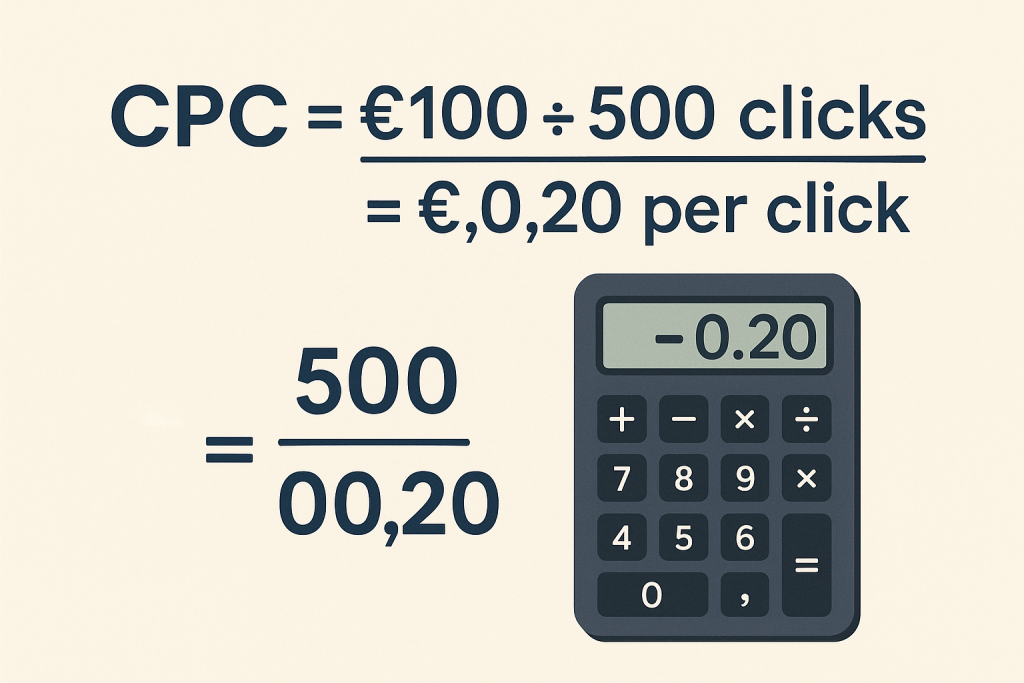
    For example, if you spend £100 on a campaign and receive 500 clicks, your price per click would be £0.20.

    This simple calculation is key to measuring the efficiency of a campaign. If you can lower your CPC while still maintaining or increasing the number of clicks, your campaign becomes more cost-effective, giving you a higher return on investment (ROI).

    Real-life Example:

    Imagine running a PPC campaign with a £1,000 budget. If you receive 2,500 clicks on your ads, the CPC would be:

    CPC = 1000 / 2500 = 0.40

    In this case, the cost per click is £0.40, and by adjusting your strategy, you may be able to reduce this cost while maintaining traffic.

    CPC formula example graphic — £100 ÷ 500 clicks = £0.20 per click; calculator/notation visual.

    Why Is CPC Important for Your Business?

    CPC is crucial because it directly impacts the success of an online ad campaign. Here are some reasons why:

    1. Performance Measurement: A low CPC combined with high click-through rates (CTR) suggests a well-optimised ad campaign.
    2. Budget Control: CPC gives advertisers control over their budgets by allowing them to set maximum bids and daily limits.
    3. Strategic Adjustments: Understanding CPC helps businesses adjust their advertising strategies, optimise bids, and improve their ad quality, leading to better campaign performance.

    What Factors Affect Cost Per Click?

    Several factors determine the final CPC you pay:

    • Ad Rank: A higher Ad Rank lowers your CPC. You can improve your Ad Rank by increasing your bid or improving your ad quality.
    • Competition: The more competition there is for a keyword, the higher the CPC will be.
    • Ad Relevance and Quality Score: Ads with a high Quality Score generally have a lower CPC, as platforms like Google reward relevance and quality.

    How Can You Lower Your CPC?

    Lowering your CPC can significantly improve the ROI of your advertising campaigns. Here are a few expert strategies:

    • Improve Ad Quality: Focus on creating ads that are relevant to your audience, as this will boost your Quality Score.
    • Use Long-Tail Keywords: These are less competitive and often cheaper.
    • Optimise Landing Pages: Ensure your landing pages are aligned with your ads, as this helps improve conversion rates and ad relevance.

    By implementing these strategies, you can drive more traffic at a lower cost, making your campaigns more efficient. Learn more about how we can help by visiting our page on PPC Management Services.

    A person using a laptop showing a price chart, with coffee and Financial Times nearby.

    CPC vs. CPM: What’s the Difference?

    While CPC focuses on paying per click, Cost Per Mille (CPM) charges advertisers based on the number of impressions their ads receive, typically per 1,000 views.

    FeatureCost Per Click (CPC)Cost Per Mille (CPM)
    Payment BasisPay per clickPay per 1,000 impressions
    FocusDriving conversionsBrand exposure
    Best forDirect interaction with adsBuilding brand awareness
    Cost VariationVaries with competitionGenerally fixed

    CPC is ideal when the goal is to drive conversions, while CPM is better for brand awareness campaigns where ad visibility is the primary concern.

    How Does CPC Work in Online Advertising?

    The concept of CPC revolves around an auction system. On platforms like Google Ads, advertisers bid on keywords. The highest bidder doesn’t always win the top spot, however. Here’s what affects CPC:

    • Ad Rank: This is a combination of your bid and the Quality Score (a measure of how relevant and useful your ad is to users).
    • Competition: More advertisers bidding for the same keywords increases the CPC.
    • Relevance: The more relevant your ad is to a search query, the lower your CPC may be.

    CPC in Google Ads: What You Need to Know

    Google Ads operates a real-time auction system, where advertisers bid on keywords. However, the actual CPC you pay is often lower than your maximum bid, thanks to the Ad Rank system. The platform also uses a Quality Score to determine how relevant and effective your ad is, which directly impacts your price per click.

    For more detailed insights on how CPC works in Google Ads, check out our guide on Google Advertising Services by Seek Marketing Partners.

    Benefits of Monitoring Your CPC Regularly

    Keeping an eye on your CPC over time allows you to:

    1. Identify Campaign Efficiency: A falling CPC usually indicates that your ads are becoming more efficient.
    2. Make Data-Driven Decisions: Adjust bids, change keywords, or optimise ad copy based on CPC trends.
    3. Improve ROI: Lowering CPC while maintaining or increasing clicks helps improve your overall return on investment.

    CPC and PPC Management Services: Seek Marketing Partners

    By understanding cost per click (CPC), businesses can better manage their online advertising efforts and make informed decisions that drive more effective results.

    At Seek Marketing Partners, we specialise in helping businesses manage their pay-per-click campaigns, optimising for cost per click to ensure better results. Whether you’re running Google Ads, Facebook Ads, or another platform, we can help lower your CPC while driving targeted traffic.

    You can explore our services on our PPC services page, or get in touch with us to learn how we can help you!

    Clean SMP CTA banner with logo lockup and “Speak to a Strategist” — abstract background only.

    FAQs About Cost Per Click

    Q: What’s a good CPC for my business?

    A: A “good” CPC varies by industry, but the goal is to keep it as low as possible while still driving traffic that converts.

    Q: How can I lower my CPC on Google Ads?

    A: Improve your ad quality, target long-tail keywords, and focus on highly relevant ads to boost your Quality Score.

    Q: How is CPC different from CPM?

    A: CPC charges for clicks, while CPM charges for impressions, typically per 1,000 views.

    Q: Why is CPC important in PPC advertising?

    A: It helps measure campaign efficiency, manage budgets, and allows strategic adjustments to improve ROI.

  • Mastering International PPC Campaigns: Strategies for Success

    Mastering International PPC Campaigns: Strategies for Success

    Reaching customers across borders is important for business growth. International PPC (Pay-Per-Click) campaigns help connect with audiences worldwide, allowing businesses to expand and target new markets precisely. Let’s explore how to create successful international PPC strategies that work well and make the most of your investment across different cultures and languages.

    Key Takeaways

    • Thorough market research is essential for international PPC success
    • Localization goes beyond translation – adapt messaging to cultural nuances
    • Technical considerations include time zones, geo-targeting, and local payment preferences
    • Develop a multilingual keyword strategy tailored to each market
    • Continuously monitor and optimize campaign performance across regions
    • Stay compliant with international legal and regulatory requirements

    Understanding the International PPC Landscape

    Before starting international PPC campaigns, it’s important to understand the global digital advertising landscape. Email marketing services can work well with your PPC efforts, creating a complete digital strategy that engages audiences in different ways. The global digital advertising market is expected to reach $786.2 billion by 2026, growing at a 9% rate each year. This shows there’s a big opportunity for businesses to use international markets through smart PPC campaigns.

    Important facts to consider when planning your international PPC strategy:

    • Google is the biggest search engine globally with an 83% share, but other search engines like Baidu in China and Yandex in Russia are important in their regions
    • 63% of people have clicked on a Google Ad, showing that PPC advertising works well in getting users to engage
    • Mobile advertising will be 77% of digital ad spending in 2024, so it’s important to make campaigns work well on mobile devices
    • The average click-through rate (CTR) for PPC ads across industries is 1.91% on the search network and 0.35% on the display network
    • Video advertising is expected to grow at 11.8% each year from 2021 to 2026, offering new ways to engage international audiences

    Researching Target Markets

    Good market research is crucial for international PPC success. It helps create a targeted and effective campaign strategy. Understanding the importance of digital marketing in different regions can help you adjust your approach to meet local expectations and preferences. This research should include a thorough analysis of each target market, including demographic data, economic indicators, and digital behavior patterns.

    Consider these factors when researching your target markets:

    • Local search engine preferences: While Google is big globally, some markets have strong local alternatives (e.g., Baidu in China, Yandex in Russia)
    • Cultural nuances and language differences: Understand idioms, cultural references, and language variations to create ad copy that connects
    • Consumer behavior and online shopping trends: Analyze preferred payment methods, peak shopping times, and popular product categories
    • Competitive landscape in each target market: Identify key competitors, their strategies, and potential gaps in the market
    • Device usage and internet penetration: Tailor your campaigns to the most commonly used devices and platforms in each region
    • Seasonal trends and local holidays: Plan campaigns around important dates and events specific to each market
    • Regulatory environment: Familiarize yourself with advertising regulations and data protection laws in each country

    Localization Strategies for PPC Success

    Good localization is key to connecting with international audiences and making your PPC campaigns work better. It’s more than just translation – you need to understand local culture, preferences, and consumer behavior. Social media marketing can give useful insights into local preferences and trending topics, helping you improve your PPC strategy for each market.

    Here are some localization tactics to make your international PPC campaigns better:

    • Translate ad copy using professional translators, not machine translation: This ensures your message is culturally appropriate and connects with local audiences
    • Adapt messaging to fit local cultural values: Tailor your value proposition and call-to-action to match cultural norms and expectations
    • Use local domain extensions to build trust: Use country-specific domains (e.g., .co.uk, .de, .fr) to increase credibility and improve local search rankings
    • Customize landing pages for each target market: Create market-specific landing pages that reflect local preferences in design, content, and user experience
    • Include local testimonials and case studies: Show success stories from customers in the target market to build trust and relevance
    • Adapt visual elements: Make sure images, colors, and design elements are culturally appropriate and appealing to local audiences
    • Localize offers and promotions: Tailor discounts, bundles, and special offers to match local buying habits and preferences
    • Use local currencies and measurement units: Show prices in local currency and use appropriate units of measurement to avoid confusion

    Technical Considerations for Global PPC Campaigns

    Managing international PPC campaigns requires attention to technical details that can significantly impact how well your campaigns work and the user experience. By addressing these technical aspects, you can make sure your campaigns are set up correctly for each target market, making them as efficient and effective as possible.

    Here are some key technical things to keep in mind:

    • Set up correct time zones for each target market: Make sure ads are shown at the best times for local audiences by setting accurate time zone settings
    • Account for seasonal variations in different regions: Adjust campaigns to match local seasons, which may be different across hemispheres
    • Use geo-targeting to reach specific locations: Use advanced geo-targeting options to focus your ads on the most relevant regions, cities, or even neighborhoods
    • Consider local payment preferences and currencies: Include popular local payment methods and show prices in local currencies to make it easier for people to buy
    • Implement hreflang tags: Use hreflang attributes to specify the language and regional targeting of your web pages, improving SEO and user experience
    • Optimize page load speeds: Make sure your landing pages load quickly on various devices and connection speeds common in your target markets
    • Adapt to local mobile networks: Consider how common 3G, 4G, or 5G networks are in each market and optimize your mobile experience accordingly
    • Implement proper URL structures: Use country-specific subdomains or subdirectories to organize your international content effectively

    Key Considerations for International PPC Campaigns

    • Research target markets thoroughly before launching
    • Understand local search engine preferences (Google isn’t universal)
    • Use professional translation for ad copy, not machine translation
    • Consider digital tax rates in different countries (2-5% increase in costs)
    • Choose between language-specific, country-specific, or region-specific campaigns
    • Adapt messaging and visuals to local cultural preferences
    • Set up correct time zones for each target market
    • Account for seasonal variations in different regions
    • Prepare localized landing pages for better user experience
    • Research local payment preferences and options

    Keyword Strategy for International Markets

    Developing a good keyword strategy is crucial for international PPC success, as it forms the foundation of your targeting and ad relevance. Email marketing services can help you understand local language nuances and popular topics, informing your keyword research. A well-crafted international keyword strategy ensures your ads appear in front of the right audience at the right time, maximizing your campaign’s effectiveness.

    Consider these tips for developing a robust international keyword strategy:

    • Conduct multilingual keyword research: Use native speakers or professional translators to identify relevant keywords in each target language
    • Adapt keywords for local search intent: Understand how users in different markets phrase their queries and tailor your keywords accordingly
    • Use long-tail keywords for better targeting: Include specific, longer phrases that may have lower competition but higher intent
    • Monitor and refine keywords regularly: Continuously analyze keyword performance and adjust your strategy based on data-driven insights
    • Consider local dialects and regional variations: Account for language differences within countries (e.g., Spanish in Spain vs. Latin America)
    • Leverage keyword tools with international data: Use tools that provide search volume and competition data for your target markets
    • Analyze competitor keywords in each market: Identify gaps and opportunities by studying successful competitors in each region
    • Include local brand names and product terms: Add popular local brands and product names that may be synonymous with your offerings

    Budget Management and Allocation

    Managing your budget well is essential for getting the best results from your international PPC campaigns. With different costs per click (CPC) and competition levels across markets, smart budget allocation can really impact your campaign’s success. Using a data-driven approach to budget management ensures you’re investing your resources where they’ll generate the best returns.

    Consider these strategies for optimal budget management in international PPC campaigns:

    • Allocate budgets based on market potential and competition: Invest more in markets with higher potential returns and adjust based on competitive landscapes
    • Account for regional CPC variations: Be prepared to adjust budgets based on the varying costs per click in different markets
    • Use data-driven insights to optimize spending: Use analytics to identify high-performing markets and campaigns, and allocate budgets accordingly
    • Continuously monitor and adjust budgets based on performance: Regularly review campaign performance and reallocate funds to maximize ROI
    • Implement dayparting strategies: Adjust bids and budgets based on peak performance times in each market
    • Set up automated rules: Use platform features to automatically adjust budgets based on performance thresholds
    • Consider currency fluctuations: Factor in exchange rate variations when managing budgets across multiple currencies
    • Allocate test budgets for new markets: Set aside funds to test and learn in new regions before fully committing resources

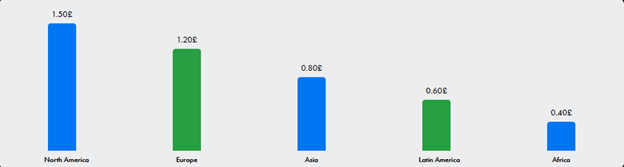
    Average CPC by Region

    CPC Region Graph

    Performance Tracking and Analytics

    Measuring the success of your international PPC campaigns is crucial for ongoing improvement and ensuring a good return on investment. Understanding digital marketing metrics is key to interpreting results and making data-driven decisions. By closely monitoring performance across different markets, you can identify opportunities for improvement and allocate resources more effectively.

    Focus on these key performance indicators (KPIs) to evaluate and optimize your international PPC campaigns:

    • Click-through rate (CTR): Measures the percentage of people who click on your ad after seeing it, indicating ad relevance and appeal
    • Conversion rate: The percentage of clicks that result in desired actions (e.g., purchases, sign-ups), reflecting the effectiveness of your landing pages and offer
    • Cost per acquisition (CPA): The average cost to acquire a customer or conversion, helping you assess the efficiency of your campaigns
    • Return on ad spend (ROAS): Measures the revenue generated for every dollar spent on advertising, indicating overall campaign profitability
    • Quality Score: Google’s rating of the quality and relevance of your keywords and PPC ads, affecting ad rank and CPC
    • Impression share: The percentage of impressions your ads receive compared to the total number of impressions they’re eligible to receive
    • Average position: The average position of your ads on search engine results pages, though less emphasized in recent years
    • Geographic performance: Analyze how your campaigns perform in different regions to identify high-potential markets
    • Device performance: Compare performance across desktop, mobile, and tablet to optimize for each device type

    Navigating Legal and Regulatory Challenges

    International PPC campaigns must follow various legal and regulatory requirements, which can be very different from one country to another. Navigating these challenges is important to avoid potential legal issues, penalties, and damage to your brand reputation. It’s essential to stay informed about the rules in each target market and adapt your PPC strategies accordingly.

    Be aware of the following legal and regulatory considerations when running international PPC campaigns:

    • Data privacy regulations (e.g., GDPR in Europe): Make sure you comply with data protection laws, including getting proper consent for data collection and processing
    • Advertising restrictions for specific industries: Be aware of limitations on advertising certain products or services (e.g., alcohol, pharmaceuticals) in different countries
    • Local tax implications: Understand the tax obligations related to digital advertising in each market, including potential digital services taxes
    • Consumer protection laws: Comply with local regulations regarding advertising claims, pricing transparency, and consumer rights
    • Intellectual property rights: Respect trademarks and copyrights when using keywords and ad content in different markets
    • Age restrictions: Follow age-related advertising regulations, particularly for products like alcohol or gambling
    • Language requirements: Some countries require the use of local languages in advertising or require translations to be available
    • Ad disclosure requirements: Follow guidelines for clearly identifying paid advertisements in each market

    Continuous Optimization and Scaling

    Successful international PPC campaigns need ongoing improvement and expansion to stay effective and take advantage of new opportunities. The digital advertising landscape is always changing, with shifts in consumer behavior, technology, and market conditions. By always working to optimize and strategically scale your campaigns, you can stay ahead of the competition and get the best return on your PPC investments.

    Consider these strategies for ongoing optimization and scaling of your international PPC campaigns:

    • Regularly review and update ad copy: Keep your messaging fresh and relevant by updating ad copy based on performance data and seasonal trends
    • Test different ad formats and extensions: Try various ad formats (e.g., responsive search ads, video ads) and extensions to improve engagement and conversion rates
    • Expand into new markets based on performance data: Use insights from existing campaigns to identify promising new markets for expansion
    • Leverage successful strategies across regions: Apply learnings from high-performing campaigns to other markets, adapting for local nuances
    • Implement advanced bidding strategies: Use machine learning-powered bidding strategies to optimize for specific goals (e.g., target ROAS, target CPA)
    • Refine audience targeting: Continuously refine your audience segments based on performance data and customer insights
    • Optimize landing pages: A/B test landing pages to improve conversion rates and user experience across different markets
    • Stay informed about platform updates: Keep up with new features and best practices from advertising platforms to leverage the latest tools and techniques

    Conclusion

    Mastering international PPC campaigns requires a mix of strategic planning, cultural awareness, and technical know-how. By thoroughly researching target markets, localizing your approach, and continuously improving your campaigns, you can succeed in the global digital advertising landscape. Remember to use complementary strategies like email marketing and social media marketing to create a complete international digital marketing strategy that engages audiences in multiple ways and drives sustainable growth for your business.

    As you start your international PPC journey, keep in mind that success often comes from being willing to adapt and learn from each market’s unique characteristics. By staying informed about global digital trends and remaining flexible in your approach, you can create PPC campaigns that connect with audiences worldwide and drive meaningful results for your business. The key to long-term success is continuous learning, testing, and refinement, always keeping the needs and preferences of your target audience as the most important part of your strategy. With persistence and a data-driven approach, your international PPC campaigns can become a powerful tool for global business growth and market expansion.

  • Remarketing vs. Retargeting: Understanding the Key Differences

    Remarketing vs. Retargeting: Understanding the Key Differences

    Remarketing and retargeting are two powerful strategies in digital marketing. While often used interchangeably, these techniques have distinct characteristics and applications that can significantly impact your marketing efforts. By understanding and using both approaches, businesses can create a comprehensive strategy that drives engagement, boosts conversions, and builds long-term customer relationships. Let’s explore remarketing vs. retargeting and see how these strategies can help you achieve your business goals.

    Key Takeaways

    AspectRemarketingRetargeting
    Primary FocusRe-engaging past customers and leadsTargeting recent website visitors
    Channels UsedEmail, search ads, display adsDisplay ads, social media ads
    Targeting MethodCustomer data, purchase historyWebsite cookies, online behavior
    Time FrameLong-term relationship buildingShort-term conversion focus
    Key BenefitIncreased brand loyaltyHigher conversion rates

    Understanding the Basics: What Are Remarketing and Retargeting?

    Before we look at the differences, let’s understand these two concepts:

    Remarketing: Reconnecting with Your Audience

    Remarketing is a broader strategy that focuses on re-engaging with people who have previously interacted with your brand. This can include past customers, newsletter subscribers, or anyone who has shown interest in your products or services. Email marketing is a classic example of remarketing, where you send targeted messages to your existing customer base. Remarketing campaigns often use customer data, purchase history, and demographic information to create personalized communications that nurture long-term relationships and encourage repeat business.

    Retargeting: Precision-Focused Advertising

    Retargeting is a more specific form of remarketing that mainly involves showing ads to people who have visited your website or interacted with your content online. This strategy uses cookies to track user behavior and serve tailored ads across various platforms and websites. PPC management often includes retargeting as a key component of its strategy. Retargeting is particularly effective for recapturing the attention of potential customers who have shown interest but haven’t yet converted, by reminding them of products or services they’ve viewed and encouraging them to complete their purchase.

    Key Differences: Remarketing vs. Retargeting

    While remarketing and retargeting share the common goal of re-engaging audiences, they differ in several key aspects:

    Retargeting

    Focuses on specific online audiences who have interacted with your website, using cookies to track user behavior and serve tailored ads across various platforms. This precision-focused approach aims to recapture the attention of potential customers who have shown interest but haven’t yet converted.
    Remarketing

    Targets a broader audience across multiple channels, including offline interactions. This strategy leverages customer data, purchase history, and demographic information to create personalized communications that nurture long-term relationships and encourage repeat business.
    Retargeting Goals

    Short-term conversion focus, primarily using display and social media ads to remind users of products or services they’ve viewed and encouraging them to complete their purchase. This approach is particularly effective for driving immediate actions and boosting conversion rates.
    Remarketing Goals

    Long-term relationship building, using email, search, and display advertising to maintain brand awareness and foster customer loyalty. This strategy aims to keep your brand top-of-mind and encourage repeat purchases over an extended period, ultimately increasing customer lifetime value.

    1. Audience Scope

    Remarketing typically casts a wider net, targeting customers who have previously engaged with your brand through various channels. This could include in-store purchases, email interactions, or phone inquiries. The audience for remarketing campaigns often includes a broader range of individuals, including past customers, newsletter subscribers, and those who have shown interest in your products or services across multiple touchpoints. This approach allows for a more comprehensive engagement strategy that can nurture relationships at various stages of the customer lifecycle.

    Retargeting, however, focuses specifically on online interactions, such as website visits or engagement with digital content. This strategy hones in on users who have demonstrated recent interest in your offerings by browsing your website, viewing specific products, or interacting with your online ads. By targeting these warm leads, retargeting aims to capitalize on existing interest and guide potential customers towards conversion.

    2. Channels Used

    Remarketing uses a variety of channels, including email, search ads, and display advertising. Social media marketing can also play a significant role in remarketing efforts. This multi-channel approach allows businesses to reach their audience through diverse touchpoints, creating a more comprehensive and cohesive brand experience. For example, a remarketing campaign might include targeted email newsletters, personalized social media ads, and search engine marketing efforts tailored to past customer behavior.

    Retargeting, on the other hand, primarily relies on display ads and social media platforms to reach its audience. This focus on digital advertising channels allows for precise targeting based on recent online behavior. Retargeting ads often appear on websites within an ad network or on social media platforms, reminding users of products or services they’ve recently viewed. This approach leverages the power of visual reminders and strategic ad placement to encourage users to return to your website and complete their desired action.

    3. Targeting Methods

    Remarketing often segments audiences based on past purchases, customer loyalty, or demographic information. This approach allows for more nuanced targeting that takes into account a customer’s history with your brand and their overall value. For instance, a remarketing campaign might create different segments for first-time buyers, repeat customers, and high-value clients, tailoring the messaging and offers to each group’s specific characteristics and needs.

    Retargeting uses more specific data points, such as pages visited on your website, items added to a shopping cart, or time spent on certain content. This granular level of targeting allows for highly personalized ad experiences that directly relate to a user’s recent interactions with your brand. For example, a retargeting campaign might show ads featuring products that a user has recently viewed or offer a discount on items left in an abandoned shopping cart, creating a sense of urgency and relevance that can drive conversions.

    The Power of Remarketing: Building Long-Term Relationships

    Remarketing offers several unique advantages that can help businesses foster lasting connections with their audience:

    1. Increased Brand Awareness

    By consistently re-engaging with past customers and leads, remarketing keeps your brand top-of-mind. This increased visibility can lead to better brand recall and recognition over time. Remarketing campaigns can reinforce your brand message, values, and unique selling propositions, helping to solidify your position in the market and differentiate you from competitors. Over time, this consistent presence can build trust and familiarity, making customers more likely to choose your brand when they’re ready to make a purchase.

    2. Higher Conversion Rates

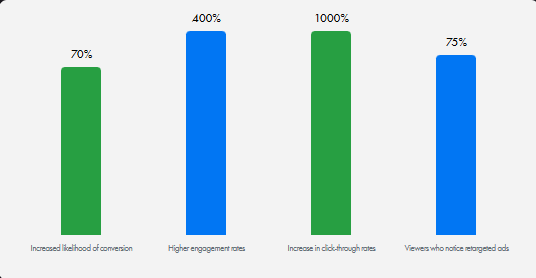
    Remarketing allows you to target people who are already familiar with your brand, making them more likely to convert. According to industry data, remarketing can lead to conversion rates up to 70% higher than standard advertising. This significant boost in conversions can be attributed to the fact that remarketing audiences have already shown interest in your products or services, making them more receptive to your marketing messages. By tailoring your offers and content to these warm leads, you can effectively guide them through the sales funnel and increase the likelihood of a successful conversion.

    3. Cost-Effective Advertising

    Since remarketing targets a more qualified audience, it often results in lower cost-per-acquisition (CPA) rates. This makes it an efficient use of your marketing budget, especially for SEO and paid advertising efforts. Remarketing campaigns typically have higher click-through rates and conversion rates compared to standard display ads, which can lead to a better return on investment (ROI) for your advertising spend. Additionally, because you’re targeting users who have already shown interest in your brand, you’re less likely to waste resources on uninterested parties, further improving the cost-effectiveness of your campaigns.

    The Advantages of Retargeting: Precision and Performance

    Retargeting offers its own set of benefits, particularly for businesses looking to drive immediate results:

    1. Precise Audience Targeting

    Retargeting allows you to reach people who have shown a clear interest in your products or services through their online behavior. This precision can lead to higher engagement rates and more efficient ad spend. By focusing on users who have recently interacted with your website or digital content, retargeting ensures that your ads are shown to a highly relevant audience. This level of targeting precision can significantly improve the effectiveness of your advertising efforts, as you’re reaching individuals who are already familiar with your brand and potentially closer to making a purchase decision.

    2. Improved ROI on Ad Spend

    With its focus on warm leads, retargeting often delivers a strong return on investment. Studies have shown that retargeted ads can have click-through rates up to 10 times higher than standard display ads. This increased engagement translates to more efficient use of your advertising budget, as you’re more likely to convert interested users into customers. Additionally, because retargeting allows you to tailor your messaging based on specific user actions, you can create more compelling and relevant ads that are more likely to resonate with your audience and drive conversions.

    3. Enhanced Customer Journey Mapping

    Retargeting provides valuable insights into customer behavior and preferences, allowing you to refine your web design and overall marketing strategy for better results. By analyzing how users interact with your retargeting ads and tracking their subsequent actions on your website, you can gain a deeper understanding of the customer journey. This data can inform decisions about website optimization, content creation, and product development, helping you to create a more seamless and effective path to conversion for your potential customers.

    Best Practices for Effective Remarketing Campaigns

    Retargeting Advertising Effectiveness

    To make the most of your remarketing efforts, consider these proven strategies:

    “Retargeting is one of the most effective ways to bring back visitors who haven’t converted. It keeps your brand top-of-mind and encourages potential customers to return and complete their purchase. When implemented correctly, retargeting can significantly boost your conversion rates and ROI, making it an essential tool in any digital marketer’s arsenal.”

    — Digital Marketing Expert

    Increased Brand Awareness

    Keep your brand in front of bounced traffic after they leave your website, reinforcing your message and increasing the likelihood of future engagement.

    Higher Conversion Rates

    Retargeted customers are 70% more likely to convert, capitalizing on their existing interest and guiding them towards a purchase decision.

    Better ROI

    Retargeting can lower your cost per acquisition by up to 44%, making it a highly cost-effective strategy for driving conversions and maximizing your marketing budget.

    • Segment your audience based on behavior and preferences, creating tailored campaigns that resonate with specific user groups. This might involve segmenting by past purchase behavior, engagement level, or demographic characteristics.
    • Create compelling ad content that resonates with each segment, using personalized messaging and visuals that speak directly to the user’s interests and needs. Consider using dynamic content that automatically adjusts based on the user’s previous interactions with your brand.
    • Set appropriate frequency caps to avoid ad fatigue, ensuring that your audience doesn’t become overwhelmed or annoyed by seeing your ads too often. Finding the right balance between visibility and overexposure is crucial for maintaining a positive brand perception.
    • Use a mix of channels for a comprehensive remarketing approach, including email, display ads, social media, and search advertising. This multi-channel strategy helps reinforce your message and increases the chances of re-engaging your audience.
    • Continuously test and refine your messaging and targeting, using A/B testing and performance analytics to optimize your campaigns over time. This data-driven approach allows you to identify what works best for different segments and continually improve your remarketing efforts.

    Optimizing Your Retargeting Strategies

    To maximize the impact of your retargeting campaigns, consider implementing these tactics:

    1. Use Dynamic Ads

    Dynamic retargeting ads automatically show products or services that a user has previously viewed on your website. This personalized approach can significantly boost engagement and conversion rates. By leveraging user data and real-time inventory information, dynamic ads ensure that the content displayed is highly relevant to each individual user. For example, an e-commerce site might show ads featuring items a user has recently browsed, along with complementary products or special offers.

    2. Implement Cross-Device Retargeting

    With users accessing content across multiple devices, it’s crucial to maintain a consistent retargeting experience. Cross-device retargeting ensures your ads reach users regardless of the device they’re using. This approach involves tracking user behavior across desktop computers, smartphones, and tablets, allowing you to deliver a seamless advertising experience. By recognizing users across different devices, you can maintain the context of their interactions with your brand and provide more relevant, timely messaging.

    3. A/B Testing for Continuous Improvement

    Regularly test different ad creatives, messaging, and targeting parameters to optimize your retargeting campaigns. This data-driven approach will help you refine your strategy and improve performance over time. A/B testing allows you to compare different versions of your ads to determine which elements resonate best with your audience. You might test variations in ad copy, images, call-to-action buttons, or even landing page designs to identify the most effective combinations for driving conversions.

    Measuring Success: Key Metrics for Remarketing and Retargeting

    To gauge the effectiveness of your remarketing and retargeting efforts, focus on these essential metrics:

    Key Differences: Retargeting vs Remarketing

    • Retargeting focuses on serving ads to people who have visited your website, utilizing cookies and pixel tracking to deliver highly targeted display or social media advertisements.
    • Remarketing typically involves re-engaging customers through email campaigns, leveraging customer data and purchase history to create personalized messaging and offers.
    • Retargeting is more immediate, often showing ads to users shortly after they leave your website, capitalizing on recent interest and intent.
    • Remarketing can be a longer-term strategy, nurturing leads and maintaining relationships with customers over time through various touchpoints.
    • Both aim to increase conversions, but retargeting often focuses on completing a specific action (e.g., finalizing a purchase), while remarketing may have broader goals like brand awareness and customer loyalty.

    In conclusion, both remarketing and retargeting are powerful tools in a digital marketer’s toolkit. While they share similar goals, their unique approaches cater to different aspects of the customer journey. By understanding the strengths of each strategy and implementing them effectively, businesses can create a comprehensive marketing approach that drives engagement, boosts conversions, and builds lasting customer relationships. Remember, the key to success lies in continuous testing, refinement, and adaptation to your audience’s evolving needs and behaviors.

  • Dynamic vs. Responsive Search Ads: Which Works Best?

    Dynamic vs. Responsive Search Ads: Which Works Best?

    When setting up PPC campaigns, a key decision is choosing dynamic search ads vs responsive search ads. Both options improve ad performance, but they work differently. Dynamic search ads (DSAs) automatically generate headlines based on website content, making them ideal for businesses with extensive pages. Responsive search ads (RSAs) allow advertisers to provide multiple headlines and descriptions, optimising the best-performing combinations with Google. Knowing the differences between dynamic search ads vs responsive search ads helps businesses make smarter ad choices.

    Key Takeaways

    • DSAs automatically match website content to user queries.
    • RSAs let advertisers test multiple headlines for better optimisation.
    • Dynamic search ads vs responsive search ads depend on campaign goals and control preferences.
    • DSAs work best for content-rich websites, while RSAs are better for flexible messaging.
    • Choosing RSA or DSA correctly maximises reach, engagement, and ad performance.

    How Dynamic Search Ads Work?

    DSAs simplify the ad creation by automatically generating headlines and targeting relevant searches based on a website’s content. Instead of relying on predefined keywords, DSAs use Google’s index to scan website pages and match user queries with the most appropriate landing pages.

    Automated Targeting and Headline Generation

    Unlike traditional search ads, which require advertisers to select keywords and write multiple headlines manually, dynamic search ads use automation to generate ad content dynamically. Here’s how the process works:

    • Website Scanning: Google continuously crawls a site to understand its structure, content, and key topics.
    • Query Matching: When a user searches for something relevant, Google identifies the best-matching page on the site.
    • Dynamic Headline Creation: Based on the user’s search intent, Google dynamically generates a headline that closely matches the search query.
    • Ad Display: The ad is served to the user with the generated headline and the advertiser’s prewritten description.

    For example, if an online retailer sells different types of running shoes and a user searches for “best trail running shoes,” DSAs will automatically generate an ad with a relevant headline and direct the user to the corresponding product page.

    Benefits of Dynamic Search Ads

    Many businesses prefer DSAs because of their ability to automate ad creation while expanding search coverage. Key advantages include:

    • Minimal Setup: No need to create separate ads or keyword lists for every product or service.
    • Increased Reach: DSAs capture long-tail search terms often missed in manual campaigns.
    • Relevant Headlines: The dynamically generated headlines align closely with users’ search terms, improving ad relevance and engagement.
    • Time Savings: Businesses can focus more on strategy rather than ad maintenance by reducing the need for manual keyword research.

    Limitations of Dynamic Search Ads

    While DSAs offer automation and efficiency, they also come with some drawbacks:

    • Less Control: Advertisers cannot manually adjust headlines, which may lead to unintended messaging.
    • Potential Irrelevance: If a website is not well-optimised, Google may pull inaccurate content and serve ads for unrelated queries.
    • Lower Conversion Rates: Since DSAs rely on Google’s AI for matching, some ads may not be as precisely targeted as traditional keyword-based campaigns.

    How Responsive Search Ads Work

    Unlike DSAs, which rely on Google’s AI to generate headlines, RSAs give advertisers more control while still leveraging automation. RSAs allow advertisers to provide multiple headlines and descriptions, and Google’s machine learning determines the best combinations based on performance.

    AI-Driven Ad Customisation

    RSAs are designed to increase ad relevance by dynamically testing different headline and description combinations. Here’s how they function:

    • Advertiser Input: The advertiser writes up to 15 headlines and 4 descriptions for a single ad.
    • Automated Testing: Google’s algorithm mixes and matches these elements to create thousands of possible ad variations.
    • Performance optimisation: Over time, Google prioritises the best-performing combinations based on click-through rates, user engagement, and conversions.
    • Dynamic Adjustments: Google tailors ad variations to different users based on device type, location, and past behaviour.

    For instance, an e-commerce store selling tech gadgets may provide multiple headlines like:

    • “Shop the Latest Smartphones”
    • “Exclusive Discounts on Laptops”
    • “Upgrade Your Tech Today”

    Google then determines which combinations resonate best with users searching for related products.

    Advantages of Responsive Search Ads

    RSAs offer more flexibility and allow advertisers to optimise their messaging through AI-driven testing. Benefits include:

    • Higher Click-Through Rate (CTR): Google’s AI continuously refines ad combinations to improve engagement.
    • More Flexibility – Advertisers can test multiple messages within one ad, reducing the need for manual A/B testing.
    • Stronger personalisation—RSAs adjust ad copy based on user intent, location, and search behaviour, making it more relevant to each searcher.
    • Better Performance Insights: Google provides data on which headlines and descriptions perform best, helping advertisers refine their messaging strategy.

    Challenges of Responsive Search Ads

    While RSAs are powerful, they require more advertiser input and depend heavily on Google’s AI. Common challenges include:

    • Requires More Input – Advertisers must provide multiple headlines and descriptions, which can be time-consuming.
    • Algorithm Dependency – Google controls which combinations are displayed, limiting direct advertiser control over final ad appearances.
    • Performance Variability – The success of RSAs depends on Google’s ability to optimise effectively, which may not always align with advertiser goals.

    Dynamic Search Ads vs Responsive Search Ads: Key Differences

    FactorDSAsRSAs
    Ad CreationGoogle auto-generates headlines from site contentAdvertisers provide multiple headlines/descriptions
    TargetingNo keywords needed – matches queries to contentUses keywords and AI to optimise ad variations
    ControlLess control: Headlines are automatedMore control: Advertisers set messaging
    CustomisationLimited – Ads are dynamically generatedHigh – Google tests different ad combinations
    Best ForLarge, content-rich websitesAdvertisers optimising messaging for different audiences
    OptimisationGoogle selects landing pages and headlinesGoogle tests and optimises combinations based on performance

    Best Use Cases for DSAs

    Websites with a Lot of Content That Changes Frequently

    For businesses with large or frequently updated websites, Dynamic Search Ads offer a streamlined way to target relevant searches without manually managing an extensive list of keywords.

    Businesses Wanting to Save Time on Keyword Research and Ad Creation

    Dynamic Search Ads can help businesses reduce manual efforts while reaching potential customers. DSAs automatically generate ad headlines and match searches to relevant landing pages.

    Companies Seeking to Expand Reach Beyond Standard Keyword-Based Targeting

    DSAs go beyond keyword-based targeting by scanning website content and displaying ads for relevant queries—even if they weren’t included in the keyword list.

    Best Use Cases for RSAs

    Advertisers Who Want More Control Over Ad Copy

    Responsive Search Ads give advertisers complete control over messaging while benefiting from machine-learning optimisation.

    Businesses Looking to optimise Messaging Through AI-Driven Testing

    RSAs allow businesses to test multiple value propositions and calls-to-action, optimising the highest-performing variations.

    Marketers Seeking Better Performance Insights and Audience Targeting

    RSAs are great for segmented targeting and ad copy tailored to user behavior, device type, and location.

    Dynamic Search Ads vs Responsive Search Ads: Which One Maximises Ad Performance?

    Best Practices for Dynamic Search Ads

    • Ensure website content is clear, structured, and SEO-friendly.
    • Exclude irrelevant pages to prevent mismatched ad placements.
    • Regularly check search term reports to refine ad targeting.

    Best Practices for Responsive Search Ads

    • Use diverse headlines to maximise Google’s machine learning optimisation.
    • Keep descriptions concise, relevant, and compelling.
    • Monitor performance data and adjust underperforming elements.

    Final Thoughts: Dynamic Search Ads vs Responsive Search Ads

    The choice between RSA or DSA hinges on your marketing objectives. Dynamic Search Ads are best suited for businesses with content-heavy websites, providing automated targeting and headline generation. In contrast, Responsive Search Ads offer more flexibility and ad optimisation through AI-powered testing. Recognising the unique advantages of each type can lead to improved ad performance, engagement, and traffic.

    Ready to take your ad strategy to the next level? Get in touch with Seek Marketing Partners for expert DSA and RSA solutions today!