Remarketing and retargeting are two powerful strategies in digital marketing. While often used interchangeably, these techniques have distinct characteristics and applications that can significantly impact your marketing efforts. By understanding and using both approaches, businesses can create a comprehensive strategy that drives engagement, boosts conversions, and builds long-term customer relationships. Let’s explore remarketing vs. retargeting and see how these strategies can help you achieve your business goals.

Key Takeaways
| Aspect | Remarketing | Retargeting |
| Primary Focus | Re-engaging past customers and leads | Targeting recent website visitors |
| Channels Used | Email, search ads, display ads | Display ads, social media ads |
| Targeting Method | Customer data, purchase history | Website cookies, online behavior |
| Time Frame | Long-term relationship building | Short-term conversion focus |
| Key Benefit | Increased brand loyalty | Higher conversion rates |
Understanding the Basics: What Are Remarketing and Retargeting?
Before we look at the differences, let’s understand these two concepts:
Remarketing: Reconnecting with Your Audience
Remarketing is a broader strategy that focuses on re-engaging with people who have previously interacted with your brand. This can include past customers, newsletter subscribers, or anyone who has shown interest in your products or services. Email marketing is a classic example of remarketing, where you send targeted messages to your existing customer base. Remarketing campaigns often use customer data, purchase history, and demographic information to create personalized communications that nurture long-term relationships and encourage repeat business.
Retargeting: Precision-Focused Advertising
Retargeting is a more specific form of remarketing that mainly involves showing ads to people who have visited your website or interacted with your content online. This strategy uses cookies to track user behavior and serve tailored ads across various platforms and websites. PPC management often includes retargeting as a key component of its strategy. Retargeting is particularly effective for recapturing the attention of potential customers who have shown interest but haven’t yet converted, by reminding them of products or services they’ve viewed and encouraging them to complete their purchase.
Key Differences: Remarketing vs. Retargeting
While remarketing and retargeting share the common goal of re-engaging audiences, they differ in several key aspects:
| Retargeting Focuses on specific online audiences who have interacted with your website, using cookies to track user behavior and serve tailored ads across various platforms. This precision-focused approach aims to recapture the attention of potential customers who have shown interest but haven’t yet converted. | Remarketing Targets a broader audience across multiple channels, including offline interactions. This strategy leverages customer data, purchase history, and demographic information to create personalized communications that nurture long-term relationships and encourage repeat business. | Retargeting Goals Short-term conversion focus, primarily using display and social media ads to remind users of products or services they’ve viewed and encouraging them to complete their purchase. This approach is particularly effective for driving immediate actions and boosting conversion rates. | Remarketing Goals Long-term relationship building, using email, search, and display advertising to maintain brand awareness and foster customer loyalty. This strategy aims to keep your brand top-of-mind and encourage repeat purchases over an extended period, ultimately increasing customer lifetime value. |
1. Audience Scope
Remarketing typically casts a wider net, targeting customers who have previously engaged with your brand through various channels. This could include in-store purchases, email interactions, or phone inquiries. The audience for remarketing campaigns often includes a broader range of individuals, including past customers, newsletter subscribers, and those who have shown interest in your products or services across multiple touchpoints. This approach allows for a more comprehensive engagement strategy that can nurture relationships at various stages of the customer lifecycle.
Retargeting, however, focuses specifically on online interactions, such as website visits or engagement with digital content. This strategy hones in on users who have demonstrated recent interest in your offerings by browsing your website, viewing specific products, or interacting with your online ads. By targeting these warm leads, retargeting aims to capitalize on existing interest and guide potential customers towards conversion.
2. Channels Used
Remarketing uses a variety of channels, including email, search ads, and display advertising. Social media marketing can also play a significant role in remarketing efforts. This multi-channel approach allows businesses to reach their audience through diverse touchpoints, creating a more comprehensive and cohesive brand experience. For example, a remarketing campaign might include targeted email newsletters, personalized social media ads, and search engine marketing efforts tailored to past customer behavior.
Retargeting, on the other hand, primarily relies on display ads and social media platforms to reach its audience. This focus on digital advertising channels allows for precise targeting based on recent online behavior. Retargeting ads often appear on websites within an ad network or on social media platforms, reminding users of products or services they’ve recently viewed. This approach leverages the power of visual reminders and strategic ad placement to encourage users to return to your website and complete their desired action.

3. Targeting Methods
Remarketing often segments audiences based on past purchases, customer loyalty, or demographic information. This approach allows for more nuanced targeting that takes into account a customer’s history with your brand and their overall value. For instance, a remarketing campaign might create different segments for first-time buyers, repeat customers, and high-value clients, tailoring the messaging and offers to each group’s specific characteristics and needs.
Retargeting uses more specific data points, such as pages visited on your website, items added to a shopping cart, or time spent on certain content. This granular level of targeting allows for highly personalized ad experiences that directly relate to a user’s recent interactions with your brand. For example, a retargeting campaign might show ads featuring products that a user has recently viewed or offer a discount on items left in an abandoned shopping cart, creating a sense of urgency and relevance that can drive conversions.
The Power of Remarketing: Building Long-Term Relationships
Remarketing offers several unique advantages that can help businesses foster lasting connections with their audience:
1. Increased Brand Awareness
By consistently re-engaging with past customers and leads, remarketing keeps your brand top-of-mind. This increased visibility can lead to better brand recall and recognition over time. Remarketing campaigns can reinforce your brand message, values, and unique selling propositions, helping to solidify your position in the market and differentiate you from competitors. Over time, this consistent presence can build trust and familiarity, making customers more likely to choose your brand when they’re ready to make a purchase.
2. Higher Conversion Rates
Remarketing allows you to target people who are already familiar with your brand, making them more likely to convert. According to industry data, remarketing can lead to conversion rates up to 70% higher than standard advertising. This significant boost in conversions can be attributed to the fact that remarketing audiences have already shown interest in your products or services, making them more receptive to your marketing messages. By tailoring your offers and content to these warm leads, you can effectively guide them through the sales funnel and increase the likelihood of a successful conversion.
3. Cost-Effective Advertising
Since remarketing targets a more qualified audience, it often results in lower cost-per-acquisition (CPA) rates. This makes it an efficient use of your marketing budget, especially for SEO and paid advertising efforts. Remarketing campaigns typically have higher click-through rates and conversion rates compared to standard display ads, which can lead to a better return on investment (ROI) for your advertising spend. Additionally, because you’re targeting users who have already shown interest in your brand, you’re less likely to waste resources on uninterested parties, further improving the cost-effectiveness of your campaigns.
The Advantages of Retargeting: Precision and Performance
Retargeting offers its own set of benefits, particularly for businesses looking to drive immediate results:
1. Precise Audience Targeting
Retargeting allows you to reach people who have shown a clear interest in your products or services through their online behavior. This precision can lead to higher engagement rates and more efficient ad spend. By focusing on users who have recently interacted with your website or digital content, retargeting ensures that your ads are shown to a highly relevant audience. This level of targeting precision can significantly improve the effectiveness of your advertising efforts, as you’re reaching individuals who are already familiar with your brand and potentially closer to making a purchase decision.
2. Improved ROI on Ad Spend
With its focus on warm leads, retargeting often delivers a strong return on investment. Studies have shown that retargeted ads can have click-through rates up to 10 times higher than standard display ads. This increased engagement translates to more efficient use of your advertising budget, as you’re more likely to convert interested users into customers. Additionally, because retargeting allows you to tailor your messaging based on specific user actions, you can create more compelling and relevant ads that are more likely to resonate with your audience and drive conversions.
3. Enhanced Customer Journey Mapping
Retargeting provides valuable insights into customer behavior and preferences, allowing you to refine your web design and overall marketing strategy for better results. By analyzing how users interact with your retargeting ads and tracking their subsequent actions on your website, you can gain a deeper understanding of the customer journey. This data can inform decisions about website optimization, content creation, and product development, helping you to create a more seamless and effective path to conversion for your potential customers.
Best Practices for Effective Remarketing Campaigns
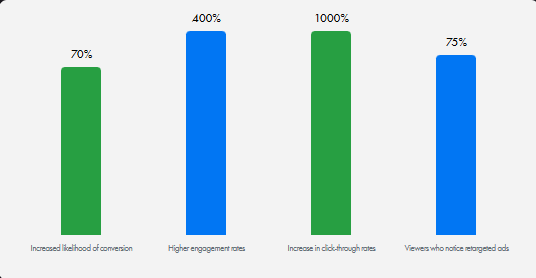
Retargeting Advertising Effectiveness
To make the most of your remarketing efforts, consider these proven strategies:
“Retargeting is one of the most effective ways to bring back visitors who haven’t converted. It keeps your brand top-of-mind and encourages potential customers to return and complete their purchase. When implemented correctly, retargeting can significantly boost your conversion rates and ROI, making it an essential tool in any digital marketer’s arsenal.”
— Digital Marketing Expert
Increased Brand Awareness
Keep your brand in front of bounced traffic after they leave your website, reinforcing your message and increasing the likelihood of future engagement.
Higher Conversion Rates
Retargeted customers are 70% more likely to convert, capitalizing on their existing interest and guiding them towards a purchase decision.
Better ROI
Retargeting can lower your cost per acquisition by up to 44%, making it a highly cost-effective strategy for driving conversions and maximizing your marketing budget.
- Segment your audience based on behavior and preferences, creating tailored campaigns that resonate with specific user groups. This might involve segmenting by past purchase behavior, engagement level, or demographic characteristics.
- Create compelling ad content that resonates with each segment, using personalized messaging and visuals that speak directly to the user’s interests and needs. Consider using dynamic content that automatically adjusts based on the user’s previous interactions with your brand.
- Set appropriate frequency caps to avoid ad fatigue, ensuring that your audience doesn’t become overwhelmed or annoyed by seeing your ads too often. Finding the right balance between visibility and overexposure is crucial for maintaining a positive brand perception.
- Use a mix of channels for a comprehensive remarketing approach, including email, display ads, social media, and search advertising. This multi-channel strategy helps reinforce your message and increases the chances of re-engaging your audience.
- Continuously test and refine your messaging and targeting, using A/B testing and performance analytics to optimize your campaigns over time. This data-driven approach allows you to identify what works best for different segments and continually improve your remarketing efforts.
Optimizing Your Retargeting Strategies
To maximize the impact of your retargeting campaigns, consider implementing these tactics:
1. Use Dynamic Ads
Dynamic retargeting ads automatically show products or services that a user has previously viewed on your website. This personalized approach can significantly boost engagement and conversion rates. By leveraging user data and real-time inventory information, dynamic ads ensure that the content displayed is highly relevant to each individual user. For example, an e-commerce site might show ads featuring items a user has recently browsed, along with complementary products or special offers.
2. Implement Cross-Device Retargeting
With users accessing content across multiple devices, it’s crucial to maintain a consistent retargeting experience. Cross-device retargeting ensures your ads reach users regardless of the device they’re using. This approach involves tracking user behavior across desktop computers, smartphones, and tablets, allowing you to deliver a seamless advertising experience. By recognizing users across different devices, you can maintain the context of their interactions with your brand and provide more relevant, timely messaging.
3. A/B Testing for Continuous Improvement
Regularly test different ad creatives, messaging, and targeting parameters to optimize your retargeting campaigns. This data-driven approach will help you refine your strategy and improve performance over time. A/B testing allows you to compare different versions of your ads to determine which elements resonate best with your audience. You might test variations in ad copy, images, call-to-action buttons, or even landing page designs to identify the most effective combinations for driving conversions.
Measuring Success: Key Metrics for Remarketing and Retargeting
To gauge the effectiveness of your remarketing and retargeting efforts, focus on these essential metrics:

Key Differences: Retargeting vs Remarketing
- Retargeting focuses on serving ads to people who have visited your website, utilizing cookies and pixel tracking to deliver highly targeted display or social media advertisements.
- Remarketing typically involves re-engaging customers through email campaigns, leveraging customer data and purchase history to create personalized messaging and offers.
- Retargeting is more immediate, often showing ads to users shortly after they leave your website, capitalizing on recent interest and intent.
- Remarketing can be a longer-term strategy, nurturing leads and maintaining relationships with customers over time through various touchpoints.
- Both aim to increase conversions, but retargeting often focuses on completing a specific action (e.g., finalizing a purchase), while remarketing may have broader goals like brand awareness and customer loyalty.
In conclusion, both remarketing and retargeting are powerful tools in a digital marketer’s toolkit. While they share similar goals, their unique approaches cater to different aspects of the customer journey. By understanding the strengths of each strategy and implementing them effectively, businesses can create a comprehensive marketing approach that drives engagement, boosts conversions, and builds lasting customer relationships. Remember, the key to success lies in continuous testing, refinement, and adaptation to your audience’s evolving needs and behaviors.