Category: PPC Strategy & Scaling

  • Landing Page Optimisation Tips for PPC Campaign Success

    Landing Page Optimisation Tips for PPC Campaign Success

    Pay-per-click advertising is one of the fastest and most controllable ways to generate high-intent traffic, leads, and revenue – but only when campaigns are built to convert, not just attract clicks. 

    While many marketers invest heavily in keywords, bidding strategies, and ad creatives, they often overlook the most important element of PPC success, the landing page. A well-optimised landing page can be the difference between a profitable campaign and wasted ad spend.

    Optimising landing pages is not just about design or copywriting; it’s about understanding user intent and delivering a seamless experience that encourages visitors to take action. When done correctly, it improves conversion rates, lowers cost per acquisition, and increases overall return on investment. 

    In this article, we will explore proven landing page optimisation strategies for high-converting PPC campaigns and highlight how marketing tools can play a critical role in achieving consistent results.

    The Role of Landing Pages in PPC Campaign Performance

    A landing page is the first real interaction a user has with your brand after clicking on a paid ad. Unlike a homepage or blog page, a PPC landing page is designed with a single, focused goal: conversion. Whether that conversion is a form submission, a purchase, or a demo request, everything on the page should guide the visitor toward that action.

    Search engines like Google evaluate landing page quality as part of their ad ranking system. A highly relevant and user-friendly page leads to a better Quality Score, which reduces cost per click and improves ad visibility. This means landing page optimisation does not just increase conversions; it directly affects how much you pay for every click.

    Aligning Landing Page Content With User Intent

    One of the most important aspects of a high-converting landing page is message alignment. When users click on an ad, they expect the landing page to immediately reflect what was promised. If there is a disconnect between the ad copy and the landing page content, users lose trust and leave.

    For example, if your ad highlights home remodelling services, your landing page should continue that narrative. The headline, subheading, and body content must reinforce the same value proposition. This continuity reassures users that they are in the right place and increases the likelihood of conversion.

    Writing Headlines That Capture Attention and Drive Action

    The headline is the most influential element on a PPC landing page. Visitors decide within seconds whether they will stay or leave, and the headline plays a major role in that decision. A strong headline focuses on benefits rather than features and speaks directly to the visitor’s pain points or goals.

    Instead of generic statements, effective headlines clearly communicate value. They explain what the user will gain and why they should care. When supported by a compelling subheadline, the message becomes even more persuasive and keeps users engaged long enough to explore the page further.

    Creating a Seamless User Experience Through Design

    Landing page design should support clarity, not distract from it. Clean layouts, sufficient white space, and logical content flow help visitors process information easily. Visual hierarchy is essential; key messages and calls-to-action should stand out immediately without overwhelming the user.

    Colours, fonts, and imagery should remain consistent with your brand while also enhancing readability. Images and visuals should support the message rather than serve as decoration. For PPC campaigns, simplicity often outperforms complexity because users are goal-oriented and impatient.

    Optimising Page Speed for Better Conversions

    Page speed is a critical factor in both user experience and PPC performance. Slow-loading pages frustrate users and lead to higher bounce rates, especially on mobile devices. Even a delay of one or two seconds can significantly reduce conversion rates.

    Using tools to analyse page speed, identify heavy scripts, and optimise images can dramatically improve load times. Faster pages not only convert better but also contribute to higher Quality Scores, ultimately lowering advertising costs.

    Designing Landing Pages With a Mobile-First Approach

    With the majority of paid traffic now coming from mobile devices, optimising landing pages for mobile is no longer optional. A landing page that looks great on desktop but performs poorly on mobile will struggle to convert.

    Mobile-first design focuses on simplicity, fast load times, and easy navigation. Short paragraphs, clear headings, and prominent call-to-action buttons make it easier for users to interact with your page on smaller screens. Forms should be concise, and buttons should be large enough to tap comfortably without zooming.

    Reducing Friction to Increase Conversion Rates

    Every extra step or unnecessary element on a landing page introduces friction. High-converting PPC landing pages remove obstacles and make it easy for users to take action. This is especially important for lead generation campaigns, where long or complex forms often discourage submissions.

    Reducing the number of required fields, clearly explaining what happens after submission, and reassuring users about privacy can significantly improve conversion rates. When visitors feel confident and informed, they are more likely to complete the desired action.

    Building Trust With Social Proof and Credibility Signals

    Trust is essential, especially for users encountering your brand for the first time through PPC ads. Including testimonials, reviews, client logos, and certifications helps establish credibility and reduces hesitation.

    For businesses offering services such as home remodelling, showcasing real portfolio images with testimonials on the landing pages will increase credibility. Trust signals should be placed strategically near call-to-action sections to reinforce decision-making at critical moments.

    Using AI and Automation to Improve Landing Page Performance

    AI-driven tools are transforming how marketers approach landing page optimisation. With the AI writing tools, businesses can generate persuasive copy, test multiple headline variations, and maintain consistent messaging across campaigns.

    AI tools help speed up content creation and A/B testing without sacrificing quality. When combined with human strategy and data-driven insights, AI becomes a powerful asset for continuous optimisation.

    Integrating PPC Landing Pages With Long-Term SEO Strategy

    Although PPC campaigns focus on immediate results, landing pages can also support long-term organic growth. High-performing landing pages often contain valuable insights into user behaviour, keyword intent, and conversion triggers.

    By leveraging data from paid campaigns and applying it to organic strategies, marketers can improve overall performance. Many businesses partner with expert teams across established SEO outsourcing hubs, including India, to manage both PPC and SEO efficiently while maintaining consistent messaging and brand standards.

    Continuous Testing and Optimisation for Sustainable Results

    Landing page optimisation is not a one-time task. Consumer behaviour, competition, and market trends constantly evolve. Regular testing of headlines, layouts, CTAs, and messaging ensures your landing pages continue to perform at a high level.

    Even small improvements, when compounded over time, can lead to significant gains in conversion rates and cost efficiency. Successful PPC campaigns rely on consistent monitoring, testing, and refinement.

    Final Thoughts on Landing Page Optimisation

    Landing page optimisation is the foundation of any successful PPC campaign. Without it, even the most well-funded advertising efforts will struggle to deliver meaningful results. By aligning messaging with user intent, improving page speed, optimising for mobile, and leveraging advanced tools, businesses can turn paid clicks into measurable outcomes.
  • Using Negative Keywords to Improve Google Ads Performance

    Using Negative Keywords to Improve Google Ads Performance

    When running paid search campaigns, the difference between wasted budget and strong ROI often comes down to the keywords you choose. While targeting the right terms is essential, knowing which keywords to exclude is just as important. These are known as negative keywords, and when used effectively, they can significantly improve your ad relevance, click-through rates (CTR), and conversion rates.

    In this guide, we’ll explain what negative keywords are, how they work, why they matter, and practical ways to implement them in your campaigns. By the end, you’ll understand how to fine-tune your Google Ads strategy to attract the right audience while saving money.

    What Are Negative Keywords?

    Simply put, negative keywords are words or phrases you add to your paid advertising campaigns to prevent your ads from appearing for irrelevant searches. By filtering out these search terms, you ensure your ads reach users with the highest potential to convert, while reducing wasted clicks that cost money without driving results.

    Think of it this way: if you sell premium running shoes, you wouldn’t want your ads to appear for searches like “cheap shoes” or “high heels.” Adding these terms as excluded keywords prevents your ads from showing to users who aren’t your target audience.

    So, what are negative keywords? In practice, these keywords are a powerful way to refine your targeting. They allow advertisers to focus on high-intent searchers, improve CTR, and maximise the return on ad spend (ROAS).

    Benefits of Using Negative Keywords

    Adding blocking keywords to your campaigns offers multiple advantages:

    • Increase ad relevance – Ensures that your ads only appear for queries aligned with your offerings.
    • Improve CTR – By avoiding irrelevant searches, the proportion of users clicking your ad increases.
    • Save money – Prevents spending on clicks unlikely to convert.
    • Boost conversions – Attracts users more likely to complete a desired action.
    • Optimise ROAS – Focus your budget on the most profitable audience.

    In short, negative keywords not only prevent wasted ad spend but also help shape campaigns that speak directly to your ideal customer.

    Ready to take your PPC campaigns to the next level? Explore our tailored Pay-Per-Click services to optimise your ad spend and drive better results. 

    Types of Negative Keyword Match

    These keywords can be applied in different ways depending on the scope and level of control you want. Google Ads allows three main match types:

    Broad Match

    Negative broad match prevents your ads from showing for searches that include all terms in any order. For example, if your negative broad match keyword is “running shoes”, your ad may still appear for searches like “blue tennis shoes,” but not for “shoes running” or “running shoes sale.”

    Broad match can limit reach more than phrase or exact matches, so it’s important to use it carefully.

    Phrase Match

    Negative phrase match blocks ads from appearing for searches that contain the exact phrase in the specified order, even with additional words before or after. For instance, if your negative phrase match keyword is “full body massage”, your ad won’t appear for searches like “deep tissue full body massage,” but could still show for “shoulder massage.”

    Phrase match offers a balance between control and reach, making it one of the safest options for many advertisers.

    Exact Match

    Negative exact match ensures your ad is excluded only when the search exactly matches the keyword phrase, with no variations. For example, [winter holidays] would prevent your ad from showing solely for users searching “winter holidays,” but not for “best winter holidays” or “holiday winter.”

    Exact match is highly precise but can be restrictive, so it works best for specific terms or competitor names.
    Looking to boost your online presence and drive more relevant traffic? Explore our comprehensive Search Engine Optimisation services to ensure your campaigns reach the right audience and deliver real results.

    Account, Campaign, and Ad Group Levels

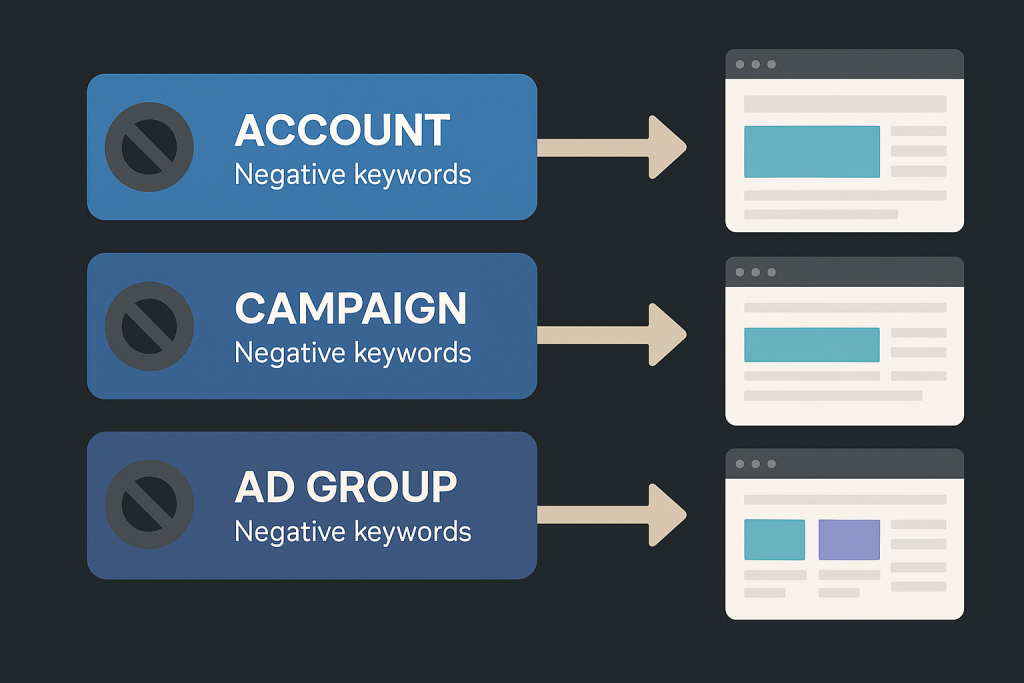
    Negative keywords can be applied at three levels in Google Ads:

    1. Account-Level – Applies to all campaigns. Use this for generic terms you never want to trigger any ad across your account.
    2. Campaign-Level – Applies to all ads within a specific campaign. Ideal for excluding broader terms irrelevant to a campaign’s focus.
    3. Ad Group-Level – Applies to a specific ad group. Useful for finer control, e.g., excluding “formal” for a running shoe ad group but allowing it for dress shoe ads.

    Choosing the right level ensures you avoid blocking valuable traffic while maintaining relevance in your campaigns.

    How to Find Negative Keywords

    Identifying the right excluded keywords is critical. There are several methods to do this effectively:

    Keyword Research

    Start by understanding your target audience and the search terms they use. Look for terms that are similar to your product but don’t align with your business. For example, if you sell premium shoes, terms like “cheap shoes” or “second-hand shoes” can be added.

    Competitor Analysis

    Review what keywords competitors are bidding on, especially if they’re unrelated to your audience. Tools like Semrush can provide insights into competitor PPC campaigns, helping you uncover terms to exclude.

    Google Search & Autocomplete

    Perform manual searches using your primary keywords. Observe autocomplete suggestions and related searches that may not match your campaign goals. Terms like “discount” or “free” often indicate low-intent queries.

    Search Terms Report

    Google Ads’ Search Terms Report shows which queries triggered your ads. Identify low-performing terms with low CTR or conversions and add them to your list. This method ensures your ads aren’t served to uninterested users.

    Creating Negative Keyword Lists

    Managing negative keywords at scale is easier by creating lists. Here’s how:

    1. Go to Google Ads and navigate to Negative Keyword Lists in the Shared Library.
    2. Click the plus icon to create a new list.
    3. Add the keywords, specifying match types (broad, phrase, exact).
    4. Apply the list to campaigns or ad groups.

    Lists are particularly useful when running multiple campaigns with overlapping terms. For example, if you sell only new cars, a single list excluding “used cars” can be applied across all campaigns.Ready to optimise your PPC campaigns and drive better results? Our expert Google Ads management service can help you create and manage effective strategies tailored to your business goals.

    Example of Negative Keywords in Action


    To illustrate, consider a company selling dog clothes:
      Primary ad group: Dog jackets
      Excluded terms: cat, kitten, feline
      Result: Ads never appear for searches like “cat jacket” but show to users searching for dog-related clothing.
    An example of negative keywords might include terms like “free,” “cheap,” or competitor brand names. Using these exclusions ensures that your budget targets only high-intent searches.

    Best Practices for Negative Keywords 

    To make the most of your negative matching strategy, include singular and plural forms (e.g., “shoe” and “shoes”), use symbols carefully as Google recognises ampersands, accents, and certain characters but handles them differently, and experiment with match types – broad, phrase, and exact can be combined to suit campaign goals. 

    Regularly monitor performance by reviewing CTR, conversions, and search terms to identify new negatives, and update lists frequently since PPC campaigns evolve, meaning your keyword lists should too.

    Supercharge Your Ads Today

    Incorporating negative keywords into your Google Ads campaigns is essential for saving budget, improving ad relevance, and driving higher conversions. By carefully selecting the right exclusions, using match types strategically, and applying these keywords at the appropriate account, campaign, or ad group level, you can ensure your ads reach the most relevant audience.

    With this approach, your campaigns will become more efficient, your CTR and conversion rates will improve, and your return on ad spend will increase. Take the time to identify, test, and refine negative keywords, and your paid search campaigns will reward you with stronger performance and better results.

  • What Is Keyword Bidding? How to Win in PPC Campaigns

    What Is Keyword Bidding? How to Win in PPC Campaigns

    Digital marketing professionals know that keyword bidding is a cornerstone of pay-per-click (PPC) advertising. It determines which ads appear for search queries, how much you pay for each click, and ultimately how effective your campaigns are. Understanding the mechanics of keyword bidding and how to strategically bid on keywords, including competitor keywords, can help businesses reach their target audience while maximising ROI.

    How Keyword Bidding Works

    Keyword bidding involves setting the amount you are willing to pay for your ad to appear when someone searches for a relevant term. Most commonly, this process takes place in Google Ads through an auction system. Every time a user searches, Google evaluates bids alongside factors like ad relevance, quality score, and the context of the search (device, location, time of day) to determine ad rank.

    A higher bid can improve ad placement, but relevance and ad quality are just as important. Ads with better quality scores often outperform higher-paying competitors. That’s why a strategic approach to keyword bidding is essential.

    Understanding Ad Rank and Quality Score

    Ad rank determines your ad’s position in search results. It is influenced by:

    • Bid amount: How much you are willing to pay per click.
    • Ad relevance: How well your ad matches the user’s search intent.
    • Landing page experience: How relevant and helpful your landing page is to the user.

    By optimising these factors, advertisers can compete effectively without overspending. A strong quality score often allows you to achieve better placement for less money.

    Boost your campaign performance and get the most out of every click with expert management. Explore how our PPC services can help you maximise results and achieve your marketing goals.

    Keyword Bidding Strategies

    Advertisers can choose from several strategies depending on their goals and level of control:

    Manual CPC: Set your bids manually at the keyword or ad group level. Provides tight control but requires ongoing monitoring.

    Automated Bidding: Google adjusts bids in real time based on performance metrics, saving time while optimising for conversions.

    Smart Bidding: Uses machine learning to bid on keywords and maximise conversions or conversion value automatically.

    Automated strategies include options such as Target CPA, Target ROAS, Maximise Conversions, and Maximise Conversion Value. Choosing the right approach depends on campaign goals, budget, and available data.

    Take your Google Ads campaigns to the next level with professional management tailored to your goals. Let our experts handle strategy, optimisation, and performance tracking so you can focus on growing your business.

    Optimising Keyword Bids for Maximum ROI

    To make the most of keyword bidding, consider these key steps:

    1. Choose the right keywords: Focus on terms with high relevance and strong commercial intent. Long-tail keywords often offer better ROI due to lower competition.
    2. Analyse competitor keywords: Understand which keywords competitors bid on and adjust your strategy to remain competitive without overspending.
    3. Use negative keywords: Exclude irrelevant search terms to prevent wasted clicks.
    4. Adjust bids strategically: Modify bids based on device, location, time, or audience characteristics to target high-value traffic.
    5. Continuous monitoring: Track performance metrics such as click-through rate (CTR), conversion rate, and cost per conversion to inform adjustments.

    Combining these tactics ensures your campaigns remain cost-effective and generate meaningful results.

    Setting Up Campaigns and Monitoring Performance

    Once you’ve selected keywords and a bidding strategy, the next steps involve:

    • Creating ad copies that align with your keywords and target audience.
    • Setting your daily budget based on bid estimates and campaign goals.
    • Launching campaigns and monitoring performance metrics regularly.
    • Testing ad variations through A/B testing to discover the most effective messaging and design.

    Regular review and optimisation allow you to refine bidding strategies for better visibility, engagement, and ROI.Boost the effectiveness of your campaigns by improving every step of the user journey. Our Conversion Rate Optimisation services help turn clicks into meaningful actions, increasing results from your existing traffic.

    Best Practices for Keyword Bidding

    Focusing on relevant and high-intent keywords is essential for any successful PPC campaign. Advertisers should avoid overbidding and use CPC estimates as a guide rather than a strict rule, ensuring that budgets are spent efficiently. 

    Tracking performance metrics closely allows for informed adjustments, helping campaigns remain competitive and effective over time. Leveraging automation wisely can save time and improve efficiency, but it should always complement a strategy grounded in quality ad creation and audience targeting.

    Equally important is keeping an eye on competitor bidding patterns. Understanding how others are bidding on keywords, including competitor keywords, enables you to respond strategically while maintaining ethical practices. 

    By combining careful monitoring, data-driven bid adjustments, and thoughtful campaign management, businesses can maximise ROI, stay ahead in the auction, and maintain campaigns that are both agile and results-driven.

    Maximising Results with Strategic Bidding

    Effective keyword bidding is more than setting a high bid – it’s about aligning campaign goals with the right strategies. By bidding on competitor keywords, optimising ad quality, and continuously refining campaigns, businesses can achieve better visibility, higher conversions, and greater ROI. A thoughtful, data-driven approach ensures every dollar spent works harder, delivering measurable growth while minimising wasted budget.Mastering keyword bidding empowers advertisers to stay ahead in the PPC landscape and maximise the impact of their digital marketing efforts.

  • Understanding and Preventing Click Fraud in Google Ads

    Understanding and Preventing Click Fraud in Google Ads

    Click fraud is a critical issue that can seriously damage the effectiveness of your Google Ads campaigns, drain your ad budget, and distort performance data. As digital advertising continues to grow, so does the prevalence of fraudsters targeting pay-per-click (PPC) campaigns. 

    This article will explore what click fraud is, how it works, the tactics used by fraudsters, and most importantly, how to protect your ad campaigns with effective AdWords click fraud prevention strategies

    What Is Click Fraud and Why Does It Matter?

    Click fraud refers to any form of fraudulent activity where clicks on an ad are made with no genuine interest in the product or service being advertised. These clicks are generated either manually by individuals or through automated bots. While AdWords click fraud can come in various forms, the goal remains the same: to either drain advertising budgets, skew campaign data, or artificially inflate a webpage’s click-through rate (CTR).

    Fraudsters often use ad fraud for financial gain. This can range from competitors repeatedly clicking on ads to deplete their rivals’ ad budgets, to criminals driving fake clicks to earn revenue from the pay-per-click model. In fact, up to 20% of all PPC ad spend is lost to click fraud every year, making it a serious issue for businesses investing in online advertising.

    How Does Click Fraud Work?

    Understanding how click fraud operates is crucial for identifying and preventing it. Fraudsters typically use two main tactics to generate invalid clicks: bots and click farms.

    Bots

    Bots are automated scripts designed to mimic human actions online, generating fraudulent clicks on ads without genuine user interaction. These bots are often part of larger networks known as botnets, which can consist of thousands or even millions of compromised devices. Once a device is infected with malware, it can unknowingly become part of a botnet, executing fraudulent clicks without the user’s knowledge.

    Botnets

    Botnets are particularly effective at executing large-scale ad fraud because they can simulate legitimate traffic across multiple devices, making detection more challenging for advertisers. For example, PPC fraud bots might mimic human behaviour, including mouse movements and random pauses between clicks, to avoid triggering detection mechanisms that monitor bot-like patterns.

    Click Farms

    Another tactic used for ad fraud involves human workers in click farms. These are low-paid workers, often based in countries with cheaper labour, who are hired to manually click on ads to inflate the click-through rate of a webpage. Click farms can also be used to artificially boost engagement on social media posts. While click farm fraud is more resource-intensive than using bots, it has the advantage of appearing more like legitimate user behaviour, making it harder to detect.

    Click Hijacking and Fake App Installations

    Other methods of PPC fraud include click hijacking, where clicks intended for one ad are redirected to another, and fake app installations, where fraudulent installations of mobile apps are used to inflate traffic numbers. These tactics further complicate the issue for businesses trying to track real user engagement and optimise their ad spend.

    Protect your campaigns from wasted spend and maximise the impact of every click with expert PPC management. Our team can help you optimise performance and ensure your ads reach the right audience.

    How Can You Spot and Prevent Click Fraud?

    There are several warning signs that click fraud is impacting your campaigns, and identifying these signs early can help minimise the damage. Some key indicators of fraudulent activity include:

    1. Spikes in Clicks or Impressions: An unusual spike in clicks, particularly outside of your target audience’s typical hours, could indicate fraudulent activity.
    2. High Bounce Rates: If users click on your ads but leave your site quickly, this can signal ad fraud, especially if the visitors aren’t converting or engaging.
    3. Traffic from Unusual Locations: If your campaign is geo-targeted but you’re seeing traffic from regions outside your target area, this could be a sign of PPC fraud from IP addresses masking their location using VPNs.
    4. Low Conversion Rates: A high number of clicks but few conversions is a red flag. It suggests that the clicks are not from legitimate customers and may be driven by fraudsters or bots.

    To combat these issues, you can implement several prevention techniques. Below are some of the most effective strategies.

    Ensure your Google Ads campaigns deliver real results with professional account management and optimisation. Our team focuses on maximising ROI while keeping your campaigns efficient and effective.

    Effective AdWords Click Fraud Prevention Strategies

    Geographic Targeting and IP Exclusion

    One of the first lines of defence in ad fraud prevention is refining your campaign’s targeting. By using geographic targeting, you can ensure your ads only appear in the locations that matter to your business. If your ads are showing up in countries or regions where you don’t do business, this can be a sign of PPC fraud.

    In addition, IP exclusion allows you to block specific IP addresses that are generating fraudulent clicks. If you notice suspicious patterns from certain IPs, excluding them from your campaigns will help protect your budget from further waste.

    Ad Scheduling

    Another prevention tactic is ad scheduling. By controlling when your ads are displayed, you can limit your exposure to high-risk times, such as late at night or on weekends, when fraudsters may be more active. Scheduling your ads to appear during business hours or when legitimate traffic is most likely to be online can reduce the likelihood of fraudulent clicks.

    Negative Keywords

    Using negative keywords is a simple yet effective way to prevent ad fraud. Negative keywords allow you to exclude irrelevant or unrelated search queries from triggering your ads. By doing this, you can reduce the chances of your ads appearing for searches that are unlikely to lead to conversions, including those targeted by fraudsters.

    Monitoring and Reporting Tools

    There are a variety of AdWords click fraud detection tools available that can help you monitor your campaigns in real time. Google’s built-in fraud detection system offers a first layer of protection by filtering out invalid clicks. However, additional third-party tools can offer more advanced features, including detailed reporting, anomaly detection, and the ability to filter out traffic from known fraudulent sources.

    Some tools also use AI and machine learning to identify suspicious patterns and prevent fraudulent activity before it can impact your ad spend.

    Boost your website’s visibility and drive high-quality traffic with expert SEO services tailored to your business goals. Our team focuses on strategies that improve rankings, increase engagement, and deliver measurable results.

    The Cost of Click Fraud to Businesses

    The financial and data impact of ad fraud can be substantial. According to recent estimates, up to 22% of all ad spend is lost to fraud each year, which can add up to billions of dollars across industries. In 2023, click fraud was responsible for a significant portion of the $84 billion in global ad spend lost to fraud.

    This financial loss is only the tip of the iceberg. The real damage occurs when PPC fraud skews campaign data, making it difficult to assess the effectiveness of your advertising efforts. Misleading data can result in poor decision-making, inefficient ad spend, and lost opportunities for growth.

    The Bottom Line on Click Fraud Prevention

    In conclusion, ad fraud is a growing threat that can drain your ad budgets and distort your campaign data if left unchecked. By implementing strategic measures such as AdWords click fraud prevention, refining your targeting, and using fraud detection tools, you can significantly reduce the risk of fraudulent clicks and protect your digital advertising investments.

    Remember, prevention is always better than cure. Taking steps now to safeguard your campaigns will help you ensure that your PPC ads are driving genuine, high-quality traffic that leads to real conversions.

  • What is Return on Ad Spend (ROAS) and How to Calculate It?

    What is Return on Ad Spend (ROAS) and How to Calculate It?

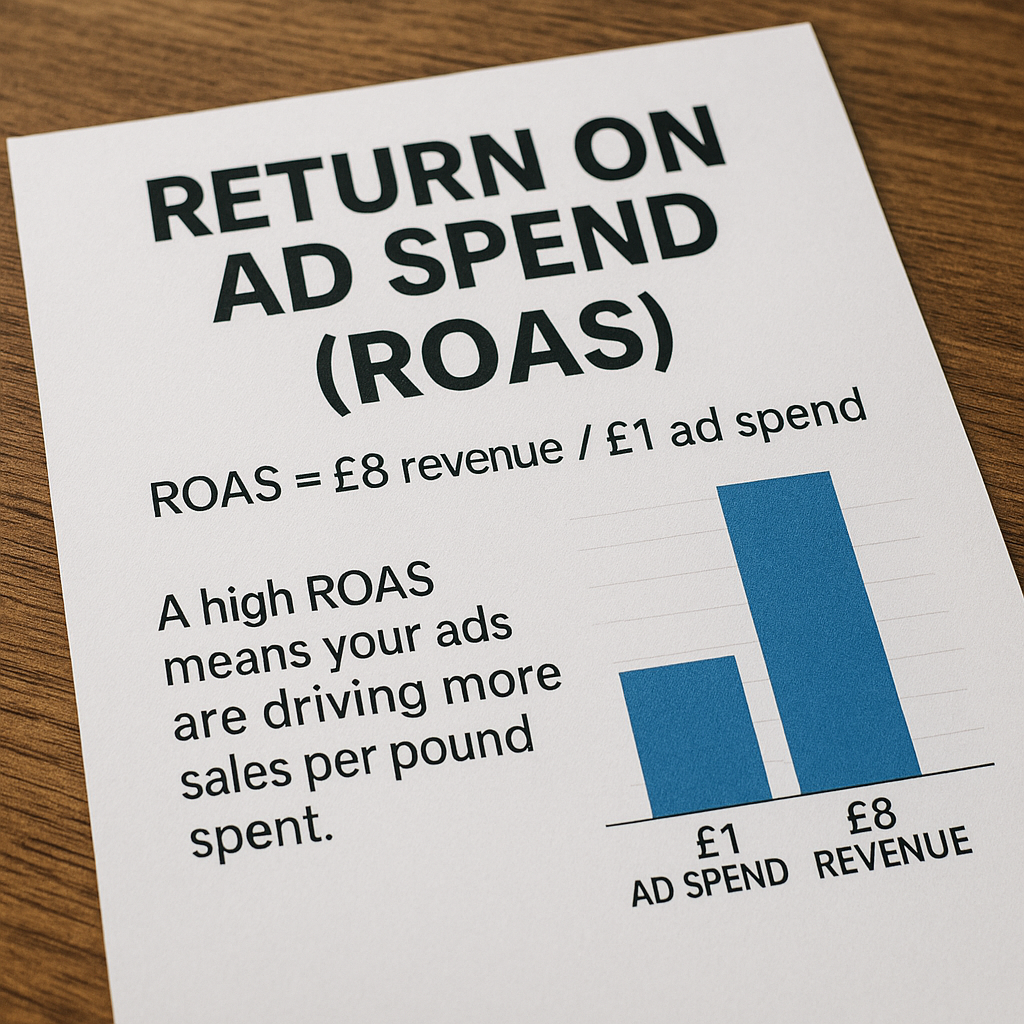
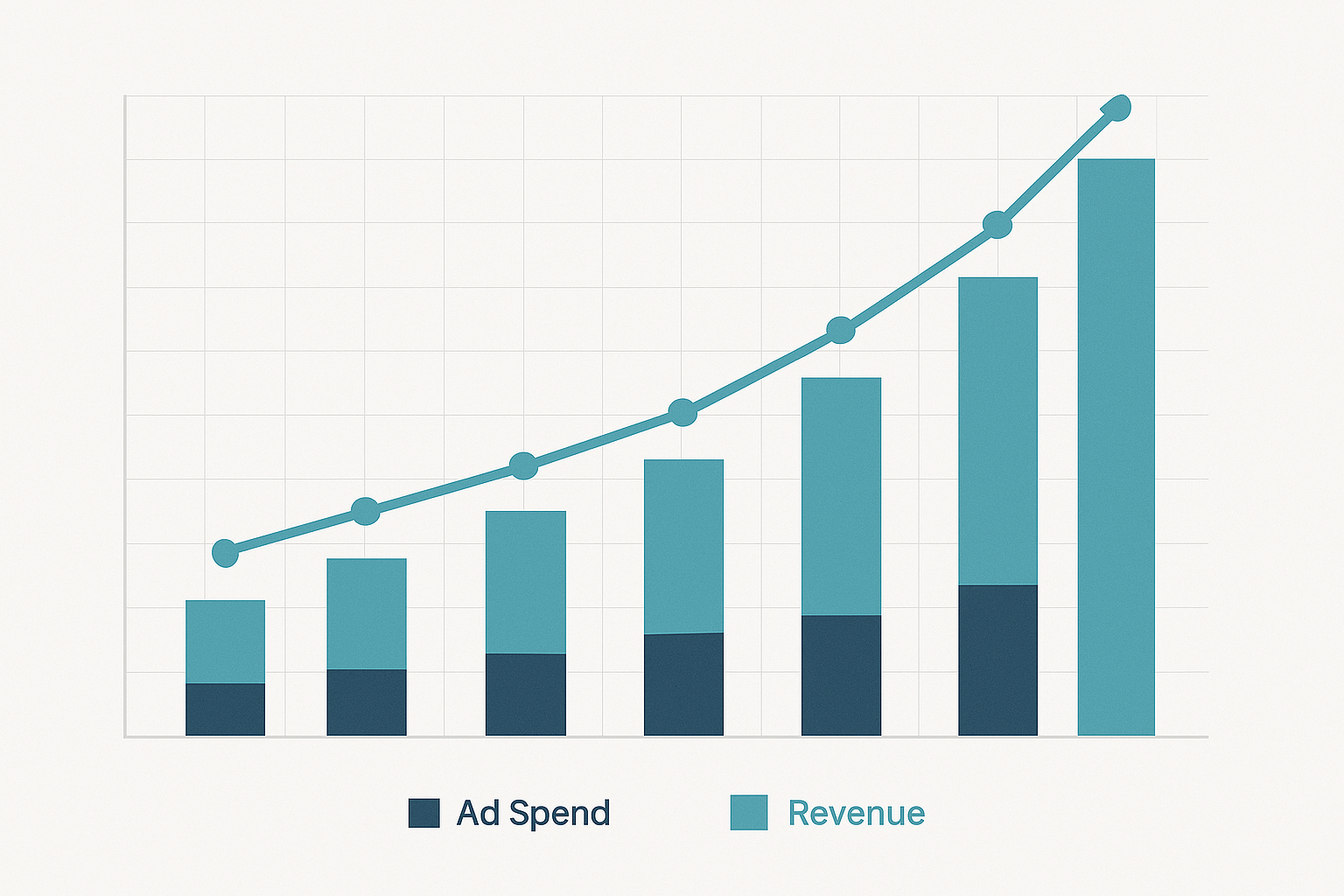
    Return on Ad Spend (ROAS) is a key marketing metric that measures how much revenue your business earns for each pound or dollar spent on advertising. In other words, ROAS tells you the efficiency of your ad budget: it answers “for every £1 we spend on ads, how many pounds of revenue do we get back?” 

    ROAS is a performance indicator (KPI) often used in e-commerce and PPC advertising to evaluate campaign success. Unlike broader return on investment (ROI) metrics, which account for all costs and net profit, ROAS focuses strictly on revenue generated versus the cost of ads. 

    In practice, a high ROAS means your ads are driving more sales per pound spent, which is crucial for growth in competitive online markets.

    How to Calculate ROAS

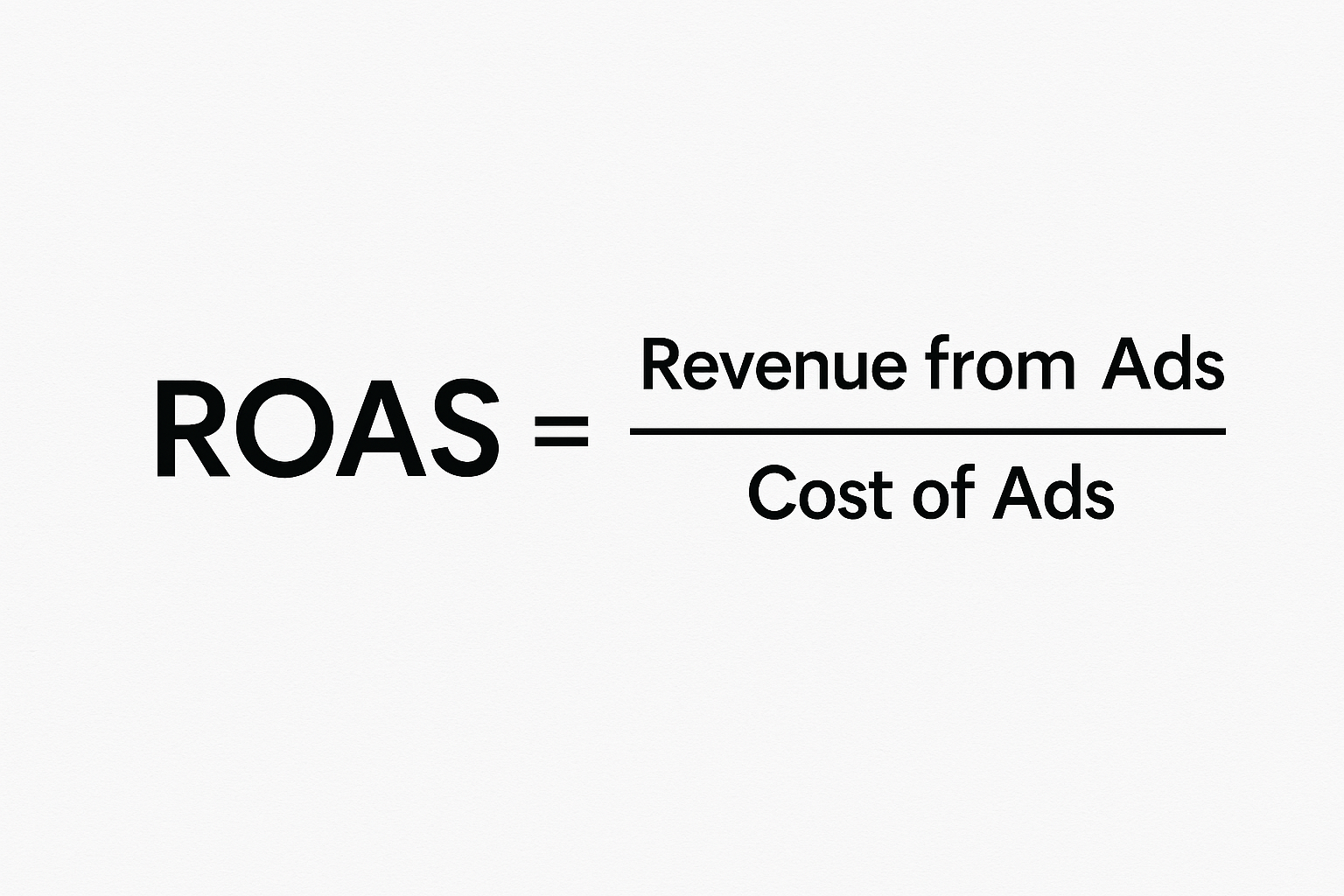
    The formula for return on ad spend is simple: divide the total revenue attributed to ads by the total ad spend. 

    For example, if an e-commerce campaign spends £2,000 on advertising and earns £10,000 in sales, the ROAS would be 5 (often written as 5:1). This means the company makes £5 in revenue for every £1 spent on ads. You can also express ROAS as a percentage by multiplying by 100: in this example, the ROAS is = 500%.

    Keep in mind that “Cost of Ads” should include all expenses directly tied to the campaign, not just the media spend. In addition to the ad budget, consider factors like vendor or platform fees, agency commissions and team costs. For instance:

    • Vendor/Agency fees: Commissions or fees charged by ad platforms and partners.
    • Staff or agency labour: The time and salaries of people managing the campaign.
    • Affiliate or transaction fees: Any commission paid to affiliates or networks.

    Accounting for these costs gives a truer picture of ad efficiency. 

    Additional Tip: If you want a quick calculation, you can start with just the media spend, then calculate a “full-cost ROAS” separately, including all overhead.

    Why Return on Ad Spend Matters?

    Monitoring ROAS helps you make data-driven budget decisions. 

    A rising ROAS means your ads are generating increasingly more revenue per pound spent. This metric lets you identify your most profitable campaigns and channels. 

    For example, if Facebook ads produce a higher ROAS than search ads, you can shift budget accordingly. BigCommerce notes that “keeping careful tabs on ROAS, e-commerce companies can make informed decisions on where to invest their ad dollars.” In practice, tracking ROAS across channels and campaigns allows marketers to cut waste on underperforming ads and double down on winners.

    In competitive online markets where advertising costs are high, ROAS provides a quick pulse-check on campaign effectiveness and a guide to maximising your advertising return.

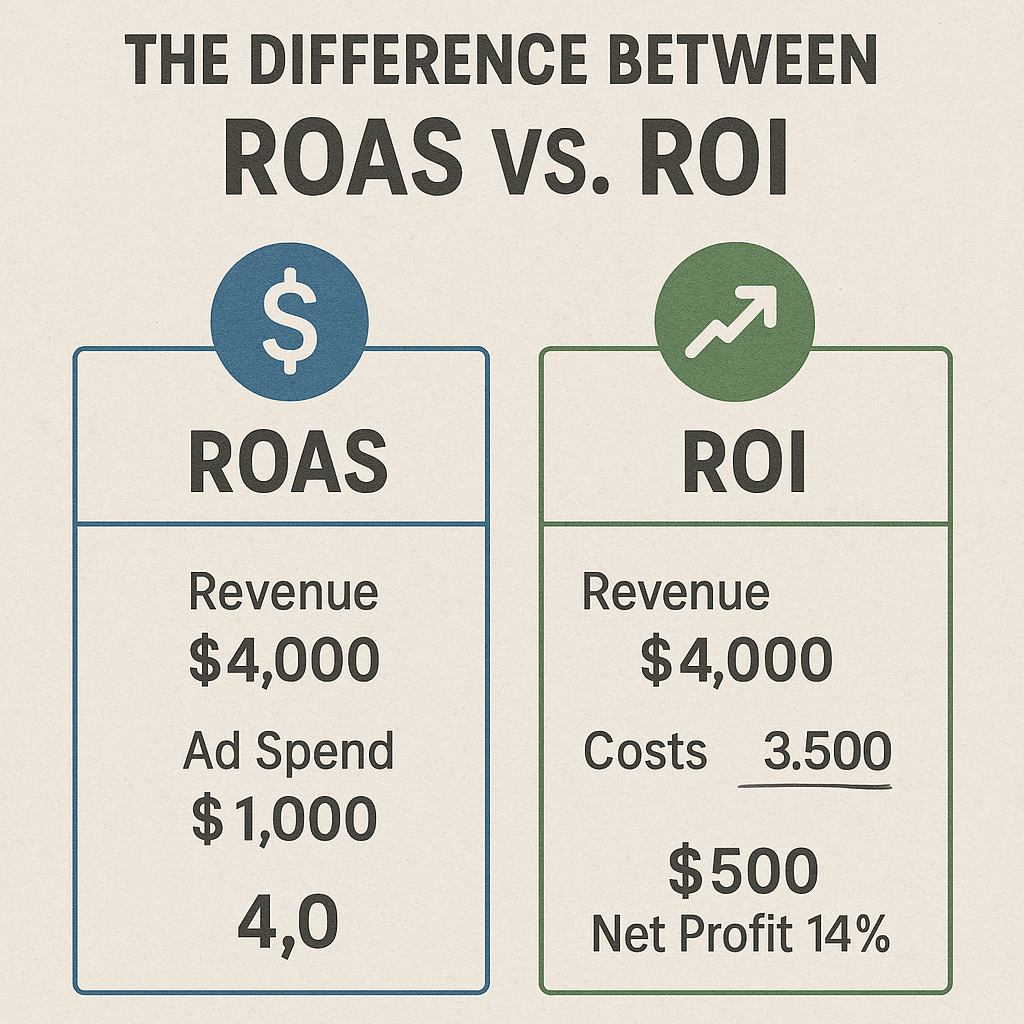
    The Difference Between ROAS vs. ROI

    It’s important to distinguish ROAS from ROI (Return on Investment). While ROAS looks only at ad spend and the revenue it directly generates, ROI measures the overall profit relative to the total investment in marketing. 

    For instance, ROI would subtract all costs (ad spend, production, overhead, etc.) to show net profit, whereas ROAS ignores those extra costs and focuses on gross revenue. This means a campaign can have a healthy ROAS but still be unprofitable when full costs are counted. 

    As the Corporate Finance Institute explains, “If ROAS > 1, then you are at least covering your marketing expenses with revenue, but are likely losing money after deducting expenses.” 

    In practice, use ROAS to optimise and compare ad performance in the short term, and use ROI when evaluating total profitability in the long term.

    What Is a Good ROAS?

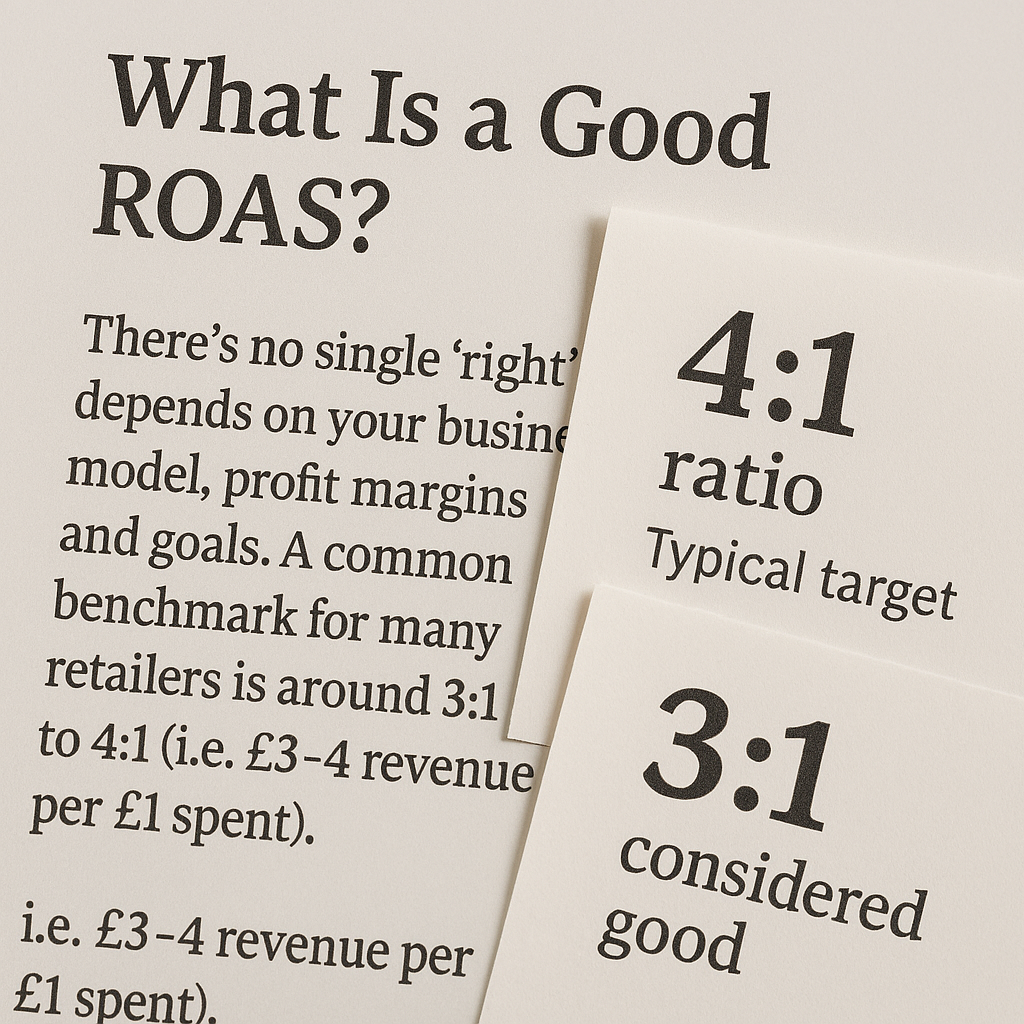
    There’s no single “right” ROAS – it depends on your business model, profit margins and goals. A common benchmark for many retailers is around 3:1 to 4:1 (i.e. £3–£4 revenue per £1 spent).

    For example, one company notes a 4:1 ratio as a typical target, while the other company suggests that “ROAS of 3 or more (3:1) is considered good” in broad terms. However, acceptable ROAS will vary: high-margin businesses like luxury products and SaaS can stay profitable with a lower ROAS, whereas low-margin or rapidly growing businesses may require much higher returns (sometimes 10:1 or more) to break even. 

    Amazon Ads reports that a ROAS of about 2:1 sits a bit above the current industry average, while more successful campaigns often achieve ratios closer to 3:1 or 4:1. 

    As a rule of thumb, ROAS above 1:1 means your ads at least cover their own cost; ROAS above 3:1–4:1 is often deemed strong. Ultimately, you should calculate break-even ROAS based on your costs: for example, a 3:1 ROAS means you earn back three times your ad spend, but whether that leads to profit depends on product costs and overhead.

    Tips on How to Improve Your ROAS

    If your ROAS isn’t where you want, there are several strategies to boost it. Key steps include:

    1. Refine Targeting

    Allocate more budget to the ads, platforms and audience segments with the highest ROAS. For example, if Instagram ads are outperforming search ads in ROAS, shift spend to Instagram.

    2. Optimise Creative

    Test different ad images, headlines and copy to find what converts best. We recommend trying varied visuals and messaging to maximise response.

    3. Improve conversion paths

    Ensure landing pages are relevant and user-friendly so that ad clicks turn into sales. Even the best ads won’t help if the checkout process falters.

    4. Adjust Bids and Budgets

    Use manual or automated bidding to increase bids on high-ROAS campaigns and pause or lower bids on low-ROAS ones. Leaning into winners and cutting losers raises overall efficiency.

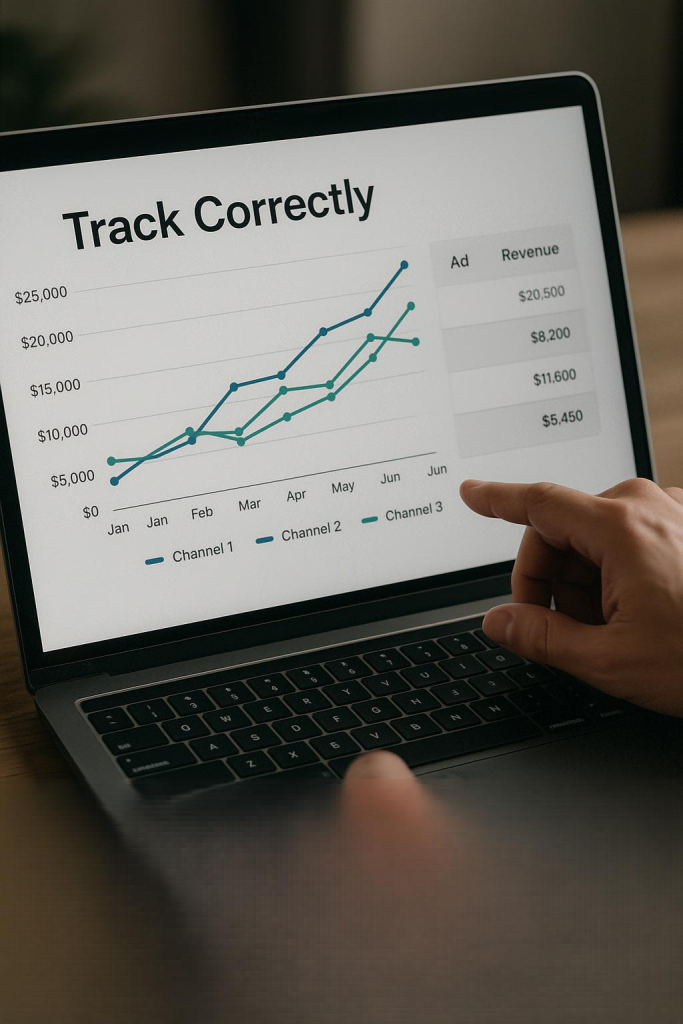
    5. Track Correctly

    Make sure your analytics and attribution are set up so you’re measuring the right revenue for each ad. Misattributed sales can lead to misleading ROAS calculations.

    By continuously testing and optimising each element of your campaigns (from audience to ad copy to landing page), you can raise the amount of revenue earned per ad spend. Over time, small improvements compound into a significantly higher ROAS.

    Final Thoughts

    So, what is return on ad spend? It is a simple yet powerful way to quantify ad efficiency. By calculating ROAS, marketers can quickly gauge campaign performance. Tracking ROAS helps ecommerce brands and advertisers focus on the tactics that drive the most sales. 

    If you want expert help maximising your ROAS, consider partnering with Seek Marketing Partners. Our team specialises in data-driven PPC and ecommerce marketing – we can analyse your campaigns, set realistic ROAS targets and optimise your ad spend for better returns. 

    Contact us today to discuss how our PPC advertising services can improve your marketing performance. 

  • What Are Meta Ads and Are They Worth It?

    What Are Meta Ads and Are They Worth It?

    What are Meta Ads? Simply put, they are digital advertisements that run on platforms owned by Meta, including Facebook, Instagram, Messenger, and WhatsApp. These ads help businesses reach their target audience effectively by leveraging powerful targeting and analytics tools. 

    Let’s explore Meta Ads in detail, including how they function, their benefits, and whether they are the right investment for your business.

    Hand holding a smartphone showing a bright orange free delivery advert.

    Key Points: What Are Meta Ads?

    • Meta Ads are digital advertising tools for Facebook, Instagram, Messenger, and WhatsApp
    • They offer precise targeting options based on user demographics, interests, and behaviours
    • Meta Ads include various formats like image, video, carousel, and story ads
    • They provide detailed analytics and reporting for campaign optimisation
    • Meta Ads can be cost-effective for businesses of all sizes when used strategically
    • When used strategically, Meta Ads can be cost-effective for businesses of all sizes.
    • Wondering “Are Meta Ads worth it?”—their success depends on the right targeting and budget allocation.
    • Understanding how Meta Ads work can help businesses maximise ROI and audience engagement.

    What Are Meta Ads?

    With Meta Ads, you can create customised campaigns that align with your business goals, whether you want to increase brand awareness, drive website traffic, or boost sales. 

    These ads are designed to integrate seamlessly into users’ social media experiences, appearing naturally in their feeds, stories, and even video content. This non-intrusive approach helps businesses engage with potential customers in a way that feels organic rather than disruptive.

    Meta’s advertising ecosystem is built on advanced data analytics, ensuring that businesses can optimize their campaigns for better engagement and conversions. Whether targeting first-time visitors, re-engaging past customers, or finding new lookalike audiences, Meta Ads work to ensure that your message reaches the right people at the right time.

    Different Formats of Meta Ads

    • Image ads: Static visuals that can quickly convey your message and brand identity.
    • Video ads: Engaging motion content that captures audience attention and encourages interaction.
    • Carousel ads: Multiple images or videos within a single ad, allowing businesses to showcase multiple products or tell a brand story.
    • Collection ads: A mobile-optimized format that combines video, images, and product catalogues for a more interactive shopping experience.
    • Instant Experience ads: Fullscreen, immersive mobile ads that load instantly and provide an engaging way for users to explore your brand.

    Each format offers unique advantages, allowing businesses to showcase their products or services in visually compelling ways. The variety of these formats means that Meta Ads work effectively across industries, from e-commerce and real estate to hospitality and entertainment. 

    A Meta Ads agency can help you determine the best format for your specific goals, ensuring that your ads perform at their best and deliver measurable results.

    How Do Meta Ads Work?

    If you’re wondering, “How do Meta Ads work?”, they function through the Meta Ads Manager, a tool that allows advertisers to create, manage, and track their campaigns. This platform provides an intuitive interface where businesses can define their audience, set their budget, and optimize ad performance based on real-time insights.

    Meta Ads use advanced targeting options, including:

    • Demographics: Age, gender, education, relationship status, and more
    • Interests: Hobbies, activities, likes, and pages followed
    • Behaviours: Purchase history, device usage, and online activities
    • Custom audiences: Based on your existing customer data or website visitors
    • Lookalike audiences: Finding users similar to your best customers
    • Engagement Targeting: Focus on users who have liked, commented, or shared similar content.
    • Device and Platform Targeting: Optimize ads for mobile, desktop, or specific devices.

    This precise targeting ensures that your ads reach the most relevant audience, increasing the likelihood of engagement and conversions. Meta’s algorithm analyses user data to show your ads to those most likely to be interested in your offerings, making your ad spend more effective and improving ROI.

    Our PPC management services for small businesses can help you improve your targeting strategy for better results, making sure your budget is used wisely to reach the right people at the right time. With a proper strategy, Meta Ads work effectively to drive engagement, generate leads, and increase sales.

    The Benefits of Meta Ads

    Why Are Meta Ads Worth It?

    Many businesses ask, “Are Meta Ads worth it?” The answer is yes—when executed properly. Here’s why:

    • Extensive reach: With over 3 billion monthly active users across Meta platforms, your potential audience is huge and diverse.
    • Advanced targeting: Reach the right people at the right time accurately, making your ad spend more efficient.
    • Versatile ad formats: Choose from various formats to best show off your offerings and engage your audience effectively.
    • Detailed analytics: Track your performance and make data-based decisions with comprehensive reporting tools.
    • Integration with other Meta platforms: Create a consistent marketing strategy across multiple channels for maximum impact.
    • Cost-effective advertising: Set your own budget and optimize campaigns for the best return on investment.
    • Retargeting capabilities: Re-engage users who have shown interest in your products or services.

    One of the biggest advantages of Meta Ads is their highly advanced targeting capabilities. By leveraging data on user demographics, interests, and online behaviour, businesses can reach the right audience with precision. This means that your advertising budget is spent efficiently, increasing the chances of conversions and maximising ROI.

    Another key benefit is the flexibility in ad formats. Whether you choose image ads, video ads, or carousel ads, Meta Ads offer dynamic ways to showcase your products and services. This flexibility makes them an excellent choice for businesses looking to create engaging and interactive campaigns.

    Meta Ads also provide detailed analytics, allowing you to track performance metrics such as reach, engagement, and conversion rates. With this data, businesses can refine their strategies and improve campaign effectiveness.

    Working with a Meta Ads agency can further enhance your results by providing expert insights and optimisation techniques.

    Challenges and Considerations

    While Meta Ads offer numerous benefits, businesses must also be aware of the challenges involved in running successful campaigns. Understanding these potential hurdles can help you make informed decisions and optimize your ad strategy effectively.

    • Ad fatigue: Users may get tired of seeing ads over time, requiring frequent creative updates.
    • Privacy concerns: Changing rules may affect targeting capabilities and data usage.
    • Increasing competition: As more businesses use Meta Ads, costs may go up, and visibility may become harder.
    • Algorithm changes: Meta’s frequent updates can affect ad performance and require strategy adjustments.
    • Ad blockers: Some users use ad-blocking technology, potentially limiting your reach.
    • Platform-specific limitations: Each Meta platform has its own rules and best practices to follow.

    Dealing with these challenges requires expertise and ongoing improvement. Our SEO audit services can help ensure your overall digital strategy stays effective in the face of these challenges. By regularly checking your digital presence and adapting to changes in the digital world, you can stay competitive and get the most out of your Meta Ads campaigns.

    Are Meta Ads Worth It?

    The answer to “Are Meta Ads worth it?” depends on your specific business goals, target audience, and industry. However, for many businesses, the answer is yes. Meta Ads offer a unique mix of reach, targeting accuracy, and flexibility that can provide significant value when used strategically.

    Factors that Make Meta Ads a Good Investment

    • Cost-effective: With proper optimisation, Meta Ads can deliver a strong return on investment, often at a lower cost per acquisition than traditional advertising methods.
    • Measurable results: Detailed analytics allow you to track and improve your performance, ensuring your marketing budget is spent efficiently.
    • Flexibility: Adjust your campaigns in real-time based on performance data, allowing for agile marketing strategies.
    • Brand awareness: Increase visibility and recognition among your target audience, even if they don’t convert immediately.
    • Lead generation: Capture valuable leads and nurture them through your sales funnel with targeted content and offers.
    • Remarketing opportunities: Re-engage users who have interacted with your brand, increasing the likelihood of conversion.
    • Scalability: Start with a small budget and scale up as you see positive results, making it suitable for businesses of all sizes.

    Our insights on the future of SEO can help you understand how Meta Ads fit into a comprehensive digital marketing strategy. By combining the immediacy of paid advertising with the long-term benefits of SEO, you can create a robust digital presence that drives both short-term results and sustainable growth.

    Best practises for Meta Ads Success

    To get the most out of your Meta Ads campaigns, consider these Best practises for Meta Ads Success:

    • Define clear campaign objectives: Align your ad goals with your overall business objectives.
    • Create compelling ad content: Develop visually appealing and engaging ads that resonate with your target audience.
    • Optimize your landing pages: Ensure a seamless user experience from ad click to conversion.
    • Implement A/B testing: Continuously test different ad elements to refine your approach and improve performance.
    • Monitor and adjust your campaigns regularly: Stay proactive in optimizing your ads based on performance data.
    • Use audience segmentation: Create tailored messages for different segments of your target audience.
    • Leverage retargeting: Re-engage users who have shown interest in your products or services.
    • Maintain brand consistency: Ensure your ads align with your overall brand identity and messaging.

    By following these best practises, businesses can maximise their reach and drive better engagement. So, are Meta Ads worth it? When executed strategically, they can be a powerful tool to boost brand awareness and generate leads efficiently.

    The Role of a Meta Ads Agency

    While it’s possible to manage Meta Ads in-house, many businesses find value in partnering with a Meta Ads agency. An experienced agency can:

    • Develop a comprehensive strategy aligned with your business goals and target audience.
    • Create compelling ad content that resonates with your target audience and drives engagement.
    • Optimize campaigns for maximum performance and ROI, leveraging industry best practices.
    • Stay up-to-date with platform changes and best practices, ensuring your campaigns remain effective.
    • Provide detailed reporting and insights for continuous improvement and strategic decision-making.
    • Manage complex campaigns across multiple platforms and ad formats efficiently.
    • Conduct in-depth competitor analysis to inform your strategy and maintain a competitive edge.
    • Handle ad account issues and communicate with Meta’s support team when necessary.
    • A history of successful campaigns across various industries, demonstrating expertise in Meta Ads.
    • Keeps up with Meta’s evolving algorithms, ad formats, and policies.
    • Provides detailed performance reports, helping businesses track ROI and make informed marketing decisions.
    • Continuously adjusts campaigns based on market trends and audience behaviour to ensure sustained success.
    • Regularly tests different ad variations to identify the best-performing content.

    Our PPC agency services include expert management of Meta Ads campaigns, ensuring you get the most out of your advertising budget. Our team of specialists stays at the forefront of digital advertising trends and technologies, providing you with cutting-edge strategies to drive results.

    Harness the Power of Meta Ads with Seek Marketing Partners

    At Seek Marketing Partners, we specialize in creating tailored Meta Ads strategies that align with your business goals and target audience. Our team of experts stays up-to-date with digital marketing trends, ensuring your campaigns use the latest best practices and technologies.

    Ready to unlock the full potential of Meta Ads for your business? Contact us today to learn how we can help you create a winning Meta Ads strategy that drives real results. Our team is ready to help you navigate the world of Meta advertising, from initial strategy development to ongoing campaign optimisation and performance analysis.

    Let’s work together to take your digital marketing to the next level and achieve your business objectives through the power of Meta Ads.

  • 8 Expert Tips for Top-Notch Paid Advertising Online

    8 Expert Tips for Top-Notch Paid Advertising Online

    In the dynamic landscape of digital marketing, mastering the art of paid advertising online is pivotal for businesses striving to stand out in the virtual crowd. As the experts at Seek Marketing Partners, we’re eager to share invaluable tips from our seasoned PPC pros. This comprehensive guide unveils strategies that can elevate your online presence and drive meaningful results, ensuring your business thrives in the competitive digital arena.

    1. Understanding Your Audience

    In the world of paid advertising online, knowing your audience is paramount. Thorough research to understand demographics, interests, and online behaviours is key. This knowledge forms the bedrock of a successful paid advertising campaign.

    Know Your Target Demographics

    Dive deep into analytics tools to discern age groups, geographic locations, and interests of your audience. This insight enables tailoring ads that resonate, creating a more personalised experience and increasing the likelihood of conversions.

    2. Crafting Engaging Ad Copy

    Compelling ad copy is the heartbeat of any paid advertising online. Tailor messages to resonate with your audience’s pain points and desires. Utilise persuasive language and a clear call-to-action to encourage clicks and conversions.

    The Power of Persuasion

    Crafting persuasive ad copy involves storytelling that connects emotionally with your audience. Address their challenges, offer solutions, and create a sense of urgency. A compelling narrative can captivate your audience, increasing the chances of them taking the desired action.

    3. Strategic Keyword Selection

    A well-researched keyword strategy is the backbone of successful paid advertising online. Utilise tools to identify high-performing keywords relevant to your business. Regularly update and refine your keyword list based on performance data.

    Unveiling the Right Keywords

    Beyond basic keyword research, consider user intent and long-tail keywords. This approach ensures that your ads are not only visible but also highly relevant to users actively seeking your products or services.

    4. Optimising Landing Pages

    Ensure that your landing pages align seamlessly with your ads. Optimise for both user experience and relevance. A cohesive journey from ad click to conversion improves your Quality Score and enhances the overall effectiveness of your campaign.

    Seamless User Experience

    A seamless user experience involves not only responsive design but also clear navigation and relevant content. Minimise load times and ensure that the landing page delivers on the promises made in the ad, increasing the likelihood of conversions.

    5. Implementing Ad Extensions

    Take advantage of ad extensions to provide additional information to potential customers. Whether it’s site links, callouts, or structured snippets, these extensions enhance your ad’s visibility and provide more value to users.

    Boosting Visibility

    Ad extensions not only provide additional information but also make your ads more prominent on the search results page. Use them strategically to highlight unique selling propositions, promotions, and other relevant details.

    6. Monitoring and Adjusting in Real-Time

    Stay on top of your campaign’s performance by regularly monitoring key metrics. Use real-time data to identify trends and adjust your strategy promptly. This agility ensures you make the most of your advertising budget.

    Dynamic Campaign Management

    Digital landscapes evolve rapidly, and so should your paid advertising online strategy. Regularly check performance metrics such as click-through rates, conversion rates, and cost per conversion. Use this data to adjust bids, refine targeting, and optimise ad creatives for ongoing success.

    7. A/B Testing for Continuous Improvement

    Don’t settle for the status quo. Conduct A/B tests to identify what resonates best with your audience. Experiment with different ad creatives, headlines, and calls-to-action to refine your approach continuously.

    Experimenting for Success

    A/B testing allows you to compare different elements of your ads to see which performs better. Test one variable at a time, whether it’s the headline, ad copy, or imagery. This iterative approach helps you fine-tune your campaigns for optimal performance over time.

    8. Harnessing the Power of Remarketing

    Implementing remarketing tactics keeps your brand in front of users who have interacted with your website. Craft personalised ads to re-engage these prospects, nurturing them towards conversion.

    Staying Top of Mind

    Remarketing is a powerful tool for staying on the radar of potential customers. Craft specific messages for users who have visited certain pages on your site but haven’t converted. Tailor your approach to their previous interactions with your brand.

    Frequently Asked Questions

    How can I determine the success of my paid advertising online?

    Track key performance indicators (KPIs) such as click-through rates, conversion rates, and return on ad spend (ROAS). Analysing these metrics provides insights into your paid advertising online’s effectiveness.

    Is paid advertising online suitable for small businesses?

    Yes, paid advertising online can be tailored to fit any budget. With strategic planning and targeting, small businesses can achieve significant results.

    What role do visuals play in paid advertising online?

    Visual elements, such as high-quality images and engaging videos, can capture attention and boost the effectiveness of your ads. Incorporate visuals that align with your brand and evoke the desired emotions.

    Conclusion

    In the dynamic landscape of digital marketing, mastering paid advertising online is a game-changer. Seek Marketing Partners’ PPC pros have shared these eight tips to guide you towards success. To take your online presence to new heights, contact us today. Our expertise extends beyond PPC, encompassing SEO, local and global SEO, on-page and off-page SEO, eCommerce SEO, content marketing, social media marketing, email marketing, web development & web design, graphic design, and white label services.
    Connect with us on social media – follow us on Facebook, LinkedIn, and TikTok. For personalised insights and strategies, reach out to Seek Marketing Partners. Let’s elevate your digital presence together. Contact us for a consultation tailored to your business needs, and discover how we can integrate the power of paid advertising with a holistic digital marketing approach.

  • The 7 Best PPC Management Strategies for Small Businesses

    The 7 Best PPC Management Strategies for Small Businesses

    Are you a small business owner wanting to boost your online presence? Pay-per-click (PPC) advertising could be the key to achieving just that. In today’s digital age, PPC management for small businesses is an essential tool for reaching new customers, increasing sales, and growing your brand. The beauty of PPC is that it allows you to control your advertising spending while targeting the right audience, which is especially crucial when you’re working with a limited budget. A well-managed PPC campaign can level the playing field and allow your business to compete alongside larger competitors.

    PPC, or pay-per-click advertising, is when you pay each time someone clicks on your online ad. It’s a great way for small businesses to get noticed quickly. But to make it work well, you need to be smart about how you use it.

    This guide provides seven practical tips to help you make the most out of your PPC campaigns. Whether you’re a newcomer or looking to improve your existing campaigns, these actionable tips will help you fine-tune your approach, maximise your ROI, and achieve meaningful growth for your small business. By setting clear goals, doing effective keyword research, crafting compelling ads, and optimising landing pages, you can ensure your PPC efforts drive the best possible results. With the right strategy in place, even small businesses can see big rewards from their PPC advertising.

    Key Points for PPC Management for Small Businesses

    • Set clear and measurable goals for your PPC campaigns
    • Conduct thorough keyword research to target the right audience
    • Create compelling ad copy that resonates with your target market
    • Optimise landing pages for better conversion rates
    • Monitor and adjust campaigns regularly for optimal performance
    • Utilise ad extensions to enhance visibility and click-through rates
    • Implement conversion tracking to measure ROI accurately

    Set Clear Goals and KPIs

    Before starting a PPC campaign, it’s essential to define exactly what you want to achieve. Setting clear, measurable goals helps you stay focused and ensures your PPC efforts align with your broader business objectives. These goals should be specific, measurable, achievable, relevant, and time-bound (SMART). For example, if you own a local coffee shop, your goal might be to increase foot traffic by 25% within the next three months. If you’re running an online store, you might want to boost sales by 20% within the next quarter. By establishing such clear goals, you’ll know exactly what success looks like.

    It’s also important to set Key Performance Indicators (KPIs) to track your progress. KPIs are metrics that will help you measure how effectively your campaign is meeting its objectives. These could include metrics such as:

    • Click-through rate (CTR): See how many people are clicking on your ads.
    • Conversion rate: How many clicks lead to sales, sign-ups, or other desired actions.
    • Cost per click (CPC): How much you’re paying for each visitor to your website.
    • Return on ad spend (ROAS): How much revenue you’re generating for every dollar spent on PPC.

    Know Your Audience Well

    Understanding who you’re trying to reach is really important for small business PPC success. Use tools like Google Analytics to learn about your website visitors. This information helps you make ads that speak directly to what your potential customers need and like. You should also look into things like age, interests, and online behavior to create detailed pictures of your ideal customers.

    For example, if you run a local bakery, you might want to reach people searching for “fresh bread near me” or “birthday cakes in [your city]”. The more specific you can be, the better chance you have of reaching the right people. You can also create customer personas based on these insights which can help you craft ads that feel more personal and directly relevant to their needs. The more targeted your ads are, the higher your chances of driving conversions.

    Do Good Keyword Research

    Keywords are super important for any PPC campaign. Start by listing words related to your business, then use tools like Google’s Keyword Planner to find more ideas and see how often people search for them. Think about why people might be searching for these words – are they just looking for information, trying to find a specific website, or ready to buy something?

    Don’t forget about long-tail keywords – these are longer, more specific phrases. They might not be searched for as often, but people who use them are often more likely to buy. For example, “affordable handmade leather wallets” are likely to attract more serious buyers than just “wallets”. As you run your campaigns, be sure to regularly review and adjust your keyword list based on the performance data. Some keywords may bring in high-quality leads, while others might underperform. By consistently analysing this data, you can refine your keyword strategy and ensure that you’re targeting the most relevant audience for your business.

    Write Good Ad Copy

    Your ad needs to grab attention and make people want to click. Here are some tips to make your ads stand out:

    • Use your main keyword in the headline
    • Highlight what makes your business special
    • Include a clear call-to-action (CTA) that tells people what to do next
    • Try different types of ads to see what works best
    • Use words that connect with your audience emotionally
    • Include numbers and facts to make your claims more believable

    Testing different versions of your ads can help you find what works best. Keep improving your ads based on how well they perform to get more clicks and sales over time. Split testing, also known as A/B testing, is a great strategy to identify which ad copy resonates best with your audience. Keep refining your approach to continually improve ad performance and engagement.

    Make Your Landing Pages Better

    Getting clicks is only part of the job. Once people get to your website, you need to convince them to take action. Make sure that your landing pages are:

    • Relevant to the ad they clicked on
    • Fast to load
    • Easy to use on mobile phones
    • Clear and easy to navigate
    • Focused on one main action you want people to take
    • Include things that build trust, like customer reviews

    Remember, a good landing page can make a big difference in how well your PPC campaign works. Keep testing and improving your landing pages to get more people to take action. If users are landing on your page and leaving quickly, it may be a sign that your message, page layout, or user experience needs some adjustments. A well-designed landing page can significantly improve your conversion rates and ROI.

    Watch and Adjust Your Campaigns

    PPC management for small businesses isn’t something you set up and forget. You need to regularly check how your campaigns are doing and make changes. Keep an eye on things like:

    • How many people click on your ads
    • How many of those clicks turn into sales or leads
    • How much each click cost you
    • How Google rates your ads
    • How much money you’re making compared to what you’re spending

    If something’s not working, change it. You might need to adjust how much you’re paying for clicks, try new keywords, or improve your ad text. Use the data you collect to guide your decisions and keep making your PPC strategy better. Adjusting your campaigns in real-time is key to staying competitive and ensuring that you’re getting the most value from your ad spend.

    Use Ad Extensions

    Ad extensions are extra bits of information you can add to your ads, like your phone number, address, or links to specific pages on your site. They make your ads bigger and more informative, which can lead to more people clicking on them. Some useful ad extensions include:

    • Links to other pages on your site
    • Your phone number for easy calling
    • Your location to help local customers find you
    • Prices of your products or services
    • Highlights of specific features or categories

    Using ad extensions well can give you an advantage over other businesses that might not be using them. They give potential customers more information and can really improve how well your ads perform in search results. They also provide users with more options to engage with your business, helping to increase click-through rates and drive more qualified traffic to your site.

    Conclusion: Effective PPC Management for Small Business Growth

    PPC advertising for small businesses can be a powerful tool when used correctly. By setting clear goals, understanding your audience, doing good keyword research, writing compelling ads, improving your landing pages, watching your performance, and using ad extensions, you can create campaigns that work for your business.

    Remember, effective small business PPC takes time and effort. You need to be willing to learn and adapt. But with these tips and some patience, you can create PPC campaigns that help your small business grow and do well online.Need help getting started with PPC management for your small business? Get in touch with Seek Marketing Partners today. Our team can help you create and manage PPC campaigns that get real results for your business. We’ll work closely with you to develop a PPC strategy that fits your business goals and budget, making sure you get the most out of your online advertising. Let us help you drive traffic, increase sales, and grow your business in the digital landscape.

  • The Guide to Cost Per Click (CPC): What You Need to Know

    The Guide to Cost Per Click (CPC): What You Need to Know

    Cost per click (CPC) is one of the most important metrics in online advertising. It measures how much an advertiser pays when someone clicks on their ad. This model is the foundation of pay-per-click (PPC) advertising, used on platforms like Google Ads, Facebook, and Instagram to drive traffic to websites. Understanding CPC can help businesses optimise their marketing strategies and manage advertising budgets effectively. Let’s dive into everything you need to know about CPC, from its calculation to its impact on your advertising campaigns.

    Key Takeaways

    • Cost per click (CPC) refers to the amount an advertiser pays for each click on their ad.
    • CPC helps advertisers measure campaign performance, control budgets, and make strategic decisions.
    • CPC is commonly compared to cost per mille (CPM), which charges for every 1,000 impressions.
    • Factors like ad competition, ad quality, and bidding influence the final CPC.
    • Lowering CPC can improve return on investment (ROI) and enhance campaign efficiency.

    What Is Cost Per Click (CPC)?

    CPC is a model that charges advertisers only when their ad is clicked. It is a critical tool for businesses running pay-per-click campaigns, as it determines how much they will spend to bring users to their website. The cost of each click can vary based on several factors such as:

    1. Competition for the chosen keywords.
    2. Ad Quality and relevance.
    3. Platform-specific algorithms, like those used in Google Ads.

    For advertisers, understanding what is cost per click is essential for budgeting and planning effective campaigns.

    Ad click journey diagram from impression → click → landing page; supports CPC concept.

    How to Calculate CPC

    The formula for calculating CPC is straightforward:

    CPC = Total Advertising Cost / Total Number of Clicks

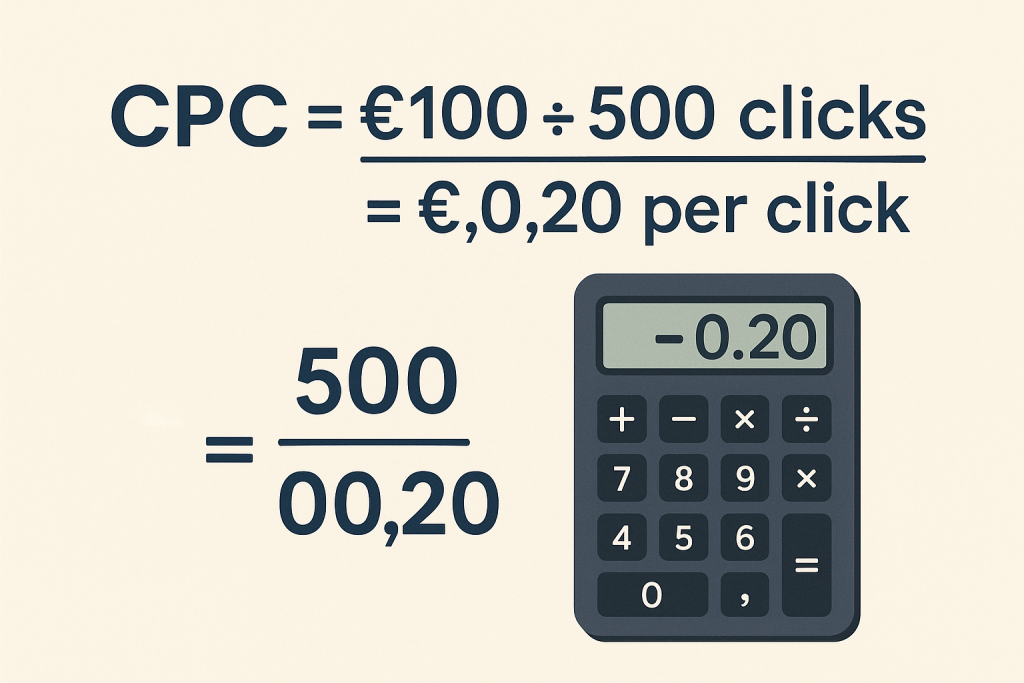
    For example, if you spend £100 on a campaign and receive 500 clicks, your price per click would be £0.20.

    This simple calculation is key to measuring the efficiency of a campaign. If you can lower your CPC while still maintaining or increasing the number of clicks, your campaign becomes more cost-effective, giving you a higher return on investment (ROI).

    Real-life Example:

    Imagine running a PPC campaign with a £1,000 budget. If you receive 2,500 clicks on your ads, the CPC would be:

    CPC = 1000 / 2500 = 0.40

    In this case, the cost per click is £0.40, and by adjusting your strategy, you may be able to reduce this cost while maintaining traffic.

    CPC formula example graphic — £100 ÷ 500 clicks = £0.20 per click; calculator/notation visual.

    Why Is CPC Important for Your Business?

    CPC is crucial because it directly impacts the success of an online ad campaign. Here are some reasons why:

    1. Performance Measurement: A low CPC combined with high click-through rates (CTR) suggests a well-optimised ad campaign.
    2. Budget Control: CPC gives advertisers control over their budgets by allowing them to set maximum bids and daily limits.
    3. Strategic Adjustments: Understanding CPC helps businesses adjust their advertising strategies, optimise bids, and improve their ad quality, leading to better campaign performance.

    What Factors Affect Cost Per Click?

    Several factors determine the final CPC you pay:

    • Ad Rank: A higher Ad Rank lowers your CPC. You can improve your Ad Rank by increasing your bid or improving your ad quality.
    • Competition: The more competition there is for a keyword, the higher the CPC will be.
    • Ad Relevance and Quality Score: Ads with a high Quality Score generally have a lower CPC, as platforms like Google reward relevance and quality.

    How Can You Lower Your CPC?

    Lowering your CPC can significantly improve the ROI of your advertising campaigns. Here are a few expert strategies:

    • Improve Ad Quality: Focus on creating ads that are relevant to your audience, as this will boost your Quality Score.
    • Use Long-Tail Keywords: These are less competitive and often cheaper.
    • Optimise Landing Pages: Ensure your landing pages are aligned with your ads, as this helps improve conversion rates and ad relevance.

    By implementing these strategies, you can drive more traffic at a lower cost, making your campaigns more efficient. Learn more about how we can help by visiting our page on PPC Management Services.

    CPC vs. CPM: What’s the Difference?

    While CPC focuses on paying per click, Cost Per Mille (CPM) charges advertisers based on the number of impressions their ads receive, typically per 1,000 views.

    FeatureCost Per Click (CPC)Cost Per Mille (CPM)
    Payment BasisPay per clickPay per 1,000 impressions
    FocusDriving conversionsBrand exposure
    Best forDirect interaction with adsBuilding brand awareness
    Cost VariationVaries with competitionGenerally fixed

    CPC is ideal when the goal is to drive conversions, while CPM is better for brand awareness campaigns where ad visibility is the primary concern.

    How Does CPC Work in Online Advertising?

    The concept of CPC revolves around an auction system. On platforms like Google Ads, advertisers bid on keywords. The highest bidder doesn’t always win the top spot, however. Here’s what affects CPC:

    • Ad Rank: This is a combination of your bid and the Quality Score (a measure of how relevant and useful your ad is to users).
    • Competition: More advertisers bidding for the same keywords increases the CPC.
    • Relevance: The more relevant your ad is to a search query, the lower your CPC may be.

    CPC in Google Ads: What You Need to Know

    Google Ads operates a real-time auction system, where advertisers bid on keywords. However, the actual CPC you pay is often lower than your maximum bid, thanks to the Ad Rank system. The platform also uses a Quality Score to determine how relevant and effective your ad is, which directly impacts your price per click.

    For more detailed insights on how CPC works in Google Ads, check out our guide on Google Advertising Services by Seek Marketing Partners.

    Benefits of Monitoring Your CPC Regularly

    Keeping an eye on your CPC over time allows you to:

    1. Identify Campaign Efficiency: A falling CPC usually indicates that your ads are becoming more efficient.
    2. Make Data-Driven Decisions: Adjust bids, change keywords, or optimise ad copy based on CPC trends.
    3. Improve ROI: Lowering CPC while maintaining or increasing clicks helps improve your overall return on investment.

    CPC and PPC Management Services: Seek Marketing Partners

    By understanding cost per click (CPC), businesses can better manage their online advertising efforts and make informed decisions that drive more effective results.

    At Seek Marketing Partners, we specialise in helping businesses manage their pay-per-click campaigns, optimising for cost per click to ensure better results. Whether you’re running Google Ads, Facebook Ads, or another platform, we can help lower your CPC while driving targeted traffic.

    You can explore our services on our PPC services page, or get in touch with us to learn how we can help you!

    Clean SMP CTA banner with logo lockup and “Speak to a Strategist” — abstract background only.

    FAQs About Cost Per Click

    Q: What’s a good CPC for my business?

    A: A “good” CPC varies by industry, but the goal is to keep it as low as possible while still driving traffic that converts.

    Q: How can I lower my CPC on Google Ads?

    A: Improve your ad quality, target long-tail keywords, and focus on highly relevant ads to boost your Quality Score.

    Q: How is CPC different from CPM?

    A: CPC charges for clicks, while CPM charges for impressions, typically per 1,000 views.

    Q: Why is CPC important in PPC advertising?

    A: It helps measure campaign efficiency, manage budgets, and allows strategic adjustments to improve ROI.

  • Mastering International PPC Campaigns: Strategies for Success

    Mastering International PPC Campaigns: Strategies for Success

    Reaching customers across borders is important for business growth. International PPC (Pay-Per-Click) campaigns help connect with audiences worldwide, allowing businesses to expand and target new markets precisely. Let’s explore how to create successful international PPC strategies that work well and make the most of your investment across different cultures and languages.

    Key Takeaways

    • Thorough market research is essential for international PPC success
    • Localization goes beyond translation – adapt messaging to cultural nuances
    • Technical considerations include time zones, geo-targeting, and local payment preferences
    • Develop a multilingual keyword strategy tailored to each market
    • Continuously monitor and optimize campaign performance across regions
    • Stay compliant with international legal and regulatory requirements

    Understanding the International PPC Landscape

    Before starting international PPC campaigns, it’s important to understand the global digital advertising landscape. Email marketing services can work well with your PPC efforts, creating a complete digital strategy that engages audiences in different ways. The global digital advertising market is expected to reach $786.2 billion by 2026, growing at a 9% rate each year. This shows there’s a big opportunity for businesses to use international markets through smart PPC campaigns.

    Important facts to consider when planning your international PPC strategy:

    • Google is the biggest search engine globally with an 83% share, but other search engines like Baidu in China and Yandex in Russia are important in their regions
    • 63% of people have clicked on a Google Ad, showing that PPC advertising works well in getting users to engage
    • Mobile advertising will be 77% of digital ad spending in 2024, so it’s important to make campaigns work well on mobile devices
    • The average click-through rate (CTR) for PPC ads across industries is 1.91% on the search network and 0.35% on the display network
    • Video advertising is expected to grow at 11.8% each year from 2021 to 2026, offering new ways to engage international audiences

    Researching Target Markets

    Good market research is crucial for international PPC success. It helps create a targeted and effective campaign strategy. Understanding the importance of digital marketing in different regions can help you adjust your approach to meet local expectations and preferences. This research should include a thorough analysis of each target market, including demographic data, economic indicators, and digital behavior patterns.

    Consider these factors when researching your target markets:

    • Local search engine preferences: While Google is big globally, some markets have strong local alternatives (e.g., Baidu in China, Yandex in Russia)
    • Cultural nuances and language differences: Understand idioms, cultural references, and language variations to create ad copy that connects
    • Consumer behavior and online shopping trends: Analyze preferred payment methods, peak shopping times, and popular product categories
    • Competitive landscape in each target market: Identify key competitors, their strategies, and potential gaps in the market
    • Device usage and internet penetration: Tailor your campaigns to the most commonly used devices and platforms in each region
    • Seasonal trends and local holidays: Plan campaigns around important dates and events specific to each market
    • Regulatory environment: Familiarize yourself with advertising regulations and data protection laws in each country

    Localization Strategies for PPC Success

    Good localization is key to connecting with international audiences and making your PPC campaigns work better. It’s more than just translation – you need to understand local culture, preferences, and consumer behavior. Social media marketing can give useful insights into local preferences and trending topics, helping you improve your PPC strategy for each market.

    Here are some localization tactics to make your international PPC campaigns better:

    • Translate ad copy using professional translators, not machine translation: This ensures your message is culturally appropriate and connects with local audiences
    • Adapt messaging to fit local cultural values: Tailor your value proposition and call-to-action to match cultural norms and expectations
    • Use local domain extensions to build trust: Use country-specific domains (e.g., .co.uk, .de, .fr) to increase credibility and improve local search rankings
    • Customize landing pages for each target market: Create market-specific landing pages that reflect local preferences in design, content, and user experience
    • Include local testimonials and case studies: Show success stories from customers in the target market to build trust and relevance
    • Adapt visual elements: Make sure images, colors, and design elements are culturally appropriate and appealing to local audiences
    • Localize offers and promotions: Tailor discounts, bundles, and special offers to match local buying habits and preferences
    • Use local currencies and measurement units: Show prices in local currency and use appropriate units of measurement to avoid confusion

    Technical Considerations for Global PPC Campaigns

    Managing international PPC campaigns requires attention to technical details that can significantly impact how well your campaigns work and the user experience. By addressing these technical aspects, you can make sure your campaigns are set up correctly for each target market, making them as efficient and effective as possible.

    Here are some key technical things to keep in mind:

    • Set up correct time zones for each target market: Make sure ads are shown at the best times for local audiences by setting accurate time zone settings
    • Account for seasonal variations in different regions: Adjust campaigns to match local seasons, which may be different across hemispheres
    • Use geo-targeting to reach specific locations: Use advanced geo-targeting options to focus your ads on the most relevant regions, cities, or even neighborhoods
    • Consider local payment preferences and currencies: Include popular local payment methods and show prices in local currencies to make it easier for people to buy
    • Implement hreflang tags: Use hreflang attributes to specify the language and regional targeting of your web pages, improving SEO and user experience
    • Optimize page load speeds: Make sure your landing pages load quickly on various devices and connection speeds common in your target markets
    • Adapt to local mobile networks: Consider how common 3G, 4G, or 5G networks are in each market and optimize your mobile experience accordingly
    • Implement proper URL structures: Use country-specific subdomains or subdirectories to organize your international content effectively

    Key Considerations for International PPC Campaigns

    • Research target markets thoroughly before launching
    • Understand local search engine preferences (Google isn’t universal)
    • Use professional translation for ad copy, not machine translation
    • Consider digital tax rates in different countries (2-5% increase in costs)
    • Choose between language-specific, country-specific, or region-specific campaigns
    • Adapt messaging and visuals to local cultural preferences
    • Set up correct time zones for each target market
    • Account for seasonal variations in different regions
    • Prepare localized landing pages for better user experience
    • Research local payment preferences and options

    Keyword Strategy for International Markets

    Developing a good keyword strategy is crucial for international PPC success, as it forms the foundation of your targeting and ad relevance. Email marketing services can help you understand local language nuances and popular topics, informing your keyword research. A well-crafted international keyword strategy ensures your ads appear in front of the right audience at the right time, maximizing your campaign’s effectiveness.

    Consider these tips for developing a robust international keyword strategy:

    • Conduct multilingual keyword research: Use native speakers or professional translators to identify relevant keywords in each target language
    • Adapt keywords for local search intent: Understand how users in different markets phrase their queries and tailor your keywords accordingly
    • Use long-tail keywords for better targeting: Include specific, longer phrases that may have lower competition but higher intent
    • Monitor and refine keywords regularly: Continuously analyze keyword performance and adjust your strategy based on data-driven insights
    • Consider local dialects and regional variations: Account for language differences within countries (e.g., Spanish in Spain vs. Latin America)
    • Leverage keyword tools with international data: Use tools that provide search volume and competition data for your target markets
    • Analyze competitor keywords in each market: Identify gaps and opportunities by studying successful competitors in each region
    • Include local brand names and product terms: Add popular local brands and product names that may be synonymous with your offerings

    Budget Management and Allocation

    Managing your budget well is essential for getting the best results from your international PPC campaigns. With different costs per click (CPC) and competition levels across markets, smart budget allocation can really impact your campaign’s success. Using a data-driven approach to budget management ensures you’re investing your resources where they’ll generate the best returns.

    Consider these strategies for optimal budget management in international PPC campaigns:

    • Allocate budgets based on market potential and competition: Invest more in markets with higher potential returns and adjust based on competitive landscapes
    • Account for regional CPC variations: Be prepared to adjust budgets based on the varying costs per click in different markets
    • Use data-driven insights to optimize spending: Use analytics to identify high-performing markets and campaigns, and allocate budgets accordingly
    • Continuously monitor and adjust budgets based on performance: Regularly review campaign performance and reallocate funds to maximize ROI
    • Implement dayparting strategies: Adjust bids and budgets based on peak performance times in each market
    • Set up automated rules: Use platform features to automatically adjust budgets based on performance thresholds
    • Consider currency fluctuations: Factor in exchange rate variations when managing budgets across multiple currencies
    • Allocate test budgets for new markets: Set aside funds to test and learn in new regions before fully committing resources

    Average CPC by Region

    CPC Region Graph

    Performance Tracking and Analytics

    Measuring the success of your international PPC campaigns is crucial for ongoing improvement and ensuring a good return on investment. Understanding digital marketing metrics is key to interpreting results and making data-driven decisions. By closely monitoring performance across different markets, you can identify opportunities for improvement and allocate resources more effectively.

    Focus on these key performance indicators (KPIs) to evaluate and optimize your international PPC campaigns:

    • Click-through rate (CTR): Measures the percentage of people who click on your ad after seeing it, indicating ad relevance and appeal
    • Conversion rate: The percentage of clicks that result in desired actions (e.g., purchases, sign-ups), reflecting the effectiveness of your landing pages and offer
    • Cost per acquisition (CPA): The average cost to acquire a customer or conversion, helping you assess the efficiency of your campaigns
    • Return on ad spend (ROAS): Measures the revenue generated for every dollar spent on advertising, indicating overall campaign profitability
    • Quality Score: Google’s rating of the quality and relevance of your keywords and PPC ads, affecting ad rank and CPC
    • Impression share: The percentage of impressions your ads receive compared to the total number of impressions they’re eligible to receive
    • Average position: The average position of your ads on search engine results pages, though less emphasized in recent years
    • Geographic performance: Analyze how your campaigns perform in different regions to identify high-potential markets
    • Device performance: Compare performance across desktop, mobile, and tablet to optimize for each device type

    Navigating Legal and Regulatory Challenges

    International PPC campaigns must follow various legal and regulatory requirements, which can be very different from one country to another. Navigating these challenges is important to avoid potential legal issues, penalties, and damage to your brand reputation. It’s essential to stay informed about the rules in each target market and adapt your PPC strategies accordingly.

    Be aware of the following legal and regulatory considerations when running international PPC campaigns:

    • Data privacy regulations (e.g., GDPR in Europe): Make sure you comply with data protection laws, including getting proper consent for data collection and processing
    • Advertising restrictions for specific industries: Be aware of limitations on advertising certain products or services (e.g., alcohol, pharmaceuticals) in different countries
    • Local tax implications: Understand the tax obligations related to digital advertising in each market, including potential digital services taxes
    • Consumer protection laws: Comply with local regulations regarding advertising claims, pricing transparency, and consumer rights
    • Intellectual property rights: Respect trademarks and copyrights when using keywords and ad content in different markets
    • Age restrictions: Follow age-related advertising regulations, particularly for products like alcohol or gambling
    • Language requirements: Some countries require the use of local languages in advertising or require translations to be available
    • Ad disclosure requirements: Follow guidelines for clearly identifying paid advertisements in each market

    Continuous Optimization and Scaling

    Successful international PPC campaigns need ongoing improvement and expansion to stay effective and take advantage of new opportunities. The digital advertising landscape is always changing, with shifts in consumer behavior, technology, and market conditions. By always working to optimize and strategically scale your campaigns, you can stay ahead of the competition and get the best return on your PPC investments.

    Consider these strategies for ongoing optimization and scaling of your international PPC campaigns:

    • Regularly review and update ad copy: Keep your messaging fresh and relevant by updating ad copy based on performance data and seasonal trends
    • Test different ad formats and extensions: Try various ad formats (e.g., responsive search ads, video ads) and extensions to improve engagement and conversion rates
    • Expand into new markets based on performance data: Use insights from existing campaigns to identify promising new markets for expansion
    • Leverage successful strategies across regions: Apply learnings from high-performing campaigns to other markets, adapting for local nuances
    • Implement advanced bidding strategies: Use machine learning-powered bidding strategies to optimize for specific goals (e.g., target ROAS, target CPA)
    • Refine audience targeting: Continuously refine your audience segments based on performance data and customer insights
    • Optimize landing pages: A/B test landing pages to improve conversion rates and user experience across different markets
    • Stay informed about platform updates: Keep up with new features and best practices from advertising platforms to leverage the latest tools and techniques

    Conclusion

    Mastering international PPC campaigns requires a mix of strategic planning, cultural awareness, and technical know-how. By thoroughly researching target markets, localizing your approach, and continuously improving your campaigns, you can succeed in the global digital advertising landscape. Remember to use complementary strategies like email marketing and social media marketing to create a complete international digital marketing strategy that engages audiences in multiple ways and drives sustainable growth for your business.

    As you start your international PPC journey, keep in mind that success often comes from being willing to adapt and learn from each market’s unique characteristics. By staying informed about global digital trends and remaining flexible in your approach, you can create PPC campaigns that connect with audiences worldwide and drive meaningful results for your business. The key to long-term success is continuous learning, testing, and refinement, always keeping the needs and preferences of your target audience as the most important part of your strategy. With persistence and a data-driven approach, your international PPC campaigns can become a powerful tool for global business growth and market expansion.