Author: Seek Marketing Partners

  • What is Answer Engine Optimisation? And How to Do It

    What is Answer Engine Optimisation? And How to Do It

    Ever asked ChatGPT or a voice assistant a question? These AI-powered tools are answer engines, and getting your brand mentioned in their responses takes a special strategy. Answer Engine Optimisation, also known as AEO, is the practice of optimising your content for AI-driven answer platforms like ChatGPT, Google’s AI Overviews, and virtual assistants. 

    In plain terms, AEO means crafting and structuring your content so it earns mentions, citations, and placements in conversational AI answers. Unlike traditional SEO, which targets search engines and keyword rankings, AEO focuses on question-based queries and making sure AI tools cite your brand in their answers.

    AEO is becoming increasingly important as search habits change. AI chatbots and assistants are carving out their own corner of online discovery.

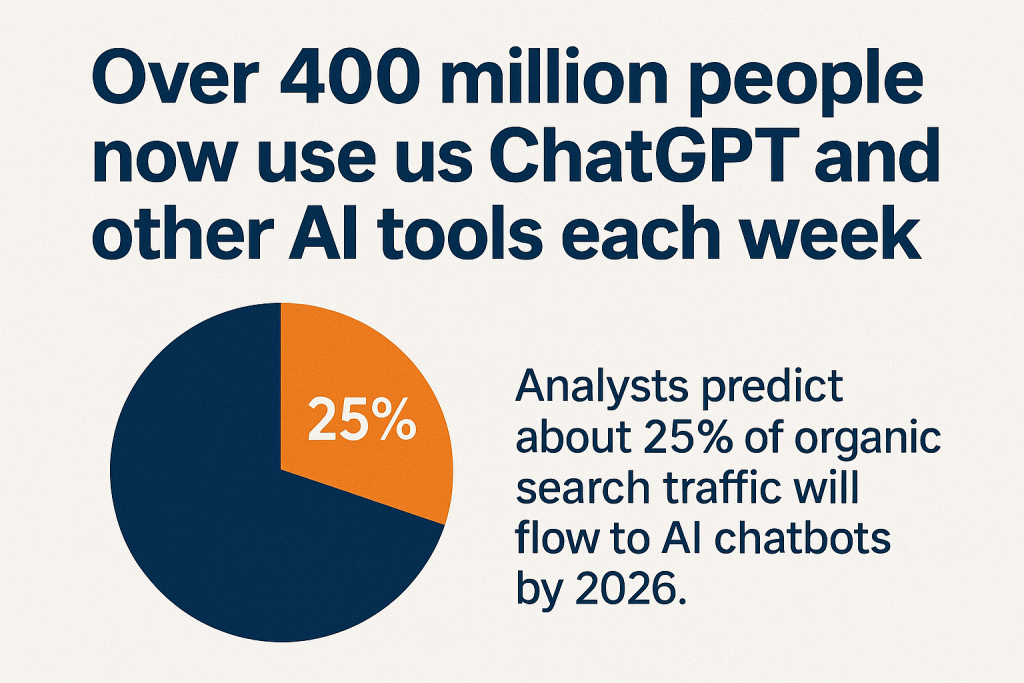
    Surveys show over 400 million people now use ChatGPT and other AI tools each week, and analysts predict about 25% of organic search traffic will flow to AI chatbots by 2026.

    In short, people are getting answers from AI without even clicking through to websites, and those AI-referred visitors can be highly intent-driven and commercially valuable. This shift means your content must show up inside AI answers, not just on Google’s first page.

    Understanding How AEO Differs from SEO

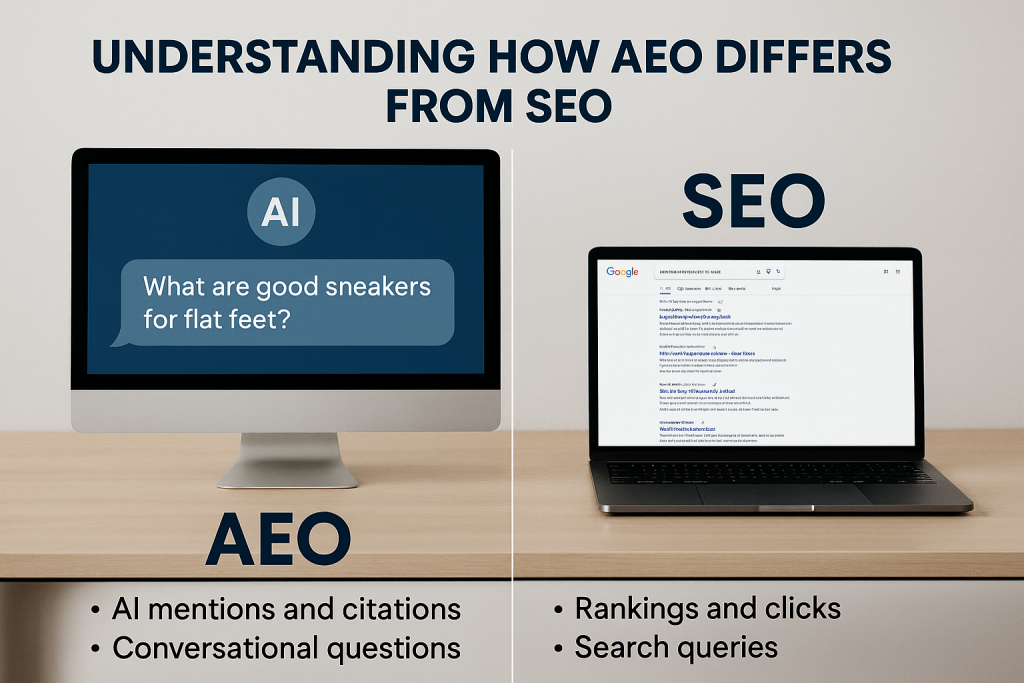
    While AEO and SEO share the goal of visibility, their focus and tactics differ. SEO aims to rank your pages on search engine results pages (SERPs) using keywords, links, and technical signals. In contrast, AEO aims to get your content cited by AI tools. 

    For example:

    • SEO success is measured in rankings and clicks, whereas AEO success is measured in AI mentions and citations.
    • SEO targets search queries like “best running shoes for flat feet,” but AEO answers conversational questions like “what are good sneakers for flat feet?”

    In practice, many tactics overlap (high-quality content, authority links, clear site structure), but AEO adds extra layers. You need to structure content so that large language models (LLMs) can easily extract answers. 

    This means using question-based headings, clear, concise answers, and even schema markup. In essence, AEO is about being AI-friendly: think about how to answer a user’s question in a way that a chatbot can read, understand, and trust.

    Why Answer Engine Optimisation Matters

    • Changing search behaviour: AI assistants are increasingly the first stop for answers. Tools like ChatGPT and Microsoft Copilot often present a single, concise response (sometimes with citations) instead of a list of links. Users can get what they need without clicking through, so being in the answer itself is critical.
    • High-value traffic: As noted, AI-driven interactions often reflect high intent, as users are actively seeking specific answers or solutions. If a chatbot cites your product or advice, you reach a user who is actively seeking a solution you offer – often at a later stage of the decision process.
    • Authority and trust: AI tools tend to pull information from trusted sources. Earning mentions in respected publications or authoritative sites boosts your credibility in their answers, which reinforces your brand authority.
    • Future-proofing your strategy: With search engines introducing features like Google’s AI Overviews and voice answers, AEO ensures you stay visible. Gartner predicts that 25% of search traffic will move to chatbots and virtual agents by 2026, so early AEO adopters can secure a first-mover advantage.

    In practice, the shift is already visible. For example, after ChatGPT launched, platforms like Stack Overflow reported a noticeable decline in visits as users increasingly turned to AI tools for answers. Yet companies like NerdWallet saw revenue rise even as organic traffic fell, confirming that users aren’t searching less – they’re searching differently. By optimising for answer engines, you tap into this new way people find information and solutions.

    How to Optimise Your Content for Answer Engines

    Getting your content featured in AI answers requires a targeted approach. Here are key AEO strategies:

    1. Earn Authoritative Mentions

    AI models pull answers from trusted sources like educational, government, and industry news sites. So, aim to get your brand or content cited on those platforms. These mentions build your AI “footprint.” As Semrush explains, “You earn AI visibility by getting your brand mentioned in places LLMs trust—like Reddit, Wikipedia, and news publications.”. In practice, this means PR outreach, guest articles, and thought leadership pieces on reputable sites.

    2. Answer Real Questions Clearly

    Identify the questions your audience is asking, use tools like Google’s “People Also Ask,” keyword planners, or AI prompt research. Structure your content to answer each question directly. For example, make the question a heading (H2/H3) and write a concise answer immediately underneath. Then expand with details.

    3. Use Structured Data and Clear Formatting

    Implement schema markup where possible to label question or answer pairs. Break up text with short paragraphs, lists, and tables. These elements make it easier for an AI to find and cite precise information. In other words, let the AI “see” your answer format. The first heading of this article, What is Answer Engine Optimisation?”, is a good example – the question is in the heading and answered immediately in the paragraph.

    4. Demonstrate Expertise and E-E-A-T

    Chatbots favour content that demonstrates real-world expertise. Including credible sources, data, and clear references can improve the likelihood of your content being cited in AI-generated answers.

    In practice, write in an experienced tone, share original research or case examples, and make sure authorship is clear. This aligns with Google’s emphasis on Expertise-Experience-Authoritativeness-Trust (E-E-A-T) in content.

    5. Keep Content Fresh and Updated

    AI tools often favour recent information. According to an AirOps study, about 95% of ChatGPT’s cited sources come from content published or updated within the last 10 months. They also found that pages with a visible “last updated” timestamp get almost double the citations of older content.

    To leverage this, regularly refresh your content with new examples, stats, and timestamp updates. Highlight dates (via dateModified schema) so AI knows the answer is current.

    6. Maintain a Solid SEO foundation

    Remember, AEO builds on SEO. Good SEO (fast site, quality backlinks, clear navigation) underpins your content’s authority. Plus, as some tools can only scrape from the live web, you still want strong search rankings. Our SEO services are designed to grow your traffic and leads through data-led strategies, which complement AEO efforts by improving overall visibility.

    The Bottom Line: Putting AEO into Action

    To get started, perform an AEO audit alongside your SEO audit. Look at the questions in your niche and check if AI tools already answer them using someone else’s content. Then create or optimise pages to fill those gaps. For example, if a chatbot is answering “how to optimise images” with an answer that doesn’t mention you, create a clear, concise answer on your site and make sure AI can find it.

    At Seek Marketing Partners, we integrate AEO principles into our digital strategies. Our data-led SEO and content teams build content ecosystems aligned with your commercial goals. We can help you identify target questions, author authoritative content, and earn the mentions that AI tools trust.

    Ready to Boost Your Visibility in the Age of AI?

    Talk to us about SEO and content marketing services that include Answer Engine Optimisation (AEO). We work with mid-to-large organisations to solve complex challenges with clear, results-driven strategies. Get in touch with us today and we’ll make sure your answers are where your customers are looking.

  • Using Negative Keywords to Improve Google Ads Performance

    Using Negative Keywords to Improve Google Ads Performance

    When running paid search campaigns, the difference between wasted budget and strong ROI often comes down to the keywords you choose. While targeting the right terms is essential, knowing which keywords to exclude is just as important. These are known as negative keywords, and when used effectively, they can significantly improve your ad relevance, click-through rates (CTR), and conversion rates.

    In this guide, we’ll explain what negative keywords are, how they work, why they matter, and practical ways to implement them in your campaigns. By the end, you’ll understand how to fine-tune your Google Ads strategy to attract the right audience while saving money.

    What Are Negative Keywords?

    Simply put, negative keywords are words or phrases you add to your paid advertising campaigns to prevent your ads from appearing for irrelevant searches. By filtering out these search terms, you ensure your ads reach users with the highest potential to convert, while reducing wasted clicks that cost money without driving results.

    Think of it this way: if you sell premium running shoes, you wouldn’t want your ads to appear for searches like “cheap shoes” or “high heels.” Adding these terms as excluded keywords prevents your ads from showing to users who aren’t your target audience.

    So, what are negative keywords? In practice, these keywords are a powerful way to refine your targeting. They allow advertisers to focus on high-intent searchers, improve CTR, and maximise the return on ad spend (ROAS).

    Benefits of Using Negative Keywords

    Adding blocking keywords to your campaigns offers multiple advantages:

    • Increase ad relevance – Ensures that your ads only appear for queries aligned with your offerings.
    • Improve CTR – By avoiding irrelevant searches, the proportion of users clicking your ad increases.
    • Save money – Prevents spending on clicks unlikely to convert.
    • Boost conversions – Attracts users more likely to complete a desired action.
    • Optimise ROAS – Focus your budget on the most profitable audience.

    In short, negative keywords not only prevent wasted ad spend but also help shape campaigns that speak directly to your ideal customer.

    Ready to take your PPC campaigns to the next level? Explore our tailored Pay-Per-Click services to optimise your ad spend and drive better results. 

    Types of Negative Keyword Match

    These keywords can be applied in different ways depending on the scope and level of control you want. Google Ads allows three main match types:

    Broad Match

    Negative broad match prevents your ads from showing for searches that include all terms in any order. For example, if your negative broad match keyword is “running shoes”, your ad may still appear for searches like “blue tennis shoes,” but not for “shoes running” or “running shoes sale.”

    Broad match can limit reach more than phrase or exact matches, so it’s important to use it carefully.

    Phrase Match

    Negative phrase match blocks ads from appearing for searches that contain the exact phrase in the specified order, even with additional words before or after. For instance, if your negative phrase match keyword is “full body massage”, your ad won’t appear for searches like “deep tissue full body massage,” but could still show for “shoulder massage.”

    Phrase match offers a balance between control and reach, making it one of the safest options for many advertisers.

    Exact Match

    Negative exact match ensures your ad is excluded only when the search exactly matches the keyword phrase, with no variations. For example, [winter holidays] would prevent your ad from showing solely for users searching “winter holidays,” but not for “best winter holidays” or “holiday winter.”

    Exact match is highly precise but can be restrictive, so it works best for specific terms or competitor names.

    Looking to boost your online presence and drive more relevant traffic? Explore our comprehensive Search Engine Optimisation services to ensure your campaigns reach the right audience and deliver real results.

    Account, Campaign, and Ad Group Levels

    Negative keywords can be applied at three levels in Google Ads:

    1. Account-Level – Applies to all campaigns. Use this for generic terms you never want to trigger any ad across your account.
    2. Campaign-Level – Applies to all ads within a specific campaign. Ideal for excluding broader terms irrelevant to a campaign’s focus.
    3. Ad Group-Level – Applies to a specific ad group. Useful for finer control, e.g., excluding “formal” for a running shoe ad group but allowing it for dress shoe ads.

    Choosing the right level ensures you avoid blocking valuable traffic while maintaining relevance in your campaigns.

    How to Find Negative Keywords

    Identifying the right excluded keywords is critical. There are several methods to do this effectively:

    Keyword Research

    Start by understanding your target audience and the search terms they use. Look for terms that are similar to your product but don’t align with your business. For example, if you sell premium shoes, terms like “cheap shoes” or “second-hand shoes” can be added.

    Competitor Analysis

    Review what keywords competitors are bidding on, especially if they’re unrelated to your audience. Tools like Semrush can provide insights into competitor PPC campaigns, helping you uncover terms to exclude.

    Google Search & Autocomplete

    Perform manual searches using your primary keywords. Observe autocomplete suggestions and related searches that may not match your campaign goals. Terms like “discount” or “free” often indicate low-intent queries.

    Search Terms Report

    Google Ads’ Search Terms Report shows which queries triggered your ads. Identify low-performing terms with low CTR or conversions and add them to your list. This method ensures your ads aren’t served to uninterested users.

    Creating Negative Keyword Lists

    Managing negative keywords at scale is easier by creating lists. Here’s how:

    1. Go to Google Ads and navigate to Negative Keyword Lists in the Shared Library.
    2. Click the plus icon to create a new list.
    3. Add the keywords, specifying match types (broad, phrase, exact).
    4. Apply the list to campaigns or ad groups.

    Lists are particularly useful when running multiple campaigns with overlapping terms. For example, if you sell only new cars, a single list excluding “used cars” can be applied across all campaigns.Ready to optimise your PPC campaigns and drive better results? Our expert Google Ads management service can help you create and manage effective strategies tailored to your business goals.

    Example of Negative Keywords in Action


    To illustrate, consider a company selling dog clothes:
      Primary ad group: Dog jackets
      Excluded terms: cat, kitten, feline
      Result: Ads never appear for searches like “cat jacket” but show to users searching for dog-related clothing.
    An example of negative keywords might include terms like “free,” “cheap,” or competitor brand names. Using these exclusions ensures that your budget targets only high-intent searches.

    Best Practices for Negative Keywords 

    To make the most of your negative matching strategy, include singular and plural forms (e.g., “shoe” and “shoes”), use symbols carefully as Google recognises ampersands, accents, and certain characters but handles them differently, and experiment with match types – broad, phrase, and exact can be combined to suit campaign goals. 

    Regularly monitor performance by reviewing CTR, conversions, and search terms to identify new negatives, and update lists frequently since PPC campaigns evolve, meaning your keyword lists should too.

    Supercharge Your Ads Today

    Incorporating negative keywords into your Google Ads campaigns is essential for saving budget, improving ad relevance, and driving higher conversions. By carefully selecting the right exclusions, using match types strategically, and applying these keywords at the appropriate account, campaign, or ad group level, you can ensure your ads reach the most relevant audience.

    With this approach, your campaigns will become more efficient, your CTR and conversion rates will improve, and your return on ad spend will increase. Take the time to identify, test, and refine negative keywords, and your paid search campaigns will reward you with stronger performance and better results.

  • What Is Keyword Bidding? How to Win in PPC Campaigns

    What Is Keyword Bidding? How to Win in PPC Campaigns

    Digital marketing professionals know that keyword bidding is a cornerstone of pay-per-click (PPC) advertising. It determines which ads appear for search queries, how much you pay for each click, and ultimately how effective your campaigns are. Understanding the mechanics of keyword bidding and how to strategically bid on keywords, including competitor keywords, can help businesses reach their target audience while maximising ROI.

    How Keyword Bidding Works

    Keyword bidding involves setting the amount you are willing to pay for your ad to appear when someone searches for a relevant term. Most commonly, this process takes place in Google Ads through an auction system. Every time a user searches, Google evaluates bids alongside factors like ad relevance, quality score, and the context of the search (device, location, time of day) to determine ad rank.

    A higher bid can improve ad placement, but relevance and ad quality are just as important. Ads with better quality scores often outperform higher-paying competitors. That’s why a strategic approach to keyword bidding is essential.

    Understanding Ad Rank and Quality Score

    Ad rank determines your ad’s position in search results. It is influenced by:

    • Bid amount: How much you are willing to pay per click.
    • Ad relevance: How well your ad matches the user’s search intent.
    • Landing page experience: How relevant and helpful your landing page is to the user.

    By optimising these factors, advertisers can compete effectively without overspending. A strong quality score often allows you to achieve better placement for less money.

    Boost your campaign performance and get the most out of every click with expert management. Explore how our PPC services can help you maximise results and achieve your marketing goals.

    Keyword Bidding Strategies

    Advertisers can choose from several strategies depending on their goals and level of control:

    Manual CPC: Set your bids manually at the keyword or ad group level. Provides tight control but requires ongoing monitoring.

    Automated Bidding: Google adjusts bids in real time based on performance metrics, saving time while optimising for conversions.

    Smart Bidding: Uses machine learning to bid on keywords and maximise conversions or conversion value automatically.

    Automated strategies include options such as Target CPA, Target ROAS, Maximise Conversions, and Maximise Conversion Value. Choosing the right approach depends on campaign goals, budget, and available data.

    Take your Google Ads campaigns to the next level with professional management tailored to your goals. Let our experts handle strategy, optimisation, and performance tracking so you can focus on growing your business.

    Optimising Keyword Bids for Maximum ROI

    To make the most of keyword bidding, consider these key steps:

    1. Choose the right keywords: Focus on terms with high relevance and strong commercial intent. Long-tail keywords often offer better ROI due to lower competition.
    2. Analyse competitor keywords: Understand which keywords competitors bid on and adjust your strategy to remain competitive without overspending.
    3. Use negative keywords: Exclude irrelevant search terms to prevent wasted clicks.
    4. Adjust bids strategically: Modify bids based on device, location, time, or audience characteristics to target high-value traffic.
    5. Continuous monitoring: Track performance metrics such as click-through rate (CTR), conversion rate, and cost per conversion to inform adjustments.

    Combining these tactics ensures your campaigns remain cost-effective and generate meaningful results.

    Setting Up Campaigns and Monitoring Performance

    Once you’ve selected keywords and a bidding strategy, the next steps involve:

    • Creating ad copies that align with your keywords and target audience.
    • Setting your daily budget based on bid estimates and campaign goals.
    • Launching campaigns and monitoring performance metrics regularly.
    • Testing ad variations through A/B testing to discover the most effective messaging and design.

    Regular review and optimisation allow you to refine bidding strategies for better visibility, engagement, and ROI.Boost the effectiveness of your campaigns by improving every step of the user journey. Our Conversion Rate Optimisation services help turn clicks into meaningful actions, increasing results from your existing traffic.

    Best Practices for Keyword Bidding

    Focusing on relevant and high-intent keywords is essential for any successful PPC campaign. Advertisers should avoid overbidding and use CPC estimates as a guide rather than a strict rule, ensuring that budgets are spent efficiently. 

    Tracking performance metrics closely allows for informed adjustments, helping campaigns remain competitive and effective over time. Leveraging automation wisely can save time and improve efficiency, but it should always complement a strategy grounded in quality ad creation and audience targeting.

    Equally important is keeping an eye on competitor bidding patterns. Understanding how others are bidding on keywords, including competitor keywords, enables you to respond strategically while maintaining ethical practices. 

    By combining careful monitoring, data-driven bid adjustments, and thoughtful campaign management, businesses can maximise ROI, stay ahead in the auction, and maintain campaigns that are both agile and results-driven.

    Maximising Results with Strategic Bidding

    Effective keyword bidding is more than setting a high bid – it’s about aligning campaign goals with the right strategies. By bidding on competitor keywords, optimising ad quality, and continuously refining campaigns, businesses can achieve better visibility, higher conversions, and greater ROI. A thoughtful, data-driven approach ensures every dollar spent works harder, delivering measurable growth while minimising wasted budget.Mastering keyword bidding empowers advertisers to stay ahead in the PPC landscape and maximise the impact of their digital marketing efforts.

  • Hreflang: Optimising Your Website for Multilingual SEO

    Hreflang: Optimising Your Website for Multilingual SEO

    If your website targets an international audience, simply translating content isn’t enough. Search engines need to understand which version of your website to show to users in different languages or regions. This is where hreflang comes in. By correctly implementing alternate URLs, you can improve user experience, avoid duplicate content issues, and ensure that your content reaches the right audience in the right language.

    What is Hreflang?

    Introduced by Google in December 2011, hreflang is an HTML attribute that signals to search engines the relationship between different language or regional versions of the same page. Essentially, it tells search engines, “This page has other versions in different languages or regions.”

    A basic implementation looks like this:

    <link rel="alternate" hreflang="es" href="https://example.com/es/" />

    In this example, Google will recognise that a Spanish version of the page exists and can serve it to users in Spain or those with Spanish-language preferences.

    Hreflang can also specify regional variations of the same language. For example, Spanish content for Spain (es-ES) differs slightly from Spanish content for Mexico (es-MX):

    <link rel="alternate" hreflang="es-ES" href="https://example.com/es-es/" />
    <link rel="alternate" hreflang="es-MX" href="https://example.com/es-mx/" />

    Why Hreflang Matters for SEO

    Without hreflang, search engines may treat multiple language versions of your website as duplicate content, which can hurt your rankings. While the canonical tag tells search engines which page is the “main” version, hreflang tags inform them which page is appropriate for a specific language or region.

    Even though language tags don’t directly improve rankings, it ensures the right content is served to the right users, reducing bounce rates and improving engagement – factors that indirectly benefit SEO.

    Struggling to manage multiple markets or regions? Our team helps international websites structure their search strategy properly, eliminate technical conflicts, and make sure every audience lands on the right version of your site. Get expert support to fix international SEO issues at scale.

    How Hreflang Works

    This attribute can be implemented in three main ways:

    1. HTML <head> section: Most common for standard web pages. Each page should include links to all language versions, including itself.

    <link rel=”alternate” href=”https://example.com/” hreflang=”en” />
    <link rel=”alternate” href=”https://example.com/es/” hreflang=”es” />
    <link rel=”alternate” href=”https://example.com/de/” hreflang=”de” />

    2. HTTP headers: Useful for non-HTML files, such as PDFs. The syntax is similar:

    Link: <https://example.com/es/manual.pdf>; rel="alternate"; hreflang="es"

    3. XML sitemaps: Best for large-scale websites with many multilingual pages. Each URL includes all alternate language links, for example:

    <urlset xmlns="http://www.sitemaps.org/schemas/sitemap/0.9"
    xmlns:xhtml="http://www.w3.org/1999/xhtml">
    <url>
    <loc>https://example.com/</loc>
    <xhtml:link rel="alternate" hreflang="en" href="https://example.com/" />
    <xhtml:link rel="alternate" hreflang="es" href="https://example.com/es/" />
    <xhtml:link rel="alternate" hreflang="de" href="https://example.com/de/" />
    </url>
    </urlset>

    A critical point is that alternate URLs must be bidirectional. That is, each language version must reference all other versions, including itself, to ensure search engines understand the full structure of your website.

    If this setup already feels complex, that’s because it is. We help businesses audit, implement, and maintain technically sound international setups that scale properly and don’t fall apart over time. Learn how our technical SEO specialists identify and fix structural issues before they impact performance.

    Using x-default for Unknown Languages

    Sometimes users arrive at your site with a language preference that isn’t available. The x-default hreflang tag lets search engines know which version should be shown as a fallback:

    <link rel="alternate" hreflang="x-default" href="https://example.com/" />

    This ensures visitors don’t land on the wrong language page, improving both user experience and SEO outcomes.

    Common Errors to Avoid

    Implementing geotargeting signals incorrectly can reduce its effectiveness. Here are common mistakes:

    • Missing self-references: Each page must include an hreflang tag pointing to itself.
    • Incorrect ISO codes: Always follow ISO 639-1 for language codes and ISO 3166-1 for regions. For example, use en-gb for the UK, not en-uk.
    • Outdated or broken URLs: Ensure all URLs in the tags actually exist.
    • Conflicts with canonical tags: Avoid using canonical and hreflang together on the same page if it could cause contradictory signals.
    • Ignoring x-default: Failing to set a default page may reduce the reach of your multilingual content.

    These issues rarely appear in isolation. On large or multi-region websites, they usually point to deeper structural problems that need a joined-up SEO approach. Our enterprise SEO team works with complex sites to resolve these risks at scale and keep international visibility stable as your business grows.

    Best Practices for Implementation

    • Use consistent URLs across all language versions to avoid confusion and ensure search engines index the correct pages.
    • Ensure bidirectional linking among all versions – each page should reference every other relevant language version, including itself.
    • Specify a default page using x-default for users whose language or region isn’t explicitly listed.
    • Verify hreflang with reliable tools:
    • For large websites, consider implementing these tags in XML sitemaps to streamline management and reduce errors across hundreds or thousands of pages.
    • Regularly audit your setup, especially after URL or content changes, to prevent broken references and outdated tags.
    • Double-check ISO language and country codes to ensure correct implementation (en-gb for UK English, not en-uk).

    Hreflang Tags and Website Performance

    Proper use of hreflang tags ensures that your website performs optimally for an international audience. Search engines serve the correct language version to users, decreasing bounce rates and improving engagement metrics. This indirectly supports SEO by enhancing the website’s credibility and user satisfaction.

    In addition, correctly implemented alternate URLs reduces the risk of duplicate content issues, which can otherwise dilute your ranking potential. For companies targeting multiple regions, this makes alternate URLs a foundational part of their SEO strategy.

    Optimise Your Multilingual Website Effectively

    Hreflang is essential for websites targeting multiple languages or regions. By signalling to search engines which version of your page is appropriate for each audience, you can improve user experience, avoid duplicate content issues, and enhance the effectiveness of your SEO strategy.

    Whether you implement it in HTML, HTTP headers, or sitemaps, following best practices and avoiding common errors ensures that your international website reaches the right users at the right time. Tools like SISTRIX and Google Search Console simplify this process, making the implementation manageable even for large websites.Investing the effort into properly using hreflang will pay off in long-term visibility, engagement, and international growth.

  • How to Boost Domain Authority: Key Strategies for SuccessAmendedHow to Boost Domain Authority: Key Strategies for Success

    How to Boost Domain Authority: Key Strategies for SuccessAmendedHow to Boost Domain Authority: Key Strategies for Success

    Achieving a higher domain authority (DA) is crucial for improving your website’s visibility in search engine results pages (SERPs). While DA isn’t a direct ranking factor for Google, it is a valuable metric that reflects your site’s credibility and likelihood to rank. Understanding how to boost domain authority can help you position your website as a trustworthy source in your industry and give your content a better chance of reaching the right audience.

    In this article, we’ll explore what domain authority is, why it’s important, what a good domain authority is, and the most effective strategies to increase it steadily over time.

    What is Domain Authority?

    Domain authority is a score developed by Moz to predict how well a website will rank on search engines. The score ranges from 0 to 100, with higher numbers indicating a greater chance of ranking. It is calculated based on multiple factors, including the number and quality of backlinks, the number of linking root domains, and the overall quality of your site’s content.

    Essentially, DA is a way to measure your website’s “trustworthiness” in the eyes of search engines. A high domain authority indicates that your website has earned credibility through strong content, a good backlink profile, and a solid user experience.

    Understanding what a domain authority is helps business owners and digital marketers make informed decisions about which strategies to prioritise. For example, if your DA is lower than your competitors’, you may need to focus on creating shareable content and building authoritative backlinks to improve your chances of ranking for competitive keywords.

    Why is Domain Authority Important?

    Even though domain authority is not a direct Google ranking factor, it provides valuable insight into your website’s ability to compete in search results. By monitoring your DA, you can evaluate how your site compares to competitors in your niche and identify opportunities for improvement.

    For instance, if your website has a DA of 35, and your competitors range from 45 to 55, you’ll know that achieving top search positions for competitive keywords may be challenging without additional effort. Conversely, if your DA is higher than most competitors, you can confidently target higher-traffic keywords and optimise content to attract more organic visitors.

    A strong domain authority can also improve your website’s credibility with users. Websites with high DA scores are often perceived as more trustworthy, which can lead to higher click-through rates, better engagement, and increased conversions.

    What is a Good Domain Authority?

    Before diving into strategies, it’s important to understand what a good domain authority score is. While DA ranges from 0 to 100, a “good” score varies depending on your industry and competition:

    • A DA of 50 or above is generally considered strong in most industries.
    • In highly competitive sectors, a DA closer to 70 may be required to outrank other established sites.
    • In less competitive niches, a DA of 30-40 could still give you a significant advantage.

    It’s important to remember that domain authority is relative. Your DA score is not an absolute measure of success but a benchmark against competitors. For smaller or newer websites, even modest improvements in DA can make a meaningful difference in search visibility.

    How to Boost Domain Authority: 5 Effective Strategies

    Now that you understand what ‘DA’ is, let’s explore actionable strategies for improving your score.

    Create High-Quality, Linkable Content

    Content remains the foundation of any effective SEO strategy. Websites with strong, original content are more likely to attract backlinks from reputable sources, which directly influences domain authority.

    When creating content:

    • Focus on quality over quantity. Long, well-researched articles often outperform shorter, superficial posts.
    • Target topics your audience cares about and provide actionable insights.
    • Create content that is naturally shareable, such as infographics, case studies, and in-depth guides.
    • Analyse competitor content to identify gaps and opportunities where you can provide a unique perspective.

    High-quality content not only increases your DA but also enhances user engagement, improves time on site, and encourages repeat visits – all factors that indirectly support your search visibility.

    Need help creating content that actually earns links and authority? Explore our Content Marketing services to turn strategic, high-quality content into measurable SEO growth.

    Build High-Quality Backlinks

    Backlinks are one of the most significant factors affecting domain authority. However, the focus should be on quality rather than quantity. Links from authoritative websites within your industry carry far more weight than numerous links from low-quality sites.

    Strategies to acquire high-quality backlinks include:

    • Guest Blogging: Write for reputable websites in your niche and include relevant links back to your own content.
    • Influencer Outreach: Connect with influencers or thought leaders who can naturally link to your content.
    • Resource Pages: Offer valuable guides or tools that authoritative sites want to reference.
    • Content Promotion: Share your content through social media and email newsletters to increase exposure and attract natural backlinks.

    Remember, acquiring high-quality backlinks takes time and effort, but it is one of the most effective ways to boost domain authority sustainably.

    Looking to build authoritative backlinks without risky tactics? Our Off-Page SEO services focus on ethical link building strategies that strengthen domain authority and deliver long-term search visibility.

    Optimise On-Page SEO

    On-page SEO ensures that your website is structured for both users and search engines. Optimised on-page elements improve user experience and help search engines crawl your website more efficiently.

    Key on-page SEO considerations include:

    • Use relevant keywords naturally within headings, content, and meta descriptions.
    • Ensure clear internal linking between pages to spread link equity and guide visitors.
    • Use descriptive, keyword-rich URLs for each page.
    • Optimise images with alt text and compressed file sizes for faster loading.

    By addressing these technical and content-related aspects, your website becomes more authoritative, contributing to a higher DA score over time.

    Struggling to turn solid content into real ranking gains? Our On-Page SEO services fine-tune structure, relevance, and internal linking to strengthen authority and improve organic performance.

    Improve Website Performance

    Website performance is a key factor in retaining visitors and reducing bounce rates. Google values sites that load quickly and provide a seamless user experience.

    To enhance your website’s performance:

    • Ensure your site is mobile-friendly and responsive on all devices.
    • Minimise page load times using caching, compressed images, and optimised code.
    • Maintain a clean, logical site structure that makes content easy to find.

    A fast, well-structured website not only improves user experience but also encourages other websites to link to your content, indirectly supporting domain authority growth.

    If site speed, structure, or crawlability are holding you back, our Technical SEO services resolve performance issues that limit rankings and restrict domain authority growth.

    Disavow Low-Quality or Broken Links

    Not all backlinks are beneficial. Links from spammy or irrelevant websites can harm your domain authority and reduce your credibility in the eyes of search engines.

    Steps to manage low-quality links:

    • Use tools like Moz, Ahrefs, or SEMrush to identify toxic links.
    • Reach out to webmasters to request removal of harmful links.
    • Use Google Search Console’s disavow tool to prevent harmful links from affecting your site’s authority.

    Regularly auditing your backlink profile ensures that your website maintains a strong, trustworthy link profile, which is essential for sustaining a high DA score.

    Continuous Monitoring and Improvement

    Boosting domain authority is not a one-time task – it requires ongoing effort. Monitor your DA using tools like Moz or Ahrefs, track the impact of your strategies, and adjust as necessary.

    Focus on creating valuable content, building reputable backlinks, optimising your on-page SEO, and maintaining a technically sound, user-friendly website. Over time, these actions will improve your site’s domain authority, enhance your visibility in search results, and drive sustainable growth.

    Want a joined-up SEO strategy that’s monitored, refined, and scaled over time? Our SEO services focus on sustainable growth by improving authority, visibility, and long-term performance.

    Take Your Domain Authority to the Next Level

    Understanding how to boost domain authority is essential for building a strong online presence. While DA is not a direct Google ranking factor, it reflects your website’s credibility, backlink strength, and overall SEO potential.

    By following the strategies outlined in this guide – creating linkable content, building high-quality backlinks, optimising on-page SEO, improving website performance, and managing low-quality links – you can steadily increase your domain authority and enhance your search engine visibility.

    Knowing what a domain authority is and what a good DA is helps set realistic benchmarks and measure your progress over time. Focus on continuous improvement, and your website will become more authoritative, competitive, and successful in attracting organic traffic.

    Start implementing these strategies today, and watch your domain authority rise along with your site’s visibility and impact.

  • Understanding and Preventing Click Fraud in Google Ads

    Understanding and Preventing Click Fraud in Google Ads

    Click fraud is a critical issue that can seriously damage the effectiveness of your Google Ads campaigns, drain your ad budget, and distort performance data. As digital advertising continues to grow, so does the prevalence of fraudsters targeting pay-per-click (PPC) campaigns. 

    This article will explore what click fraud is, how it works, the tactics used by fraudsters, and most importantly, how to protect your ad campaigns with effective AdWords click fraud prevention strategies

    What Is Click Fraud and Why Does It Matter?

    Click fraud refers to any form of fraudulent activity where clicks on an ad are made with no genuine interest in the product or service being advertised. These clicks are generated either manually by individuals or through automated bots. While AdWords click fraud can come in various forms, the goal remains the same: to either drain advertising budgets, skew campaign data, or artificially inflate a webpage’s click-through rate (CTR).

    Fraudsters often use ad fraud for financial gain. This can range from competitors repeatedly clicking on ads to deplete their rivals’ ad budgets, to criminals driving fake clicks to earn revenue from the pay-per-click model. In fact, up to 20% of all PPC ad spend is lost to click fraud every year, making it a serious issue for businesses investing in online advertising.

    How Does Click Fraud Work?

    Understanding how click fraud operates is crucial for identifying and preventing it. Fraudsters typically use two main tactics to generate invalid clicks: bots and click farms.

    Bots

    Bots are automated scripts designed to mimic human actions online, generating fraudulent clicks on ads without genuine user interaction. These bots are often part of larger networks known as botnets, which can consist of thousands or even millions of compromised devices. Once a device is infected with malware, it can unknowingly become part of a botnet, executing fraudulent clicks without the user’s knowledge.

    Botnets

    Botnets are particularly effective at executing large-scale ad fraud because they can simulate legitimate traffic across multiple devices, making detection more challenging for advertisers. For example, PPC fraud bots might mimic human behaviour, including mouse movements and random pauses between clicks, to avoid triggering detection mechanisms that monitor bot-like patterns.

    Click Farms

    Another tactic used for ad fraud involves human workers in click farms. These are low-paid workers, often based in countries with cheaper labour, who are hired to manually click on ads to inflate the click-through rate of a webpage. Click farms can also be used to artificially boost engagement on social media posts. While click farm fraud is more resource-intensive than using bots, it has the advantage of appearing more like legitimate user behaviour, making it harder to detect.

    Click Hijacking and Fake App Installations

    Other methods of PPC fraud include click hijacking, where clicks intended for one ad are redirected to another, and fake app installations, where fraudulent installations of mobile apps are used to inflate traffic numbers. These tactics further complicate the issue for businesses trying to track real user engagement and optimise their ad spend.

    Protect your campaigns from wasted spend and maximise the impact of every click with expert PPC management. Our team can help you optimise performance and ensure your ads reach the right audience.

    How Can You Spot and Prevent Click Fraud?

    There are several warning signs that click fraud is impacting your campaigns, and identifying these signs early can help minimise the damage. Some key indicators of fraudulent activity include:

    1. Spikes in Clicks or Impressions: An unusual spike in clicks, particularly outside of your target audience’s typical hours, could indicate fraudulent activity.
    2. High Bounce Rates: If users click on your ads but leave your site quickly, this can signal ad fraud, especially if the visitors aren’t converting or engaging.
    3. Traffic from Unusual Locations: If your campaign is geo-targeted but you’re seeing traffic from regions outside your target area, this could be a sign of PPC fraud from IP addresses masking their location using VPNs.
    4. Low Conversion Rates: A high number of clicks but few conversions is a red flag. It suggests that the clicks are not from legitimate customers and may be driven by fraudsters or bots.

    To combat these issues, you can implement several prevention techniques. Below are some of the most effective strategies.

    Ensure your Google Ads campaigns deliver real results with professional account management and optimisation. Our team focuses on maximising ROI while keeping your campaigns efficient and effective.

    Effective AdWords Click Fraud Prevention Strategies

    Geographic Targeting and IP Exclusion

    One of the first lines of defence in ad fraud prevention is refining your campaign’s targeting. By using geographic targeting, you can ensure your ads only appear in the locations that matter to your business. If your ads are showing up in countries or regions where you don’t do business, this can be a sign of PPC fraud.

    In addition, IP exclusion allows you to block specific IP addresses that are generating fraudulent clicks. If you notice suspicious patterns from certain IPs, excluding them from your campaigns will help protect your budget from further waste.

    Ad Scheduling

    Another prevention tactic is ad scheduling. By controlling when your ads are displayed, you can limit your exposure to high-risk times, such as late at night or on weekends, when fraudsters may be more active. Scheduling your ads to appear during business hours or when legitimate traffic is most likely to be online can reduce the likelihood of fraudulent clicks.

    Negative Keywords

    Using negative keywords is a simple yet effective way to prevent ad fraud. Negative keywords allow you to exclude irrelevant or unrelated search queries from triggering your ads. By doing this, you can reduce the chances of your ads appearing for searches that are unlikely to lead to conversions, including those targeted by fraudsters.

    Monitoring and Reporting Tools

    There are a variety of AdWords click fraud detection tools available that can help you monitor your campaigns in real time. Google’s built-in fraud detection system offers a first layer of protection by filtering out invalid clicks. However, additional third-party tools can offer more advanced features, including detailed reporting, anomaly detection, and the ability to filter out traffic from known fraudulent sources.

    Some tools also use AI and machine learning to identify suspicious patterns and prevent fraudulent activity before it can impact your ad spend.

    Boost your website’s visibility and drive high-quality traffic with expert SEO services tailored to your business goals. Our team focuses on strategies that improve rankings, increase engagement, and deliver measurable results.

    The Cost of Click Fraud to Businesses

    The financial and data impact of ad fraud can be substantial. According to recent estimates, up to 22% of all ad spend is lost to fraud each year, which can add up to billions of dollars across industries. In 2023, click fraud was responsible for a significant portion of the $84 billion in global ad spend lost to fraud.

    This financial loss is only the tip of the iceberg. The real damage occurs when PPC fraud skews campaign data, making it difficult to assess the effectiveness of your advertising efforts. Misleading data can result in poor decision-making, inefficient ad spend, and lost opportunities for growth.

    The Bottom Line on Click Fraud Prevention

    In conclusion, ad fraud is a growing threat that can drain your ad budgets and distort your campaign data if left unchecked. By implementing strategic measures such as AdWords click fraud prevention, refining your targeting, and using fraud detection tools, you can significantly reduce the risk of fraudulent clicks and protect your digital advertising investments.

    Remember, prevention is always better than cure. Taking steps now to safeguard your campaigns will help you ensure that your PPC ads are driving genuine, high-quality traffic that leads to real conversions.

  • How to Get Rich Snippets for Your Website: A Complete Guide

    How to Get Rich Snippets for Your Website: A Complete Guide

    Digital marketing professionals know that standing out in search results is no longer just about ranking. Rich snippets are enhanced search results that display additional information, like ratings, prices, and images, directly in Google’s Search Engine Results Pages (SERPs). These snippets don’t directly impact rankings, but they significantly improve click-through rates (CTR) and user engagement, giving your website a competitive edge.

    In this guide, we’ll explain what rich snippets are, why they matter for SEO, the different types you can implement, and how to get rich snippets using structured data, particularly JSON-LD. By the end, you’ll understand how to enhance your search listings and drive more qualified traffic to your site.

    What is a Rich Snippet and Why It Matters

    A rich snippet is a search result that goes beyond the standard “blue link” snippet. It can include star ratings, product pricing, author images, event dates, and more. Unlike normal snippets, rich snippets give users more context about your content at a glance, which makes your listing more visually appealing and trustworthy.For example, a recipe with a rich snippet can display cooking time, ingredients, and a photo directly in the SERP. A product page can show availability, price, and reviews without users even visiting the page.

    Why it matters:

    • Improved CTR: Listings with rich snippets can get up to 20–30% higher click-through rates.
    • Enhanced visibility: They stand out visually in crowded SERPs.
    • User trust: By showing accurate details upfront, users perceive your brand as credible.

    While Google doesn’t consider rich results as a direct ranking factor, the increased engagement they drive can influence ranking indirectly over time.

    The Difference Between Snippets, Rich Results, and SERP Features

    Snippet

    The standard search result shows the page title, URL, and a short description. 

    It provides basic information to users but doesn’t visually stand out in search results.

    Rich snippet / Rich result

    This is an enhanced listing that includes extra details like star ratings, images, prices, or FAQs. 

    These added elements make your result more eye-catching and informative, encouraging more users to click through to your site.

    SERP features

    These are special elements like carousels, knowledge panels, or “people also ask” boxes that provide additional context or related information directly in the search results.

    While not all can be controlled, structured data can influence some features and increase your page’s visibility.

    Understanding and optimising for these different result types helps your content attract attention, drive clicks, and improve overall search visibility.

    Ready to make your website stand out in search results? Explore our Technical SEO services to implement structured data, optimise your pages for rich results, and boost your organic visibility.

    Types of Rich Snippets You Can Implement

    There are multiple types of rich results, each serving different purposes and suitable for different kinds of content:

    Product Snippets

    Display product price, availability, and user ratings. Perfect for e-commerce sites to provide instant info to potential buyers.

    Review Snippets

    Showcase star ratings and reviews for products, services, or even courses. These snippets build credibility and trust.

    FAQ Snippets

    Highlight questions and answers directly in the search results, improving the user experience and answering queries without extra clicks.

    Event Snippets

    Show details about concerts, workshops, or conferences, including dates, locations, and ticket availability.

    Organisation Snippets

    Provide company information like name, logo, contact details, and social profiles to enhance brand recognition.

    Recipe Snippets

    Display ingredients, cooking time, ratings, and calorie info for food content.

    Each snippet type is implemented using structured data, and your choice depends on the type of content your page contains.

    Best Practices for Optimising Rich Snippets

    To maximise the effectiveness of rich snippets, follow these best practices:

    • Include accurate pricing, stock status, and high-quality images for products. Each product page should focus on a single item to avoid confusing search engines and users, and detailed, precise information increases the chances of your snippet being displayed.
    • Encourage genuine customer reviews and ensure they are regularly updated. Using aggregate ratings can provide a quick snapshot of overall satisfaction, building trust with potential buyers and improving click-through rates.
    • Update your FAQs frequently to reflect the questions your audience is actually asking. Keep answers clear and directly relevant, providing helpful information that users can quickly consume without leaving the search results.
    • Include only relevant events and ensure every detail, including date, location, and ticket information, is correct. Accurate event markup helps search engines display your listings prominently and ensures users can take immediate action.
    • Provide complete and correct organisation information, including your logo, official social profiles, and contact details. This helps search engines verify your business and increases brand credibility in search results.

    Consistency, accuracy, and clarity are key across all snippet types. Misleading or outdated information can reduce trust, harm user experience, and even lead to penalties from search engines.

    Want expert help optimising your pages for rich snippets? Check out our On-Page SEO services to boost your visibility, improve CTR, and ensure your structured data is fully compliant.

    What is Structured Data and Its Role in Rich Snippets

    Structured data is a standardised format that tells search engines what your content is about. By implementing structured data, Google can understand your content more effectively and display it as rich snippets.

    There are three main formats for structured data:

    • JSON-LD (JavaScript Object Notation for Linked Data): Google’s recommended format for its simplicity and flexibility.
    • Microdata: An HTML-based format that nests metadata within the content.
    • RDFa (Resource Description Framework in Attributes): Used mainly in academic or semantic web applications.

    JSON-LD is the preferred format for structured data because it can be added to your site without altering the existing HTML structure, making implementation simpler and less disruptive. It is also easier to maintain and update over time, allowing you to make changes quickly without breaking your code. 

    Additionally, JSON-LD supports complex data structures, enabling you to provide detailed information to search engines without complicating your website’s underlying code. For most websites, JSON-LD is the most efficient method for adding structured data.

    How to Get Rich Snippets Using JSON-LD

    Here’s a step-by-step guide to getting rich snippets with JSON-LD:

    Step 1: Generate Your Schema Markup

    You can use tools like:

    Choose the schema type matching your content (Product, Review, FAQ, Event, etc.) and fill in the required fields.

    Step 2: Validate Your Markup

    Before implementing, check your code using:

    Paste your JSON-LD code and confirm that Google detects all items correctly. Valid markup ensures eligibility for rich results.

    Step 3: Add Code to Your Website

    Ensure that the visible content matches the structured data to prevent errors.

    Add the JSON-LD snippet to the <head> or <body> of your HTML.

    Avoid duplicate or conflicting schemas on the same page.

    Step 4: Monitor and Maintain Your Snippets

    Even valid code can break over time due to updates or conflicts. Use tools like:

    • Ahrefs Site Audit – to identify structured data issues and prioritise fixes based on traffic potential.
    • Google Search Console – to track “valid items” and fix warnings or errors promptly.

    Regular monitoring ensures your pages remain eligible for rich results and continue driving high CTR.

    Want to make the most of the increased traffic and clicks from your rich results? We can help turn that extra visibility into measurable business results. Explore our Conversion Rate Optimisation services to start boosting conversions today.

    Are Rich Snippets Worth the Effort?

    Definitely! Implementing rich snippets is a practical way to make your search listings more engaging and informative. They:

    • Increase click-through rates and attract more qualified traffic.
    • Enhance brand credibility and trustworthiness.
    • Improve user experience by answering questions before users click.

    Even if they don’t directly boost your rankings, the additional engagement can indirectly improve SEO performance over time.

    Ready to Boost Your Click-Through Rates?

    Don’t let competitors capture attention with visually appealing search results. By implementing structured data and rich results, your website can stand out, attract more traffic, and drive higher conversions.

    Take the next step: Audit your site today, implement the right schema, and start seeing the benefits of rich snippets in your search results.

  • My Google Business Profile is Suspended! What Should I Do?

    My Google Business Profile is Suspended! What Should I Do?

    Is your Google Business Profile suspended? We understand that this can be alarming. Your listing is often the first place potential customers discover your business online. Without access to Google’s local search features, your visibility drops, calls and leads decrease, and your reputation may be affected.

    Many business owners are left wondering, “Why did my Google Business Profile get suspended?” While Google does not always provide a clear reason, most suspensions result from specific triggers or mistakes that violate Google’s guidelines. Understanding these issues is essential to recovering your profile and preventing future disruptions.

    In this guide, we’ll cover common causes, actionable solutions, and best practices to help you maintain a healthy Google Business Profile.

    Why Did My Google Business Profile Get Suspended?

    If you’re asking yourself, “Why did my Google Business Profile get suspended?”, you’re not alone. Every year, thousands of business owners face this problem, sometimes without warning. A suspended profile can disrupt your online presence, reduce leads, and, in some cases, halt business operations. Recognising both the triggers and mistakes that lead to suspension is crucial to getting reinstated.

    Common Triggers of a GBP Suspension

    Google doesn’t always specify why a profile is suspended, but common causes include:

    Keyword Stuffing in the Business Name

    Adding extra words or locations – like “Best Locksmith in London—24/7 Service” – violates Google guidelines. The business name must reflect what is officially registered and appear on signage or official documentation.

    Virtual Addresses or Co-working Spaces

    Businesses using P.O. boxes, virtual offices, or shared spaces risk suspension. Google wants a verifiable physical location where customers can interact with the business.

    Frequent or Large Profile Updates

    Multiple edits at once – changing hours, categories, or website links – can flag your profile as suspicious. Even legitimate updates should be applied gradually.

    Duplicate Listings

    Multiple listings for the same business or address can cause confusion and appear as spam, which often leads to suspension.

    High-Risk Categories

    Certain industries, like locksmiths, lawyers, HVAC, plumbing, and pest control, are more closely monitored due to higher rates of fraudulent listings.

    Account-Related Issues

    Suspended manager accounts, or users performing questionable edits, may trigger a suspension of your profile, even if you did not make the changes.

    Need help keeping your Google Business Profile compliant and optimised? Our Local SEO Services can ensure your profile meets Google’s guidelines and stays visible to customers.

    Usual Mistakes That Lead to Suspension

    Common errors business owners make include:

    Inconsistent Business Information

    Your business name, address, and phone number should match across your website, social profiles, and official documents.

    Mismanaged Service Area Businesses

    Service Area Businesses (SABs) that display addresses incorrectly can be flagged. Switching to a SAB without proper verification can trigger issues.

    Incorrect Business Hours

    Showing 24/7 availability without staffing those hours is problematic. Accurate hours ensure customers know when they can visit.

    Outdated or Incorrect Website Links

    Directing users to social pages or forwarding URLs instead of an official website may appear suspicious.

    Improper Verification

    A profile that isn’t verified or has ownership changes without documentation may face suspension.

    Duplicate or Overlapping Listings

    Overlapping service areas or multiple profiles in the same location create confusion and increase the chance of suspension.

    Immediate Steps to Take After a Suspension

    If your profile has been suspended, acting quickly is essential. Follow these steps:

    Review Google’s Guidelines

    Check the Google Business Profile Guidelines to understand potential violations.

    Document Everything

    Take screenshots of your profile, previous edits, and any verification documents. This documentation may be required during the appeal process.

    Identify Potential Violations

    Review your profile for duplicate listings, keyword-stuffed names, inaccurate addresses, or other guideline breaches.

    Submit a Reinstatement Request

    Use Google’s official appeal form to request reinstatement. Include all supporting documents and a clear explanation of changes made.

    Be Patient but Persistent

    Google reviews requests carefully, and reinstatement can take days or weeks. Avoid submitting multiple appeals simultaneously, as this may slow the process.

    Our Digital PR services can help protect your Google Business Profile by maintaining a strong, trustworthy online presence and reducing the risk of future suspensions.

    How to Prevent Your Google Business Profile from Getting Suspended

    Preventing your Google Business Profile from getting suspended requires a proactive and consistent approach. Here are key strategies to safeguard your listing:

    Maintain Consistency

    Ensure your business name, address, and phone number are uniform across your website, social profiles, and Google Business Profile. Inconsistent information is a common cause of suspensions.

    Keep Listings Accurate

    Choose categories and services that accurately reflect your business. Avoid keyword stuffing or misleading information that could be seen as spam

    Document Your Location

    If you operate from a home office, co-working space, or multi-business location, keep verification documents like utility bills or photos on hand.

    Audit Your Profile Regularly

    Schedule quarterly reviews to check that business information, hours, and website links are correct.

    Monitor User Contributions

    Ensure your business name, address, and phone number are uniform across your website, social profiles, and Google Business Profile. Inconsistent information is a common cause of suspensions.

    Keep Listings Accurate

    Choose categories and services that accurately reflect your business. Avoid keyword stuffing or misleading information that could be seen as spam.

    Document Your Location

    If you operate from a home office, co-working space, or multi-business location, keep verification documents like utility bills or photos on hand.

    Audit Your Profile Regularly

    Schedule quarterly reviews to check that business information, hours, and website links are correct.

    Monitor User Contributions

    Keep an eye on reviews, edits, and user-submitted updates to prevent unauthorised changes.

    Update Gradually

    Make incremental changes to your profile, and maintain records of significant edits to avoid triggering automated flags

    Eliminate Duplicates

    Merge or remove duplicate listings to prevent conflicts and confusion.

    Avoid Aggressive SEO Tactics

    Practices like fake reviews, misleading service areas, or keyword stuffing can lead to permanent suspension.

    Verify Ownership Properly

    Keep your Google account active and verification documents up-to-date to ensure you maintain control of your listing.

    Maintain Transparency

    Ensure that your business name, categories, and services reflect your actual operations, providing clear information for customers and Google alike.

    By combining awareness of triggers with proactive prevention, you can reduce the risk of suspension and maintain visibility for your customers.

    Investing in content marketing for your local business can enhance your online presence, provide accurate business information, and support a healthy Google Business Profile to prevent future suspensions.

    Restoring and Protecting Your Google Business Profile

    A suspended Google Business Profile can feel frustrating, but understanding the reasons behind the suspension and the common mistakes that trigger it is the first step toward recovery. By carefully auditing your profile, submitting a thorough appeal, and following preventative best practices, you can restore your presence and safeguard your business against future disruptions.

    Remember, accurate information, consistency, and proper verification are your strongest tools. If you find yourself asking, “Why did my Google Business Profile get suspended?”, refer back to the triggers and mistakes outlined here to identify the cause and take action promptly.

  • Schema Markup: Boost Your Website’s SEO and Visibility

    Schema Markup: Boost Your Website’s SEO and Visibility

    In today’s crowded digital landscape, having great content is no longer enough. If search engines cannot understand your pages, your content may never reach the right audience. This is where schema markup comes in. By adding structured data to your website, you help search engines interpret your content accurately, making it more likely to appear in enhanced search results.

    But what exactly is schema markup, and how can it benefit your site? In this guide, we’ll break down the fundamentals, explain why it matters, and show you how to implement it effectively.

    What is Schema Markup?

    Schema markup, also known as structured data, is a type of code added to your website that helps search engines understand the meaning behind your content. While humans can easily recognise a recipe, a product listing, or an event, search engines rely on this to identify these elements accurately.

    Think of this as a pair of glasses for search engines – it clarifies your content and ensures nothing gets lost in translation. With the right markup, your pages can appear as rich results in search engines, displaying extra details like ratings, cooking times, event dates, or product prices.For example, a recipe page with schema markup may show not only the title and URL but also star ratings, prep time, and calories right in Google’s search results. This not only improves visibility but also encourages users to click through to your website.

    In short, schema markup transforms your content from something search engines simply index to something they can interpret and showcase more effectively.

    Why Schema Markup Matters for SEO

    Implementing schema markup is more than just a technical exercise — it directly impacts how your content performs in search results. When search engines can clearly understand your content, they are more likely to display it in rich results, which stand out from standard listings.

    Rich results often include images, ratings, prices, event details, or FAQs, making your page more attractive and clickable. This can lead to:

    • Higher click-through rates (CTR): Users are drawn to pages with additional visible information.
    • Better indexing: Search engines can categorise and display your content more accurately.
    • Increased visibility in voice search: Devices like Google Home and Alexa often rely on structured data to pull precise answers.

    While schema markup alone won’t guarantee a #1 ranking, it complements quality content and domain authority, making your pages more competitive in search results. Simply put, structured data helps search engines help your users.

    Ready to boost your site’s SEO performance? Explore professional Search Engine Optimisation services to implement schemas effectively and improve your visibility.

    Types of Schema Markup

    Schema markup comes in many types, each designed to describe different kinds of content. Implementing the right types ensures that search engines can fully understand your pages and display them effectively in rich results. Here’s a more detailed look:

    WebPage

    The WebPage schema tells search engines that a page is a standard webpage and provides basic information about it. This is a foundational markup, often used site-wide, and can be combined with other schemas like BreadcrumbList to clarify page hierarchy.

    Example: Your homepage, an “About Us” page, or a service page can all use WebPage markup to establish their role on the website.

    BreadcrumbList

    BreadcrumbList schema adds a trail of links showing the page’s location within your website’s structure. This helps both users and search engines understand the site hierarchy.

    Example: For an eCommerce site, a product page might show Home > Category > Subcategory > Product in the breadcrumbs. When marked up, these breadcrumbs can appear in Google’s search results.

    Organisation

    The Organisation schema provides structured information about your business, including your name, logo, contact details, and social media profiles. This helps Google display enhanced results like Knowledge Panels.

    Example: Adding Organisation schema ensures your business appears correctly in search results and Google Maps, improving credibility and local visibility.

    Article & BlogPosting

    Article and BlogPosting schema enhance news or blog content by specifying details like the headline, author, date published, and images. They are essential for publishers who want to appear in rich search features.

    Example: A blog post about SEO tips could use BlogPosting markup to display the title, author, publish date, and even featured images in search results.

    Product & Offer

    These schemas are vital for eCommerce. Product schema provides details like product name, description, SKU, and brand. Offer schema adds pricing, availability, and sales info. When combined, they often display as rich product snippets with star ratings, price, and stock status.

    Example: A product page for headphones could show price, availability, and reviews directly in Google search results.

    Review & Rating

    Review schema lets search engines understand user ratings and reviews. Pages with reviews can appear in rich snippets with stars, boosting click-through rates.

    Example: A restaurant page could display star ratings from multiple reviewers in search results, helping it stand out from competitors.

    Event

    Event schema highlights upcoming events such as concerts, workshops, or conferences. It can include date, location, ticket price, and organiser information.

    Example: A concert venue could have structured data for each event, making it more likely to show in event-specific rich results on Google.

    FAQPage & QAPage

    FAQPage schema allows you to mark up a list of questions and answers, making them eligible for rich results with expandable sections. QAPage schema works for community Q&A or forums.

    Example: A product FAQ page could display the top questions directly in Google’s search results, giving users immediate answers.

    LocalBusiness & Place

    For local businesses, LocalBusiness schema is essential. It provides business type, address, phone, opening hours, and geo-coordinates. Place is broader and can describe locations like parks, landmarks, or museums.

    Example: A café can use LocalBusiness markup to appear in Google’s local pack with opening hours and location.

    Creative Works

    This includes Book, Movie, MusicRecording, Recipe, and TVSeries. These schemas are for media content, allowing rich search features like review stars, cooking time, or streaming availability.

    Example: A recipe page with Recipe schema could display prep time, calories, ingredients, and user reviews directly in Google search results.

    By using multiple schema types strategically, you increase the chances of your content appearing in various rich results, enhancing visibility, CTR, and user engagement.

    How to Add Schema Markup

    Adding schema markup to your website doesn’t have to be intimidating. While it involves a bit of code, there are simple ways to implement it and make your pages eligible for rich results.

    1. Choose the Right Schema Type

    Before adding a schema, identify the type that fits your content. For example:

    • Blog posts → BlogPosting
    • Product pages → Product and Offer
    • Local businesses → LocalBusiness
    • FAQs → FAQPage

    Start with the schema that will give the most value in search results for your users.

    2. Use JSON-LD Format

    There are three main ways to implement schema: RDFa, Microdata, and JSON-LD. Google recommends JSON-LD because it is easier to implement, keeps your code clean, and is less prone to errors. JSON-LD is usually added within a <script type=”application/ld+json”> tag in your page’s <head> or <body>.

    Example of simple JSON-LD for a local business:

    3. Add Schema Sitewide or Page-by-Page

    • Sitewide: For schemas like WebPage or BreadcrumbList, you can add the markup globally through your CMS, theme settings, or via Google Tag Manager.
    • Page-specific: For schemas like Product, Article, or FAQPage, you’ll need to add the JSON-LD directly to the relevant page. Many CMS platforms allow a custom script field in the page settings for this purpose.

    4. Use Schema Markup Generators

    If you don’t want to write code manually, there are free generators like TechnicalSEO.com Schema Generator or Google’s Structured Data Markup Helper. Input your content details, and they will produce JSON-LD markup ready to add to your site.

    5. Test and Validate

    After implementing schemas, it’s crucial to test it:

    Always fix errors – warnings are optional, but can help improve your markup. Proper validation ensures search engines can read and display your structured data correctly.

    Need help adding schemas to your website? Check out our professional Web Development services to get your pages fully optimised and eligible for rich results.

    How Schema Markup Works

    Now that you know how to add schema markup, let’s explore how it works behind the scenes.

    Communicating with Search Engines

    Schema markup acts as a “translator” between your content and search engines. It provides context to your pages, helping search engines understand the type of content, key elements, and how users might interact with it.

    For example, a recipe page without schema may only show a title, URL, and meta description. With Recipe schema, search engines can pull prep time, ingredients, calories, and ratings to display a rich snippet. This extra clarity can boost visibility and click-through rates.

    Enabling Rich Results

    When search engines read schema markup, they can create rich results: enhanced listings on search pages with images, ratings, breadcrumbs, event dates, and more. Rich results are visually appealing and occupy more space on SERPs, increasing the chance of user clicks.

    Example:

    • Simple search result: Shows title, URL, and meta description.
    • Rich result with schema: Adds star ratings, images, FAQs, or event info.

    Improving Indexing

    Search engines use schema to better categorise and index your content. By explicitly defining page elements, search engines are more confident about the relevance of your pages, which can indirectly support SEO and increase visibility.

    Supporting Voice Search

    Schema markup also helps with voice search on devices like Google Home, Alexa, or Siri. Structured data allows these assistants to extract precise answers from your pages, enabling faster, more accurate responses for queries like “Where is the nearest café?” or “Show me vegan cookie recipes.”

    Want to make your content work harder and reach more users? Explore our expert Content Marketing services to optimise your pages with effective schemas and boost search visibility.

    Where Schema Markup Displays Rich Results

    Schema markup can transform the way your pages appear in search results by enabling rich results. Unlike standard search listings that show only a title, URL, and meta description, rich results can include extra information that makes your page more engaging and clickable.Some of the common areas where schema markup can generate rich results include:

    Recipes

    When you add schema markup to a recipe page, search engines can display cooking time, ingredients, calories, and even user reviews. This makes your recipe immediately more informative to users.

    Events

    Event pages with schema can show dates, times, locations, and ticket availability right in the search result. Users can quickly see if the event suits them without visiting the page first.

    Products and Offers

    Product pages benefit from review stars, pricing, availability, and promotions being displayed directly in search results. This can improve click-through rates and give your page more visibility.

    Articles and Blog Posts

    News articles or blog posts can show featured images, publication dates, and author information. This increases trust and signals freshness, which can improve user engagement.

    Local Businesses

    LocalBusiness schema can enhance Google’s display of your business with contact details, location, and operating hours. This is especially useful for users searching on mobile devices.

    FAQs and Q&A

    Pages with frequently asked questions can display expandable answers directly in search results. This allows users to find the information they need immediately, reducing bounce rates.

    Videos

    Video schema lets search engines show a preview thumbnail, duration, and description. Users are more likely to click when they can see exactly what the video offers.

    Breadcrumbs

    Breadcrumb markup shows a trail of pages in your website hierarchy. It helps search engines understand site structure and improves navigation for users directly in the search results.

    Voice Search and Speakable Content

    With the rise of smart assistants, schema can help content be read aloud via text-to-speech (TTS) using Google’s Speakable markup. This opens opportunities for voice search results.

    Using schema markup across these areas increases your chances of appearing as a rich result in search engines, making your content more visible, trustworthy, and engaging.

    Unlock the Power of Schema Markup

    Schema markup is your secret weapon for helping search engines truly understand your content. By adding structured data, your pages can stand out with rich results, attract more clicks, and improve indexing. Whether it’s products, articles, events, or local business info, the right schema gives search engines the context they need to showcase your content effectively.

    Getting started is easier than it seems. Use JSON-LD, pick the right schema types, validate your markup, and watch your website become more visible and engaging.Don’t wait – add schema markup to your pages today and turn ordinary search results into eye-catching, clickable listings that drive traffic and growth.

  • Proven Strategies on How to Get More Views on Instagram

    Proven Strategies on How to Get More Views on Instagram

    Instagram is one of the most powerful platforms for personal and business growth, making it crucial to understand how to get more views on Instagram to expand your reach and engagement. Whether you’re a brand trying to increase your visibility or an influencer looking to grow your audience, mastering the art of boosting Instagram views is a game-changer.

    In this article, we’ll explore several proven strategies and actionable tips for getting more views, increasing engagement, and building a dedicated Instagram following. Let’s dive in!

    How to Get More Views on Instagram: The Basics

    The first step in increasing your Instagram views is understanding the platform’s algorithm and how it determines which posts get more visibility. Instagram’s algorithm takes various factors into account, including user engagement, post relevance, and the time of activity. 

    When trying to figure out how to get more views on Instagram, these factors should be at the forefront of your strategy.

    Post Consistently

    One of the easiest ways to increase your views on Instagram is by posting consistently. Instagram favours accounts that stay active and post regularly. Aim for a balance – post enough to stay relevant without overwhelming your followers.

    Use Instagram Stories and Reels

    Stories and Reels are currently some of the most engaging features on Instagram. They provide users with bite-sized, dynamic content, and Instagram gives priority to these formats in the feed. Incorporating more stories and Reels into your content strategy is a proven way to boost views.

    Optimise Your Profile and Bio

    A well-optimised Instagram profile can significantly contribute to getting more views. Your profile should reflect your brand’s identity and include key elements like a compelling bio, a clear profile picture, and a call-to-action (CTA). Make sure your bio includes keywords related to your niche and encourages users to follow you.

    Time Your Posts Right

    When it comes to Instagram, timing matters. Research the optimal posting times for your target audience, as posting during peak hours can help you get more views. You can experiment with different times and use Instagram Insights to track performance.

    Ready to take your Instagram strategy to the next level? Explore our Social Media Marketing services and boost your brand’s online presence today!

    How to Increase Engagement on Instagram

    Engagement is one of the most important factors when it comes to increasing views on Instagram. The more engagement your posts receive, the more likely they are to be seen by a wider audience. Here’s how you can increase your Instagram engagement:

    Write Engaging Captions

    Captions are your chance to connect with your audience. The more engaging your captions, the more likely your followers are to interact with your post. Ask questions, use polls, and share interesting insights to encourage comments and interaction.

    Use Hashtags Strategically

    Hashtags help users discover your content. Use a mix of popular and niche-specific hashtags to reach a broader audience. However, don’t go overboard – Instagram’s algorithm may penalise overuse of hashtags, so stick to 5-15 relevant hashtags per post.

    Engage with Your Audience

    Respond to comments, engage in conversations, and like your followers’ posts. Building a community is key to long-term success on Instagram. When you interact with your audience, they are more likely to engage with your posts in return.

    Host Giveaways and Contests

    Giveaways are a fun way to boost engagement on Instagram. Not only will you see an increase in likes and comments, but they can also help increase followers and views. Make sure the prize is relevant to your target audience and encourage users to tag friends and share your content.

    Post User-Generated Content (UGC)

    User-generated content helps build trust with your followers and increases engagement. Encourage your followers to share photos or stories using your products or services and repost them on your profile.

    Looking to enhance your Instagram visuals and boost engagement? Check out our Graphic Design services to create eye-catching content that resonates with your audience!

    How to Get More Likes and Followers on Instagram

    Getting more likes and followers is a process that takes time, effort, and consistency. By incorporating the following tactics into your Instagram strategy, you can boost both likes and followers.

    Run Instagram Ads

    Paid ads are a powerful way to increase your visibility and get more likes and followers. Instagram offers a variety of ad types, from photo ads to carousel ads, that can be targeted to specific demographics. Make sure your ads are visually appealing and include clear CTAs to drive action.

    Collaborate with Influencers

    Partnering with influencers can expose your account to a larger audience. Choose influencers whose followers align with your target audience. Influencer collaborations can drive traffic to your page, resulting in more likes and followers.

    Create Shareable Content

    Content that resonates with your audience is more likely to be shared. When people share your posts, you’re exposed to a wider audience, which can lead to more followers. Think about content that’s entertaining, informative, or inspirational, and tailor it to your target demographic.

    Create High-Quality Visual Content

    The visual nature of Instagram means that high-quality, aesthetically pleasing content will stand out. Invest in good photography or graphic design to create visually appealing posts that attract more engagement and increase the chances of getting more followers.

    Mastering Instagram Analytics: Tracking Your Growth

    Once you’ve started implementing strategies to get more views on Instagram, it’s essential to track your performance. Instagram provides an in-depth analytics tool called Instagram Insights, which allows you to monitor various metrics, including reach, engagement, and impressions.

    By reviewing your Instagram analytics regularly, you can identify which types of content are performing the best, when your audience is most active, and which strategies are driving the most engagement. This data is invaluable for tweaking your content strategy and ensuring you’re on the right track.

    Want to leverage data for better Instagram performance? Discover our Data Science & Analytics services to gain deeper insights and optimise your social media strategy.

    Your Path to Instagram Growth and Success

    Getting more views on Instagram requires a combination of strategic content creation, engagement, and data analysis. Whether you’re looking to increase your followers, boost engagement, or improve your content’s reach, there are numerous actionable steps you can take. The key is consistency and adapting your strategy based on insights and trends.

    By following the tips outlined in this guide, you can master how to get more views on Instagram and enhance your overall social media presence. With dedication and the right approach, you’ll be on your way to achieving Instagram success in no time.