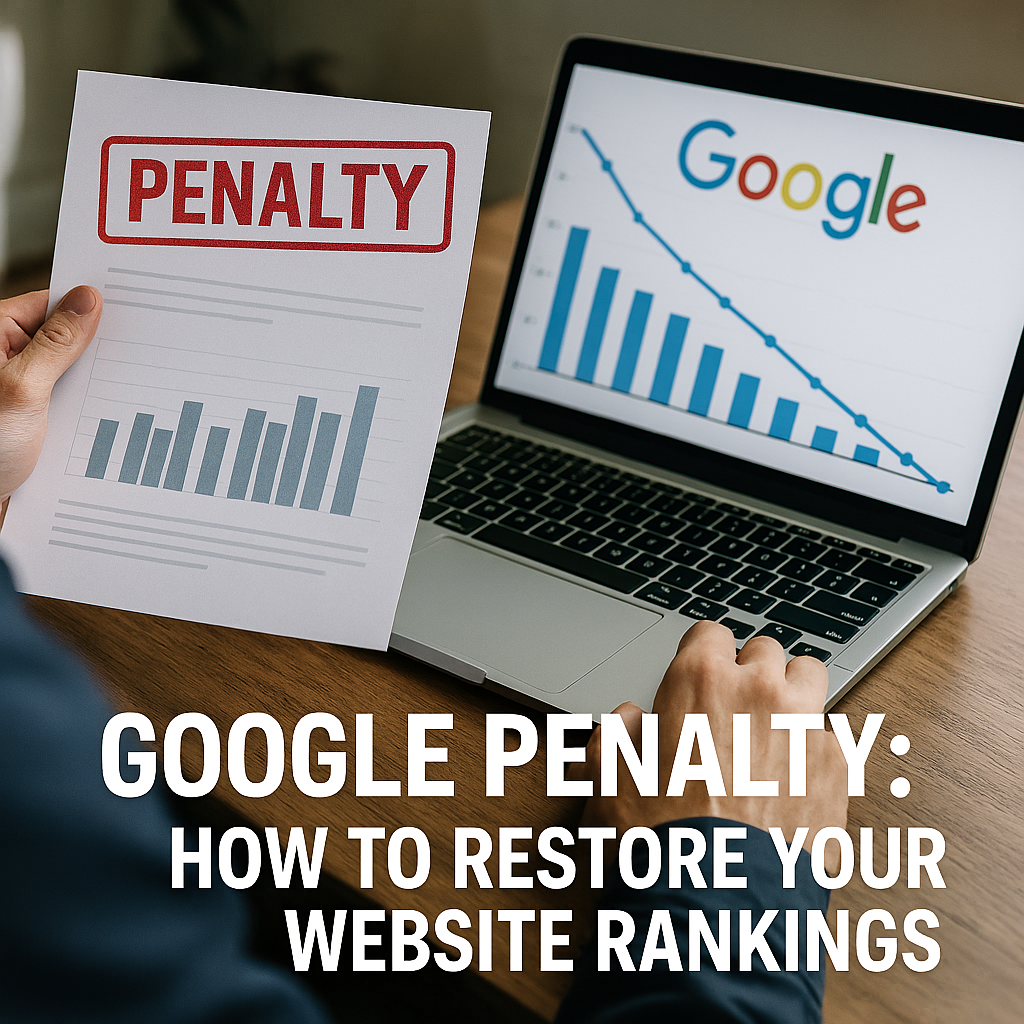
A Google penalty can undo months of SEO work almost overnight, reducing your traffic, rankings, and revenue. Whether triggered by a manual action or an algorithmic update, understanding the problem is essential. In this guide, you’ll learn how to recover from a Google penalty, remediate issues, and implement long-term strategies to protect your website. Seek Marketing Partners supports businesses with structured, data-driven solutions that ensure measurable improvements and sustainable recovery.
Understanding Google Penalties
A Google penalty occurs when Google identifies behaviour or signals that violate its ranking guidelines, reducing a site’s visibility. Penalties fall into two categories:
| Manual penalties arise from a Google reviewer identifying unnatural links, spam, or other violations. Recovery requires documented remediation and a reconsideration request. | Algorithmic penalties are automatic and result from updates like Panda, Penguin, or the Helpful Content Update, targeting low-quality content, poor backlink profiles, or negative user experience signals. |
Identifying the type of Google penalty quickly ensures you apply the correct recovery approach and prevents wasted effort on irrelevant fixes.
Common Signs Your Website Has a Google Penalty
You may not always receive a notification from Google. Watch for these warning signs:
- Traffic drops: You might notice a sharp decline in organic sessions and clicks, often tied to a specific date or event, which signals a possible penalty.
- Ranking losses: Pages that previously held strong positions in search results may suddenly fall, reducing visibility for important keywords.
- Indexing issues: Certain pages may be removed from Google’s index or crawled less frequently, indicating potential deindexing caused by a penalty.
- Manual Action notifications: Google may explicitly flag a violation in Search Console, providing details about the issue that triggered the penalty.
- Visibility volatility: Rankings can fluctuate noticeably, especially after algorithm updates, showing that your site may be impacted by automated enforcement.
Regularly tracking keyword positions with tools like SE Ranking helps differentiate a widespread penalty from minor daily Google SERP volatility, providing clear visibility into sudden shifts.
Recognising these symptoms early is critical when determining how to recover from a Google penalty efficiently.
Diagnosing a Google Penalty Effectively
A structured diagnosis saves time and ensures you target the root cause. Start with Google Search Console, checking Manual Actions and Coverage errors. Analyse organic traffic in Google Analytics, identify the exact drop, and cross-reference with known algorithm updates. Review affected pages for patterns in content or backlinks to prioritise remediation.
Diagnostic Checklist
- Review any flagged issues in Google Search Console and examine which pages are affected. Understanding the nature and scope of these errors will help guide your next steps effectively.
- Compare daily or weekly traffic trends to pinpoint when the decline began. This analysis helps distinguish between normal fluctuations and sustained issues that need attention.
- Match the timing of your traffic drop with public announcements about algorithm updates. Doing so can indicate whether automated changes may have impacted your site’s performance.
- Look for patterns among pages that lost visibility, such as landing pages, category pages, or blog content. Identifying shared characteristics can reveal underlying problems that require remediation.
- Analyse which search queries experienced the largest drops in impressions and clicks. This will help prioritise pages or sections that need the most immediate attention.
For expert guidance on diagnosing and fixing issues, explore our Search Engine Optimisation services to get your site back on track
Recovering from Manual Google Penalties
Manual penalties require precise steps for recovery. Here’s how to recover from a Google penalty:
| Review the violation details in Google Search Console to understand the specific issue that triggered the penalty. Knowing exactly what Google flagged allows you to plan corrective actions accurately. | Conduct a thorough audit of your backlink profile to identify any unnatural or toxic links. Categorising these links helps determine which ones require removal and which may need disavowal. | Contact the owners of sites linking to your pages to request removal of problematic links. Keeping a clear record of these outreach efforts is essential for demonstrating due diligence. | Use the Disavow Tool to address any residual toxic links that could not be removed manually. This step ensures that remaining harmful links do not continue to affect your site’s performance. | Prepare and submit a comprehensive reconsideration request to Google once all corrective measures are complete. Include detailed evidence of the steps taken to resolve the issues and show your commitment to compliance. |
Common backlink issues include paid or link scheme links, spammy directory links, and low-quality guest post links.
Paid or scheme links should be removed where possible and disavowed if not, typically over 2-4 weeks. Spammy directory links require outreach and removal efforts, usually taking 1-3 weeks, while low-quality guest post links should be evaluated and either removed or disavowed within 2-4 weeks. Keeping detailed records of every step demonstrates due diligence and increases the likelihood of successful Google penalty recovery.
For expert help with backlink audits, removal outreach, and disavowal, explore our Off-Page SEO services to start fixing your site’s manual penalties
Algorithmic Penalty Recovery
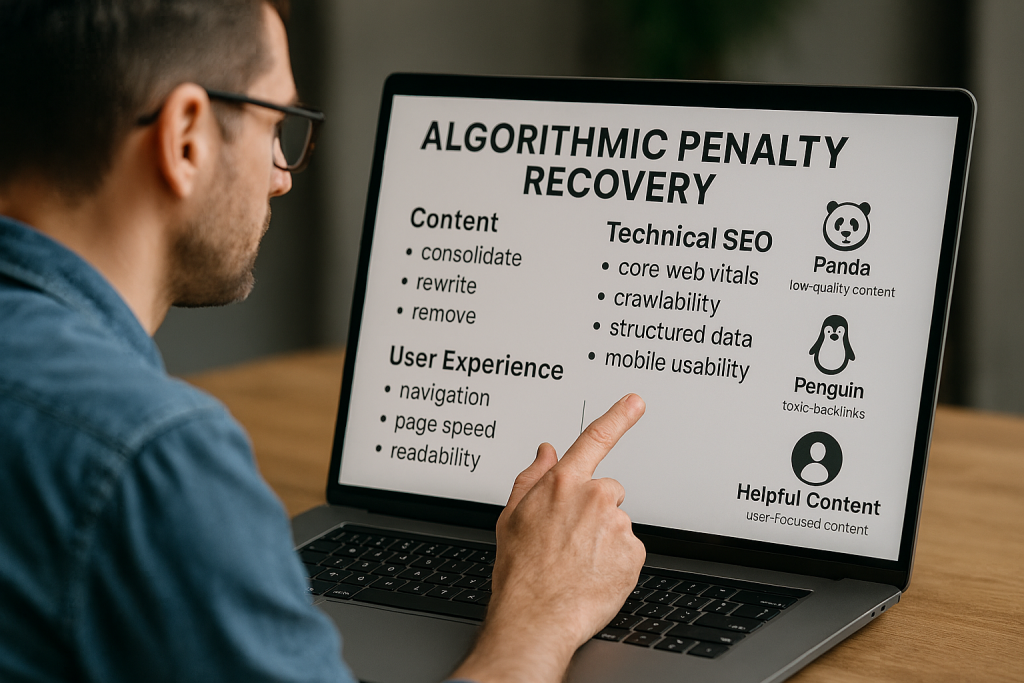
Algorithmic penalties affect a site broadly and cannot be fixed by addressing a single flagged item. Recovery requires systemic improvements across content, technical SEO, and user experience.
Content updates may involve consolidating, rewriting, or removing low-value pages to ensure all material meets quality standards. Technical SEO improvements should focus on enhancing Core Web Vitals, improving crawlability, implementing structured data, and ensuring mobile usability.
User experience is equally important, with attention to navigation, page speed, and readability to create a site that is easy and satisfying to use. Different algorithm updates often affect specific areas: Panda targets low-quality content, Penguin focuses on toxic backlinks, and the Helpful Content Update prioritises user-focused content.
By identifying the most impacted areas, high-traffic or conversion-critical pages can be prioritised first to accelerate recovery and maintain long-term results.
Improving Content Quality
High-quality, user-focused content is essential for Google penalty recovery. Conduct a content audit assessing:
- Clarity of purpose: Ensure every page clearly communicates its goal and the value it provides to the reader.
- Depth of expertise: Verify that content demonstrates knowledge, authority, and accurate information relevant to the topic.
- Unique value: Confirm that the page offers insights or solutions not easily found elsewhere online.
- Alignment with user intent: Check that the content meets the needs and expectations of the target audience.
Pages scoring low should be consolidated, rewritten, or removed. Focus first on high-impact pages and monitor metrics like impressions, dwell time, and rankings to track recovery.
For expert guidance on creating high-quality, user-focused content that supports recovery, explore our Content Marketing services.
Enhancing Technical SEO
Technical fixes form the foundation of algorithmic recovery and help improve overall site performance. Key areas to address include Core Web Vitals, such as page speed, layout stability, and user interaction metrics, as well as crawlability through proper configuration of robots.txt, sitemaps, and indexation health.
Mobile usability should also be optimised to ensure seamless navigation across all devices. Quick wins like image optimisation, lazy loading, CSS containment, and reduced server latency can further enhance performance. Combining these technical improvements with content updates strengthens the site’s overall signals and supports long-term recovery.
For professional support in addressing technical issues and optimising your site for algorithmic recovery, explore our Technical SEO services.
Preventing Future Google Penalties
Ongoing governance and proactive SEO management are essential for maintaining long-term site health and avoiding future penalties. Implementing regular audits, white-hat link building, content quality control, and backlink monitoring ensures your site stays compliant and competitive.
| Key Area | Action |
| Regular SEO audits | Conduct monthly technical scans and quarterly content reviews to detect potential issues early. |
| White-hat link building | Earn editorial links through high-quality content, guest contributions, and strategic partnerships. |
| Content quality control | Maintain clarity, depth, uniqueness, and actionable value across all pages. |
| Backlink monitoring | Track spikes, suspicious links, and unusual activity to intervene before problems escalate. |
| Monitoring checklist | Include crawl errors, index coverage, organic traffic trends, Core Web Vitals performance, and backlink profile health. |
By consistently following these strategies, teams can detect potential issues early and maintain strong, sustainable SEO performance.
Seek Marketing Partners’ Approach
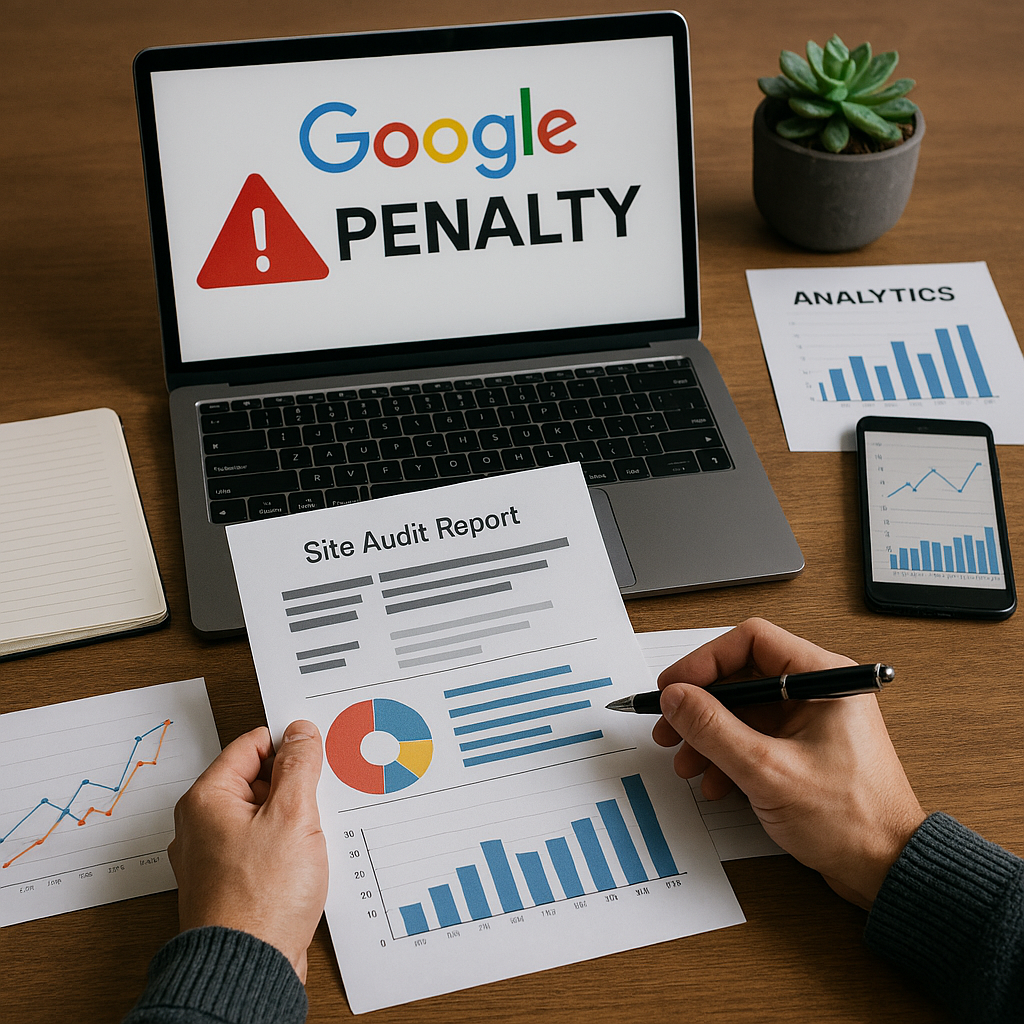
Seek Marketing Partners combines SEO, content marketing, web development, PPC, and analytics into structured services for addressing a Google Penalty, following a clear audit → remediate → monitor framework.
We begin by identifying the root cause of the issue, then remove toxic links, rewrite low-quality content, and fix technical problems across the site. Throughout the process, we track metrics, maintain site health, and implement measures to prevent future issues. Recovery is treated as a documented project with checkpoints, evidence collection, and ongoing monitoring, ensuring transparency and confidence at every stage.
For organisations seeking expert support, contact us today to start addressing your site’s issues and safeguard its long-term performance.