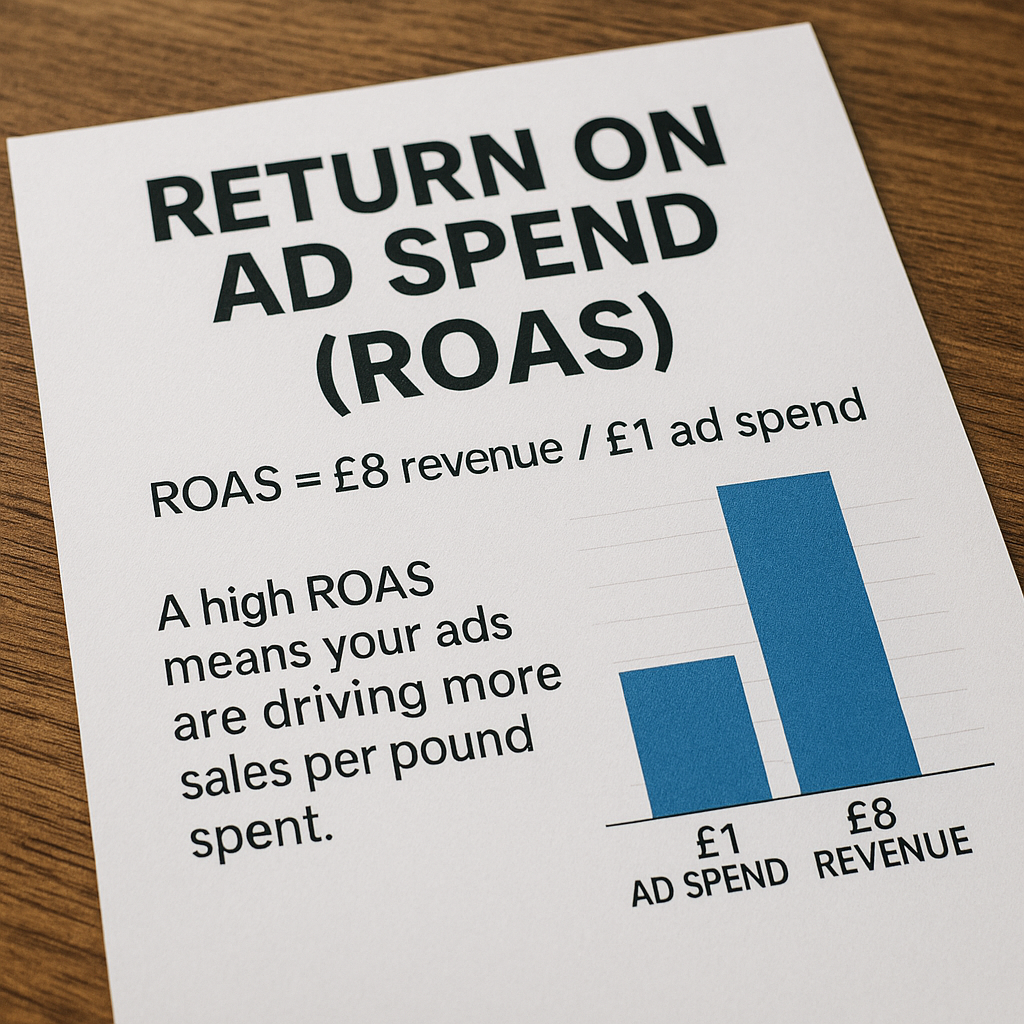
Return on Ad Spend (ROAS) is a key marketing metric that measures how much revenue your business earns for each pound or dollar spent on advertising. In other words, ROAS tells you the efficiency of your ad budget: it answers “for every £1 we spend on ads, how many pounds of revenue do we get back?”
ROAS is a performance indicator (KPI) often used in e-commerce and PPC advertising to evaluate campaign success. Unlike broader return on investment (ROI) metrics, which account for all costs and net profit, ROAS focuses strictly on revenue generated versus the cost of ads.
In practice, a high ROAS means your ads are driving more sales per pound spent, which is crucial for growth in competitive online markets.
How to Calculate ROAS
The formula for return on ad spend is simple: divide the total revenue attributed to ads by the total ad spend.
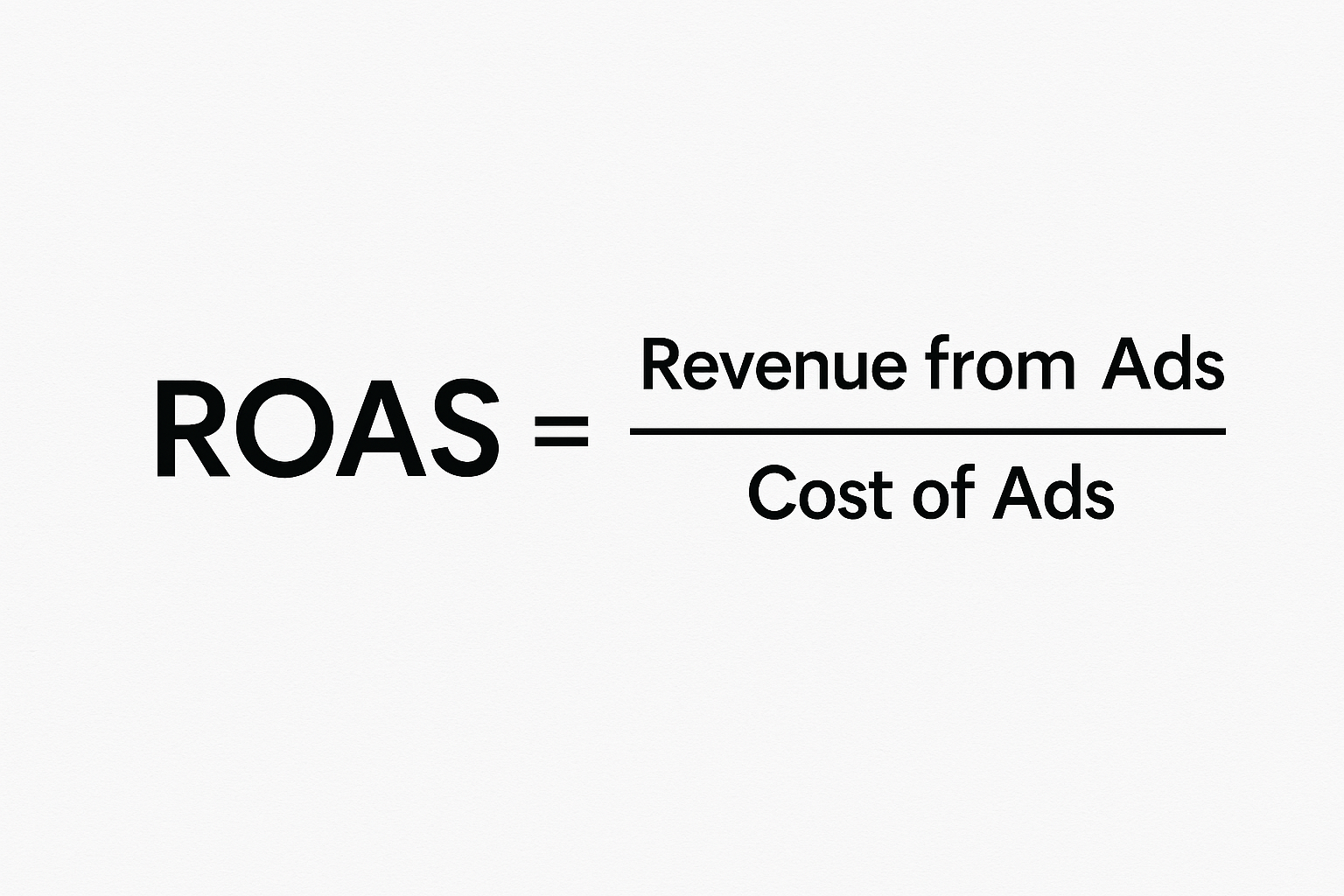
For example, if an e-commerce campaign spends £2,000 on advertising and earns £10,000 in sales, the ROAS would be 5 (often written as 5:1). This means the company makes £5 in revenue for every £1 spent on ads. You can also express ROAS as a percentage by multiplying by 100: in this example, the ROAS is = 500%.
Keep in mind that “Cost of Ads” should include all expenses directly tied to the campaign, not just the media spend. In addition to the ad budget, consider factors like vendor or platform fees, agency commissions and team costs. For instance:
- Vendor/Agency fees: Commissions or fees charged by ad platforms and partners.
- Staff or agency labour: The time and salaries of people managing the campaign.
- Affiliate or transaction fees: Any commission paid to affiliates or networks.
Accounting for these costs gives a truer picture of ad efficiency.
Additional Tip: If you want a quick calculation, you can start with just the media spend, then calculate a “full-cost ROAS” separately, including all overhead.
Why Return on Ad Spend Matters?
Monitoring ROAS helps you make data-driven budget decisions.
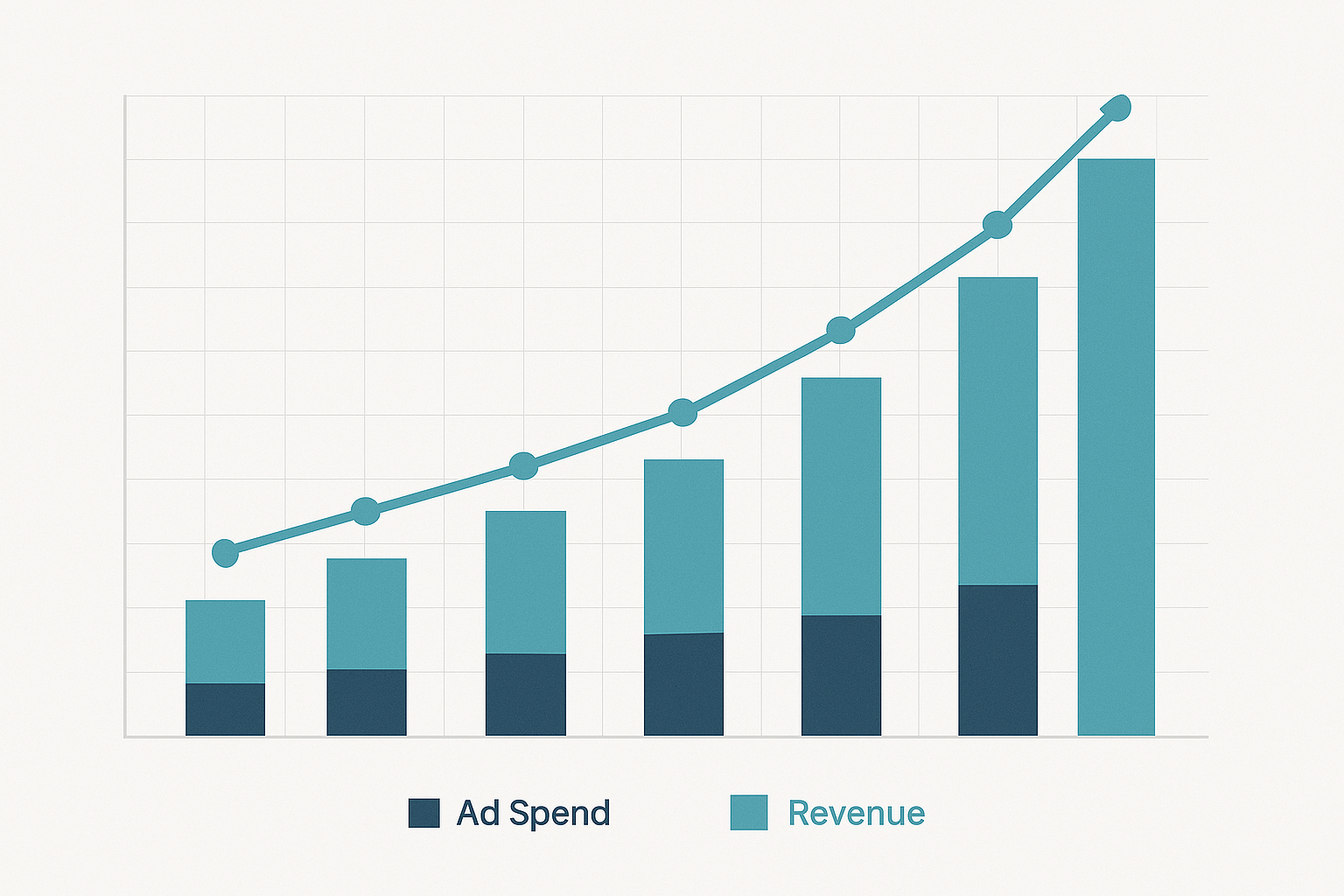
A rising ROAS means your ads are generating increasingly more revenue per pound spent. This metric lets you identify your most profitable campaigns and channels.
For example, if Facebook ads produce a higher ROAS than search ads, you can shift budget accordingly. BigCommerce notes that “keeping careful tabs on ROAS, e-commerce companies can make informed decisions on where to invest their ad dollars.” In practice, tracking ROAS across channels and campaigns allows marketers to cut waste on underperforming ads and double down on winners.
In competitive online markets where advertising costs are high, ROAS provides a quick pulse-check on campaign effectiveness and a guide to maximising your advertising return.
The Difference Between ROAS vs. ROI
It’s important to distinguish ROAS from ROI (Return on Investment). While ROAS looks only at ad spend and the revenue it directly generates, ROI measures the overall profit relative to the total investment in marketing.
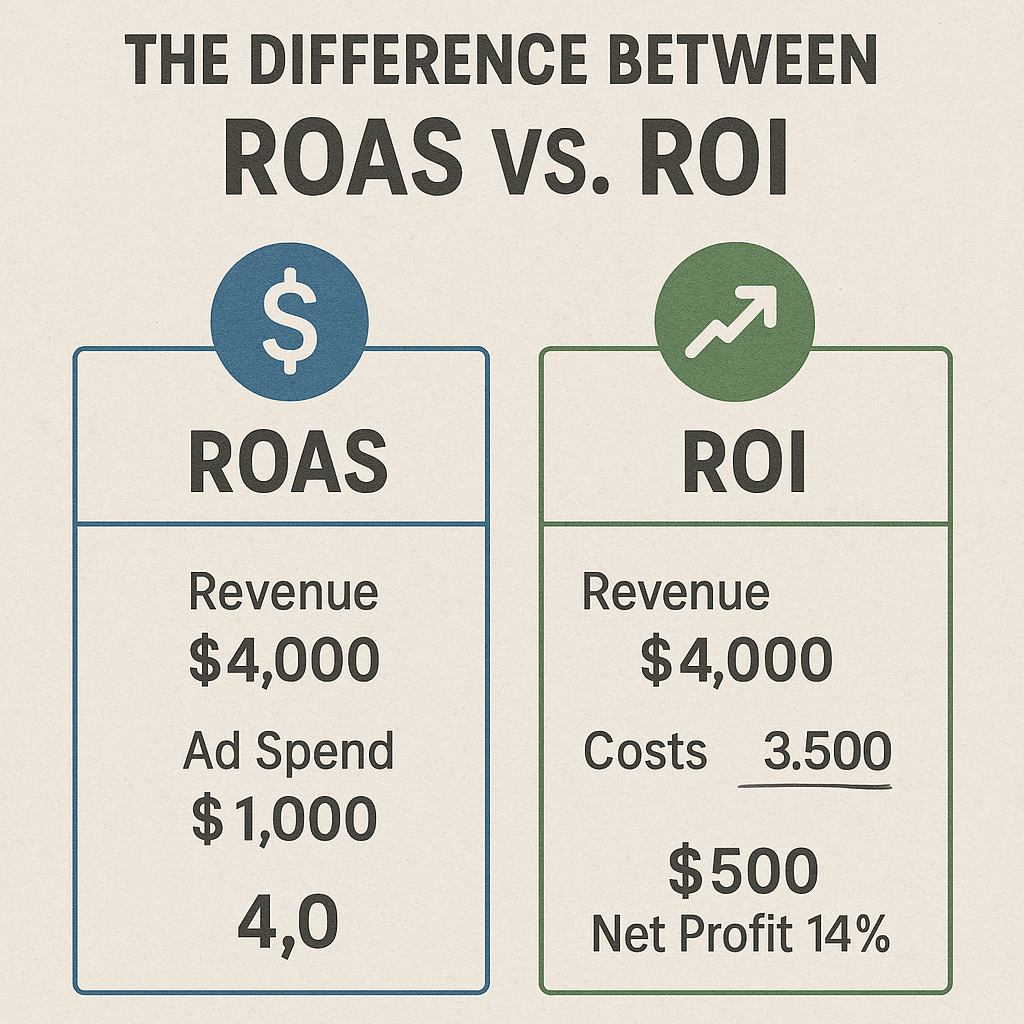
For instance, ROI would subtract all costs (ad spend, production, overhead, etc.) to show net profit, whereas ROAS ignores those extra costs and focuses on gross revenue. This means a campaign can have a healthy ROAS but still be unprofitable when full costs are counted.
As the Corporate Finance Institute explains, “If ROAS > 1, then you are at least covering your marketing expenses with revenue, but are likely losing money after deducting expenses.”
In practice, use ROAS to optimise and compare ad performance in the short term, and use ROI when evaluating total profitability in the long term.
What Is a Good ROAS?
There’s no single “right” ROAS – it depends on your business model, profit margins and goals. A common benchmark for many retailers is around 3:1 to 4:1 (i.e. £3–£4 revenue per £1 spent).
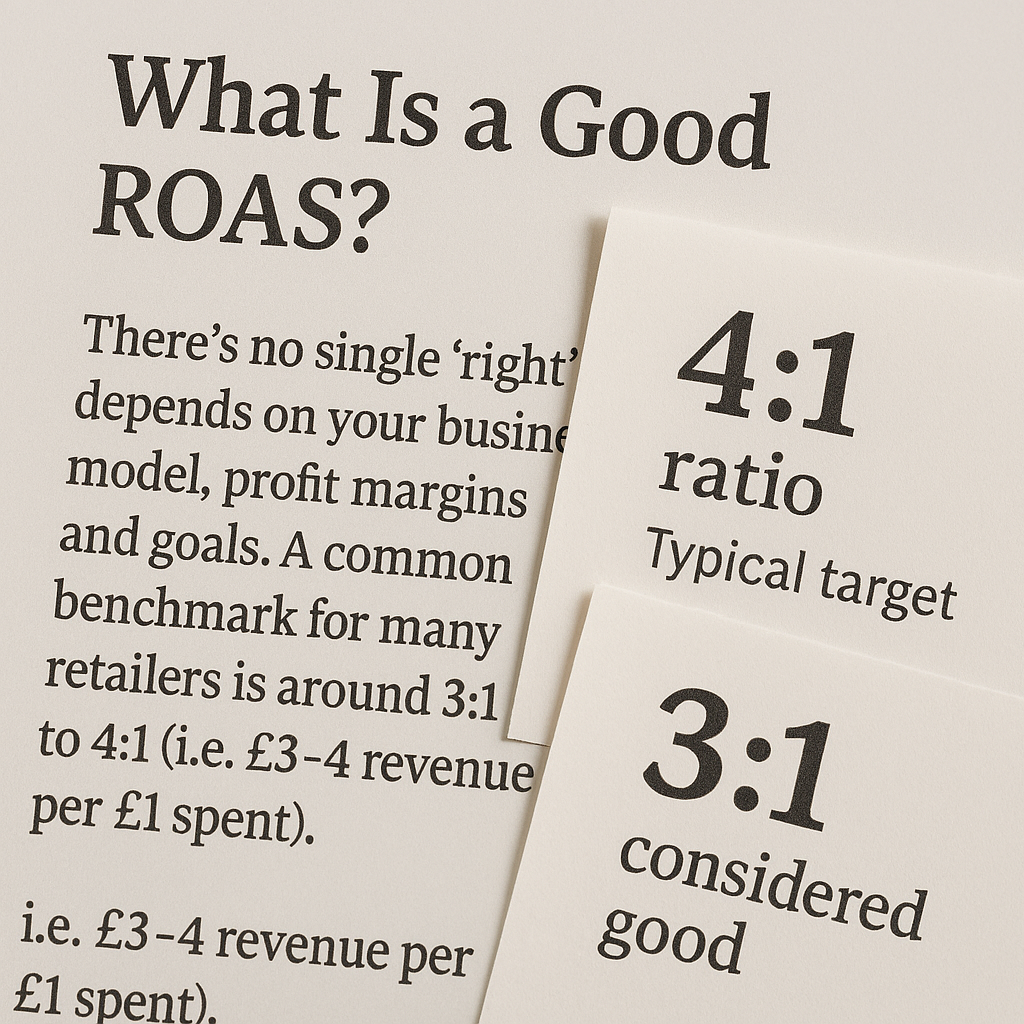
For example, one company notes a 4:1 ratio as a typical target, while the other company suggests that “ROAS of 3 or more (3:1) is considered good” in broad terms. However, acceptable ROAS will vary: high-margin businesses like luxury products and SaaS can stay profitable with a lower ROAS, whereas low-margin or rapidly growing businesses may require much higher returns (sometimes 10:1 or more) to break even.
Amazon Ads reports that a ROAS of about 2:1 sits a bit above the current industry average, while more successful campaigns often achieve ratios closer to 3:1 or 4:1.
As a rule of thumb, ROAS above 1:1 means your ads at least cover their own cost; ROAS above 3:1–4:1 is often deemed strong. Ultimately, you should calculate break-even ROAS based on your costs: for example, a 3:1 ROAS means you earn back three times your ad spend, but whether that leads to profit depends on product costs and overhead.
Tips on How to Improve Your ROAS
If your ROAS isn’t where you want, there are several strategies to boost it. Key steps include:
1. Refine Targeting
Allocate more budget to the ads, platforms and audience segments with the highest ROAS. For example, if Instagram ads are outperforming search ads in ROAS, shift spend to Instagram.
2. Optimise Creative
Test different ad images, headlines and copy to find what converts best. We recommend trying varied visuals and messaging to maximise response.
3. Improve conversion paths
Ensure landing pages are relevant and user-friendly so that ad clicks turn into sales. Even the best ads won’t help if the checkout process falters.
4. Adjust Bids and Budgets
Use manual or automated bidding to increase bids on high-ROAS campaigns and pause or lower bids on low-ROAS ones. Leaning into winners and cutting losers raises overall efficiency.
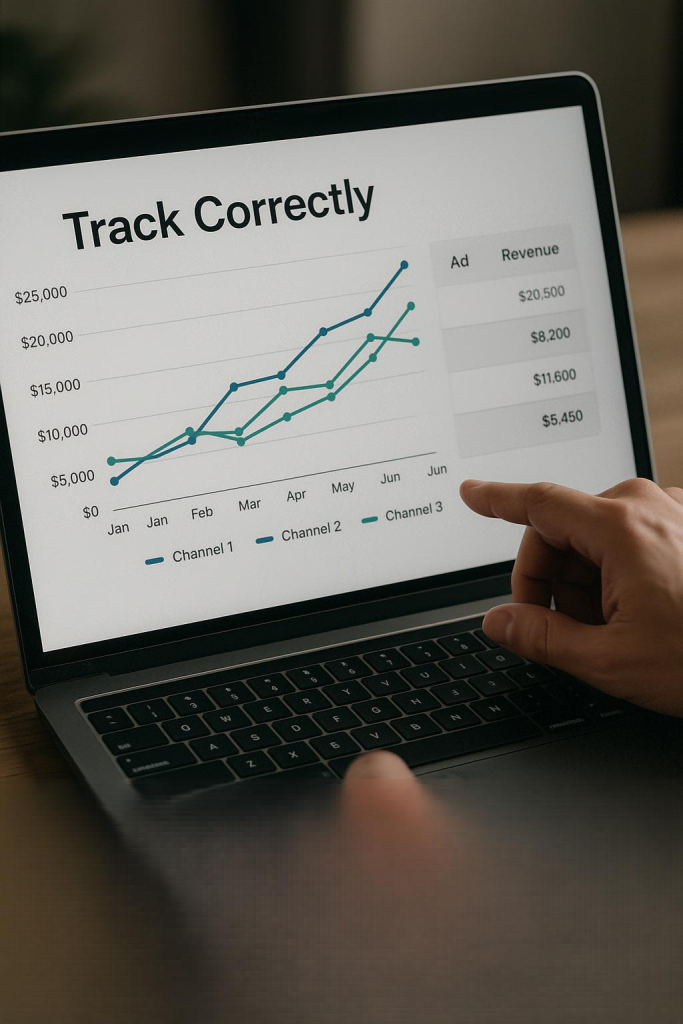
5. Track Correctly
Make sure your analytics and attribution are set up so you’re measuring the right revenue for each ad. Misattributed sales can lead to misleading ROAS calculations.
By continuously testing and optimising each element of your campaigns (from audience to ad copy to landing page), you can raise the amount of revenue earned per ad spend. Over time, small improvements compound into a significantly higher ROAS.
Final Thoughts
So, what is return on ad spend? It is a simple yet powerful way to quantify ad efficiency. By calculating ROAS, marketers can quickly gauge campaign performance. Tracking ROAS helps ecommerce brands and advertisers focus on the tactics that drive the most sales.
If you want expert help maximising your ROAS, consider partnering with Seek Marketing Partners. Our team specialises in data-driven PPC and ecommerce marketing – we can analyse your campaigns, set realistic ROAS targets and optimise your ad spend for better returns.
Contact us today to discuss how our PPC advertising services can improve your marketing performance.