
In this month’s roundup of the important digital marketing updates from October 2026, we cover eight developments worth knowing about, ranging from the fallout following Google’s September spam update to new reporting capabilities and changes to how websites appear in search. As usual, along with the important details, we’ll also explain why each story matters to your business, and what you can do about it!
Contents & Key Takeaways
- Google’s September spam update finishes rolling out — We follow up on a story from last month, as the Google spam update from September 2026 continues to affect the SEO landscape.
- Google strengthens its guidance on AI content and expertise — Further clarification on the relationship between Google and AI content, as Google warns against misleading readers with fake author profiles, credentials and expertise.
- SEO and AI search take centre stage at Search Central Live — We look at the latest developments in AI-powered search and what they mean for businesses trying to stay visible as search behaviour evolves.
- Search Console adds multimodal search reporting — Google adds a multimodal search filter for Search Console reports, helping website owners measure traffic from visual search tools such as Google Lens.
- Google Ads introduces new budget and channel controls — New campaign controls give advertisers more flexibility over how their budgets are allocated across eligible channels, bringing fresh opportunities to review paid media performance.
- Cloudflare and OpenAI report improved page discovery — A research pilot helps ChatGPT Search discover more web pages, raising further questions about how businesses can make their content accessible to AI-powered search.
- Google updates guidance on user-generated content and spam — New documentation covers faster content discovery for eligible platforms and reinforces the importance of managing user-generated spam on Google, and controlling what gets indexed.
- Google clarifies website owners’ search controls — Google refreshes its guidance on existing tools controlling how site content is crawled, indexed and displayed in search results, opening the door for greater control over SERP visibility for site owners.

Story 1: Google’s September Spam Update finishes rolling out
We start our look at the digital marketing updates for October 2026 with a call-back to a story from last month. Google completed its September 2026 spam update on 8 October, almost two weeks after it began.
If your organic performance has shifted, this is a good opportunity to investigate rather than rush into changes. With the rollout complete, you now have a clearer window for assessing its potential impact. Compare performance before, during and after the update, and look for sustained changes in clicks, impressions and rankings before deciding whether action is needed.
Why It Matters
Changes like the Google spam update from September 2026 can therefore affect the number of enquiries and online sales that you see. So the update is relevant to any business that relies on organic search for enquiries, sales or brand discovery.
However, the announcement doesn’t mean every website should expect a ranking change, and a fall in traffic around the same time doesn’t automatically prove that the update caused it. A sensible response to these digital marketing updates in October 2026 starts with diagnosis, not guesswork. The date of an update is a useful clue to what may have contributed to a change in your analytics, not a verdict on it.
What To Do About It
- Compare the right periods. Review Google Search Console performance before, during and after the rollout. Compare year-on-year data as well as recent weeks to account for seasonality.
- Find the specific losses. Check which pages, search queries, countries and devices have changed. A drop concentrated in one section of your website needs a different response from a sitewide decline.
- Check the technical basics. Review indexing, crawl errors, important page availability and recent website releases before assuming rankings are the problem.
- Review Google’s spam policies. Check for practices that violate Google’s guidelines, including manipulative link schemes and large volumes of unoriginal content created primarily to manipulate search rankings.
- Avoid knee-jerk fixes. Don’t rewrite every page or remove large amounts of content based on a short-term dip. Make changes only when the evidence supports them, then monitor the results.

Story 2: Google strengthens its guidance on AI content and authentic expertise
You may have noticed from the stories we’re covering this month that AI has been a popular source of digital marketing updates in October 2026. One reason is that this month, Google updated its guidance on creating helpful, reliable, people-first content, including a clearer warning against deceptive authorship information.
Google’s updated people-first content guidance helps to clarify the relationship between Google and AI content, and explains that the concern is whether a website misleads readers about who created content and the expertise behind it.
The guidance specifically warns against fabricated creator profiles, including made-up names, false credentials and AI-generated headshots used to make content appear as though it was written by human experts.
For us, the message is simple: using AI as part of a production process is one thing; using AI to ‘invent’ expertise or to make that content appear more trustworthy is another.
Why It Matters
Readers need reasons to trust what they’re reading, but a polished article with a convincing-looking author biography is not necessarily credible. If the person named as the author doesn’t exist, their qualifications are invented or nobody with relevant expertise has checked the claims, it’s all too easy for the information presented to become misleading (whether that’s accidentally or deliberately so).
That’s exactly the opposite of what Google wants its search engine to do, so naturally they want to eliminate it as a possibility, and deter anyone from taking such ‘black hat’ approaches.
What To Do About It
- Audit your author profiles. Make sure names, biographies, qualifications and photographs accurately represent real contributors.
- Put experts in the process. Ask people with relevant experience to review technical claims, explain important nuances and correct anything that doesn’t reflect how your business actually works.
- Use AI with a clear purpose. It can help with outlining, summarising research and editing, but the final content should contain useful insight rather than generic text produced at scale.
- Make accountability visible. Where appropriate, provide accurate bylines, author information, review dates and supporting evidence so readers can understand where the information comes from.
Story 3: SEO and AI search take centre stage at Search Central Live
Next on our list of digital marketing updates for October 2026, another call-back to last month. Google’s Search Central Live Deep Dive Europe event took place in Barcelona from 30 September to 2 October, bringing together discussions about crawling, indexing, search behaviour and AI-powered search experiences.
One statistic highlighted in an attendee’s event recap was that follow-up queries in Google AI Mode had increased by around 40% month on month since its launch. This shouldn’t be treated as anything more than a figure reported in that recap of course, but the wider point is still worth attention: it indicates that people are using search tools to explore topics, ask follow-up questions and compare options, not simply to find a list of web pages.
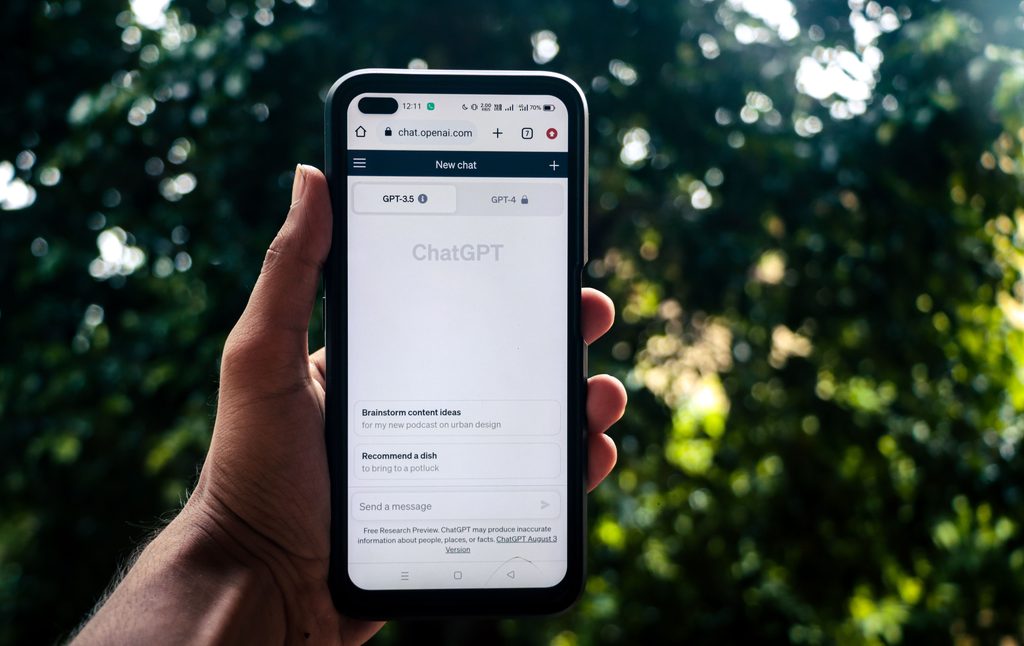
But SEO and AI search are not (yet) interchangeable terms for one system. Google Search, Microsoft’s AI experiences and ChatGPT Search each have their own systems for finding and presenting information.
Microsoft, for example, offers an AI Performance report in Bing Webmaster Tools that helps eligible site owners understand how their content is cited in supported AI experiences. ChatGPT Search can also search the web and provide links to sources, and OpenAI explains the process in its search help documentation.
Why It Matters
None of what we’ve mentioned above means traditional SEO has suddenly become irrelevant. Search engines still need to discover and understand content. Strong technical foundations, clear information and useful pages remain important.
However, businesses do need to think beyond rankings alone when assessing digital visibility. A page can be indexed without being cited in an AI-generated answer. Being cited doesn’t guarantee a click, and a click doesn’t guarantee a qualified lead or sale.
That makes measurement more complicated, but also more important. You need to understand exactly what you’re getting and from where, as well as whether your business is being discovered by the right people and whether that visibility contributes to commercial outcomes.
What To Do About It
- Keep your technical SEO in good shape. Check that important pages can be crawled and indexed, internal links work properly and content is accessible to search engines.
- Answer real customer questions. Build useful pages around the problems people are trying to solve, including comparisons, practical explanations, product details and relevant buying considerations.
- Show genuine expertise. Support claims with evidence, examples, first-hand knowledge and clear explanations. Avoid publishing generic material simply because a topic is trending.
- Use all available reporting. Review Google Search Console and, where relevant, Bing Webmaster Tools’ AI Performance report to understand different parts of your visibility.
- Connect visibility to outcomes. Track referral traffic, enquiries, sales and lead quality alongside search impressions, rankings and AI citations.
Story 4: Search Console adds multimodal search reporting
Google has introduced a new multimodal search filter in Search Console’s performance reporting. It gives website owners more insight into traffic from visual searches, including Google Lens, Circle to Search on Android, image uploads to Google Search and Chrome’s “Search this image” feature.
Google announced the change in its Search Central blog. The filter is rolling out globally, with data appearing where a website receives traffic from these types of queries.
In plain English, it gives you a clearer way to measure how your content appears in image-led searches, alongside conventional text-based search performance.
Why It Matters
We’ve included this in our list of digital marketing updates for October 2026 because it’s particularly relevant to businesses whose products, places or services are naturally visual. In these cases traditional search reporting can leave teams with an incomplete picture of how people find their websites.
Someone might discover a product through an image, use a visual search tool to identify an item or explore a location based on what they see. If that behaviour brings relevant visitors to your website, understanding it could influence how you invest in product photography, image optimisation and on-page information.
What To Do About It
- Check the new filter. Open Google Search Console’s Performance report and look for the multimodal search type filter. Export the data if you want to compare it with other reporting.
- Compare visual and text searches. Review impressions, clicks and trends to see whether visual search is a meaningful source of discovery for your site.
- Review important images. Check that product and service images are relevant, high quality, appropriately sized and placed on useful, accessible pages.
- Improve supporting information. Use descriptive alternative text where appropriate, meaningful image filenames, clear product descriptions and relevant surrounding copy. Avoid stuffing keywords into image attributes.
- Prioritise based on evidence. If visual search is contributing to valuable traffic, test improvements in the areas with the greatest commercial potential. If it isn’t, keep your focus on higher-impact opportunities.
- Focus on page-level insights. Multimodal reporting doesn’t provide the usual query data, so review which pages attract impressions and clicks to identify where visual search may be contributing to discovery.

Story 5: Google Ads introduces new budget and channel controls
Google has announced optional channel prioritisation and budget-allocation controls in Google Ads. The aim is to give advertisers more flexibility over how their Google PPC budget is distributed across eligible advertising channels.
The controls are rolling out across Search, Shopping, Performance Max and Demand Gen, although the available options differ by campaign type and account. For example, Demand Gen supports channel prioritisation but not channel-level budget allocation. You can read the announcement on the Google Ads & Commerce blog for more information, and check the Google Ads Help Centre for implementation details.
The change does offer more choice over how campaigns spend money. But more control over your Google PPC budget does not guarantee better performance. Restricting a channel may reduce unwanted spend in some circumstances, while limiting useful reach in others.
It’s also important not to assume every setting is available in every account today. Check the options actually shown in your campaign before planning a change.
Why It Matters
Paid media performance is about more than the number of clicks or the amount spent in a particular channel. Businesses need to understand how spend contributes to qualified leads, sales, revenue and profitability.
Additional budget controls could help advertisers test channels with clearer spending guidelines rather than switching them off entirely. However, allocation limits are best-effort targets, not guaranteed caps.
What To Do About It
- Check what’s available. Review your account and campaign settings, then confirm which channel-prioritisation and allocation options are available for your campaign type.
- Establish a baseline. Record current spending, conversions, revenue or lead quality, and performance by channel before making changes.
- Set priorities around business goals. Decide whether the objective is qualified leads, profitable sales, greater reach or another measurable outcome. The answer should determine how you assess each channel.
- Test controlled changes. Where practical, compare the results of a channel allocation change against a suitable baseline or control period. Allow enough time and volume to make a meaningful assessment.
- Look beyond cheap clicks. Consider conversion quality, sales value and the wider customer journey rather than assuming the lowest cost per click is always the best result.
Story 6: Cloudflare and OpenAI report improved page discovery for ChatGPT Search
We go back to AI for the next item in our roundup of digital marketing updates for October 2026, and the news that Cloudflare and OpenAI have reported early results from a research pilot designed to help AI search discover relevant web pages more efficiently.
Per Search Engine Journal, their report said the pilot helped OpenAI discover and index hundreds of millions of additional pages. The participating group was reported to represent around 1% of Cloudflare’s network, so the results should be understood in that context rather than as a change affecting every website equally.
For businesses interested in increasing visibility in ChatGPT searches or understanding how ChatGPT search works though, there’s one important distinction to make: helping a search system discover and index a page does not guarantee that the page will be cited in an answer, receive referral traffic or generate leads.
Why It Matters
AI-powered search is another potential route through which customers can discover products, services and information. If your website is difficult to crawl, important pages are poorly linked or content is outdated, you may be making discovery harder than it needs to be and missing out on potential awareness, engagement and business as a result.
What To Do About It
- Check crawler access. Review your robots.txt rules, website security settings and content delivery network configuration. If you want to be eligible for ChatGPT Search, follow OpenAI’s guidance on allowing OAI-Searchbot and ensuring your host or CDN permits its published crawler IP addresses. The pilot’s discovery signals do not override your site’s crawler access settings.
- Improve internal linking. Make important pages easy to find through clear site architecture and relevant links from other pages.
- Keep content accurate. Update information that has become outdated, particularly pricing, product details, service descriptions and factual guidance.
- Monitor real-world results. Where your analytics tools allow, review referral traffic from AI search experiences and assess whether visitors engage, enquire or convert.
- Avoid unnecessary platform changes. Don’t change hosting providers or restructure your website solely because of a pilot announcement. First establish whether there is a genuine technical or commercial need.

Story 7: Google updates guidance on user-generated content and spam
Google has published new documentation for its UGC Fresh Data Program, and updated its guidance on preventing user-generated spam. The Fresh Data Program documentation explains how approved platforms can send fresh user-generated content and interaction signals to Google through a dedicated data pipeline.
It is intended for eligible platforms with substantial volumes of public user-generated content, such as forums and community services. It is not a general-purpose submission tool for ordinary business websites, and Google does not guarantee that submitted content will appear in Search.
Separately, on 26 October, Google updated its guidance on preventing user-generated spam. The changes include advice on preventing pages shared through links from being indexed when they are not intended for public search, and using Search Console to monitor abuse.
These are related developments, but they are not the same thing. One describes a specialised route for eligible platforms to provide fresh content signals; the other concerns spam on Google and dealing with unwanted or abusive user-created pages.
Why It Matters
User-generated content can be valuable. Reviews, forum discussions, community posts and customer contributions can provide genuine first-hand information that helps other people make decisions.
The topic of spam on Google becomes a problem when public contribution features attract spam, abusive material or large volumes of low-value pages. If a platform allows users to create pages freely, it needs a clear plan for moderation, access controls and indexing.
A page being available to someone with a link does not necessarily mean it should appear in public search results. Equally, blocking useful pages from search without considering their purpose could reduce the visibility of legitimate content.
What To Do About It
- Review public and private pages. Check whether pages created for private sharing, collaboration or utility should be accessible to search engines at all.
- Strengthen moderation. Use reporting mechanisms, clear community rules and processes for responding to abusive or spam submissions.
- Monitor Search Console. Look for unusual increases in indexed pages, unexpected search queries or sections of the site that appear to be generating unwanted content.
- Apply indexing controls carefully. Use appropriate technical controls for pages that should not appear in Search, and test changes before deploying them widely. Use ‘noindex’ when a page should be excluded from Search. Remember that blocking crawling in robots.txt does not necessarily prevent a URL from being indexed.
- Check eligibility before applying. If you operate a high-volume public UGC platform, review the UGC Fresh Data Program criteria. Don’t mistake it for a replacement for normal crawling or indexing practices.

Story 8: Google clarifies how website owners control content shown in Search
We’ll wrap up our rundown of the digital marketing updates from October 2026 with updated documentation from Google explaining how website owners can control what content is shared with Google Search.
The change is a documentation clarification rather than a new feature. Google’s updated guidance brings its existing options for controlling how content appears in Search together in one place, helping site owners understand which controls are available and how they can manage their website’s SERP visibility.
Why It Matters
For businesses that need to manage their SERP visibility, Google’s updated documentation makes it easier to identify the appropriate controls for how pages or specific content appear in Search.
However, businesses need to be careful. Getting these controls wrong can have unintended consequences. We’ve seen how accidentally applying a noindex directive sitewide, when intending to change the settings for just one page, can prevent valuable pages across a website from appearing in Search. Similarly, a rule intended to prevent a snippet from showing certain text might not prevent the page itself from appearing in Search.
The fact is that there’s no need to change settings simply because Google has refreshed its documentation. For anyone wanting greater oversight or control over SERP visibility for particular pages, changes may be warranted. However, if your current setup meets your business requirements well, then ‘if it ain’t broke, don’t fix it’ might be the better approach.
What To Do About It
- Identify an actual requirement. Decide whether you need to prevent a page from being indexed, restrict text used in a snippet or manage your site’s inclusion in Google’s generative AI search features.
- Choose the right control. Review Google’s documentation before deciding between noindex, data-nosnippet, X-Robots-Tag, robots.txt and other available options.
- Check how the site is implemented. Confirm that directives are accessible to crawlers and are applied to the intended pages or sections.
- Test before rollout. Ask your SEO and development teams to check the effect of proposed changes in a staging environment where appropriate, then validate the live implementation.
- Monitor the results. Use Search Console and technical checks to confirm that the controls behave as intended. If visibility changes unexpectedly, investigate before making further changes.
Other Ways We Can Help You
Keeping up with digital marketing updates from October 2026 and beyond is useful, but the real value in doing that comes from working out which changes matter to your business and turning that insight into action.
At Seek Marketing Partners, we help businesses make sense of their data, improve performance and focus their investment where it can make a measurable difference. But that’s just one of the proven digital marketing support services that you can count on us for.
We’ve detailed the rest below, so if you need help in any of the areas that you’re about to see, get in touch with our team for expert support!
| SEO: Improve technical health, organic visibility and content relevance with an SEO strategy built around customer intent and measurable results. | PPC Ads: Plan, manage and optimise paid campaigns to reach the right audiences, control spending and generate more valuable conversions. | Web Design & Development: Create fast, accessible and effective websites that support your brand, serve your customers and turn visits into action. |
| Content Marketing: Develop useful, credible content that answers customer questions, builds trust and supports discovery across the marketing funnel. | Social Media Marketing: Use the right platforms and content to build awareness, engage audiences and support your wider marketing objectives. | Email Marketing: Deliver targeted campaigns and automated journeys that nurture leads, strengthen customer relationships and encourage repeat business. |
| Graphic Design: Produce clear, consistent creative that communicates your message and makes your brand recognisable across channels. | Data Science + Analytics: Turn fragmented marketing data into useful insight, helping you understand performance, identify opportunities and make better-informed decisions. | Conversion Rate Optimisation: Find and fix friction in your customer journey through research, testing and evidence-led improvements to conversion rates. |
| Digital PR: Build brand awareness and credible online coverage through relevant stories, relationships and campaigns that support your wider digital visibility. | Lead Generation: Attract and convert potential customers with targeted campaigns, useful offers and a clearer path from first interaction to enquiry. | White Label Support: Extend your agency’s capabilities with reliable, behind-the-scenes marketing expertise delivered under your brand. |