
Bad backlinks can seriously harm your website’s search visibility, reduce organic traffic, and damage your brand’s trust. Knowing how to detect bad backlinks and the best ways to remove them is essential for protecting your site. This guide covers the mechanics of toxic backlinks, practical auditing steps, outreach and disavow workflows, and long-term prevention strategies.
You’ll learn metrics to prioritise links, methods for manual validation, and when to seek support from a data-driven digital marketing agency like Seek Marketing Partners to safeguard your rankings.
What Are Bad Backlinks and Why Do They Harm SEO?
Bad backlinks are links from low-quality or manipulative sites that signal to search engines that your link profile may be unnatural. Links from link farms, hacked domains, irrelevant directories, or paid networks can dilute trust and reduce your domain authority.
Key characteristics of toxic backlinks include:
- High spam indicators: Automated content, thin copy, or excessive link lists.
- Irrelevant anchor text: Keywords that do not relate to the linked page.
- Unnatural link velocity: Sudden spikes in referring domains or reciprocal networks.
Recognising these traits helps you prioritise which links to delete and which to monitor.
How Bad Backlinks Differ from Low-Quality or Spammy Links
Not all low-quality links are harmful. Bad backlinks become toxic when they show deliberate manipulation or create a risk of penalties. Examples include:
- Purchased or mass-generated links
- Links from hacked sites
- Networked links with high spam scores
By analysing metrics such as domain authority, anchor text patterns, and link concentration, you can distinguish truly harmful backlinks from benign low-value links.
The Impact of Toxic Backlinks on Rankings and Brand Reputation
Toxic backlinks can cause:
- Drops in organic traffic and keyword rankings
- Manual action penalties that remove pages from search results
- Association with spammy or malicious sites, reducing user trust
Monitoring KPIs such as organic sessions, conversion rates, and referring domain quality helps you measure impact and prioritise recovery actions.
How to Detect Bad Backlinks Using Audit Tools
Begin with a structured audit workflow: export backlink data, normalise sources, filter by toxicity indicators, and manually validate high-risk items. Categorise links as:
- Remove candidates – links to contact for removal
- Disavow candidates – links that cannot be removed manually
- Monitor-only links – low-risk links
Use automated scores to shortlist, then manually validate for context like link placement and content relevance.
Learn more about how our SEO services can help you detect, manage, and prevent toxic backlinks on your site.
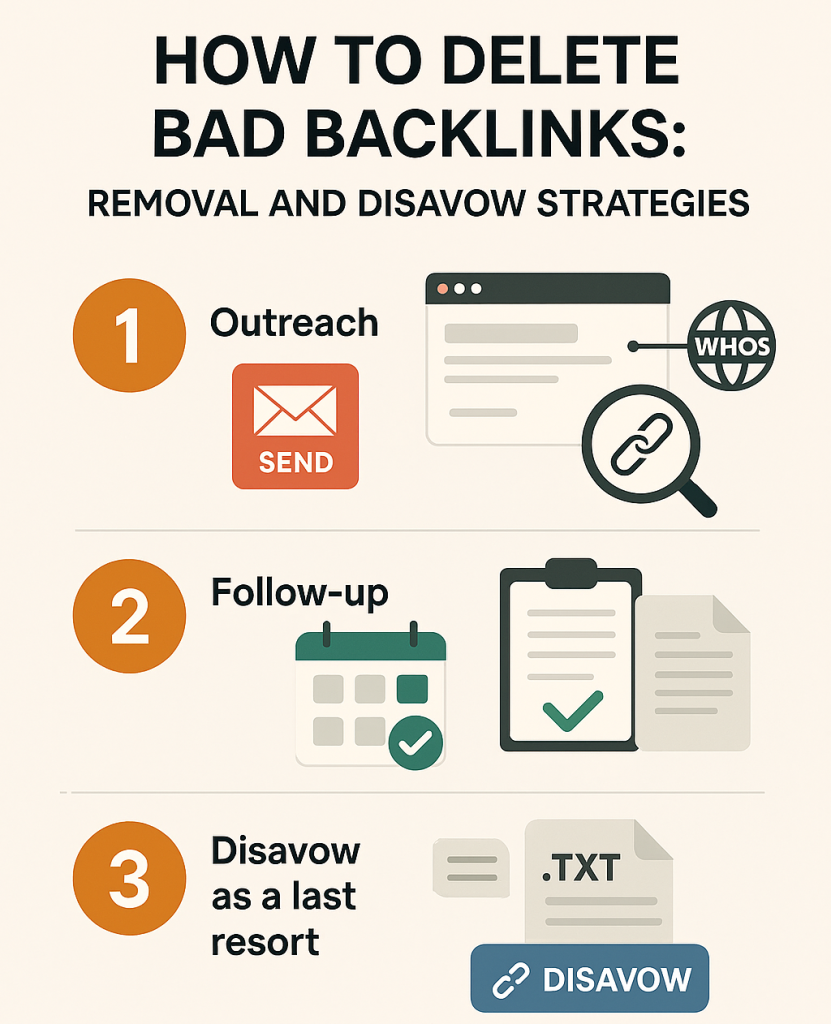
How to Delete Bad Backlinks: Removal and Disavow Strategies
Step 1: Outreach first
- Locate webmaster contact details via WHOIS or site contact pages
- Send a polite, concise removal request including: source URL, target URL, why it’s harmful, and requested action
Step 2: Follow-up
- Schedule 1–2 follow-ups if needed
- Maintain a removal log with timestamps and outcomes
Step 3: Disavow as a last resort
- Create a plain text .txt file listing domains or URLs Google should ignore
- Include optional comments documenting outreach attempts
- Submit through Google’s Disavow Tool for verified properties
This staged approach reduces unnecessary disavows and maximises recovery potential.
For a strategic approach to removing and managing bad backlinks, see how our Off-Page SEO services can support your site’s recovery and long-term link health.
Recovering from Penalties Caused by Bad Backlinks
Recovery involves:
- Auditing and documenting all suspect links
- Attempting removal via outreach
- Submitting a disavow file for unresolved links
- Filing reconsideration requests for manual actions
- Monitoring KPIs for gradual recovery
For organisations lacking internal resources, Seek Marketing Partners provides managed remediation services, including audits, reporting, and recovery support.
Want expert help auditing your backlink profile and preventing toxic links? Contact us to schedule a comprehensive backlink audit and protect your SEO performance.
Preventing Toxic Backlinks and Maintaining a Healthy Link Profile
Prevention strategies:
- Vet link partners for relevance and editorial quality
- Maintain varied, natural anchor text
- Avoid reciprocal or paid link schemes
- Automate alerts for sudden spikes in referring domains or anchor text patterns
- Perform monthly or quarterly backlink audits
A proactive approach ensures your site remains resilient to negative SEO and reduces the need for disavowals.
Next Steps for Backlink Management
Managing bad backlinks is critical to protecting your site’s SEO, maintaining organic traffic, and safeguarding your brand reputation. By regularly auditing your backlink profile, prioritising removal or disavowal of harmful links, and implementing proactive link-building and monitoring practices, you can prevent penalties and ensure long-term growth.
For businesses looking for expert support, Seek Marketing Partners offers data-driven backlink audit and remediation services, helping you recover from toxic links and maintain a healthy, high-performing link profile. Take action now to protect your rankings and future-proof your SEO strategy.