Ever asked ChatGPT or a voice assistant a question? These AI-powered tools are answer engines, and getting your brand mentioned in their responses takes a special strategy. Answer Engine Optimisation, also known as AEO, is the practice of optimising your content for AI-driven answer platforms like ChatGPT, Google’s AI Overviews, and virtual assistants.
In plain terms, AEO means crafting and structuring your content so it earns mentions, citations, and placements in conversational AI answers. Unlike traditional SEO, which targets search engines and keyword rankings, AEO focuses on question-based queries and making sure AI tools cite your brand in their answers.
AEO is becoming increasingly important as search habits change. AI chatbots and assistants are carving out their own corner of online discovery.
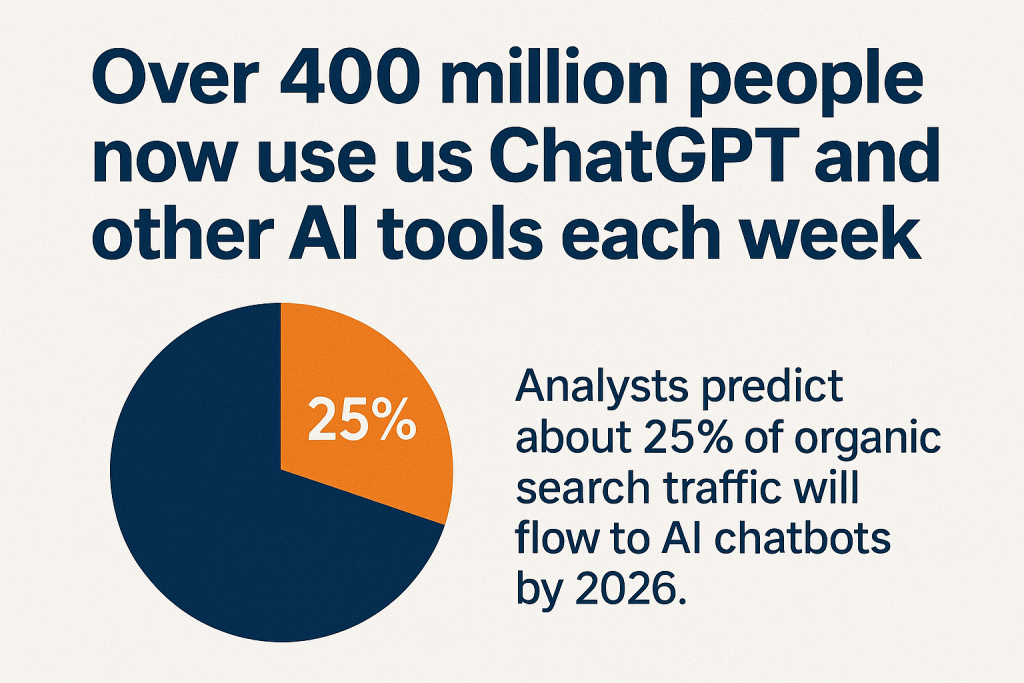
| Surveys show over 400 million people now use ChatGPT and other AI tools each week, and analysts predict about 25% of organic search traffic will flow to AI chatbots by 2026. |
In short, people are getting answers from AI without even clicking through to websites, and those AI-referred visitors can be highly intent-driven and commercially valuable. This shift means your content must show up inside AI answers, not just on Google’s first page.
Understanding How AEO Differs from SEO
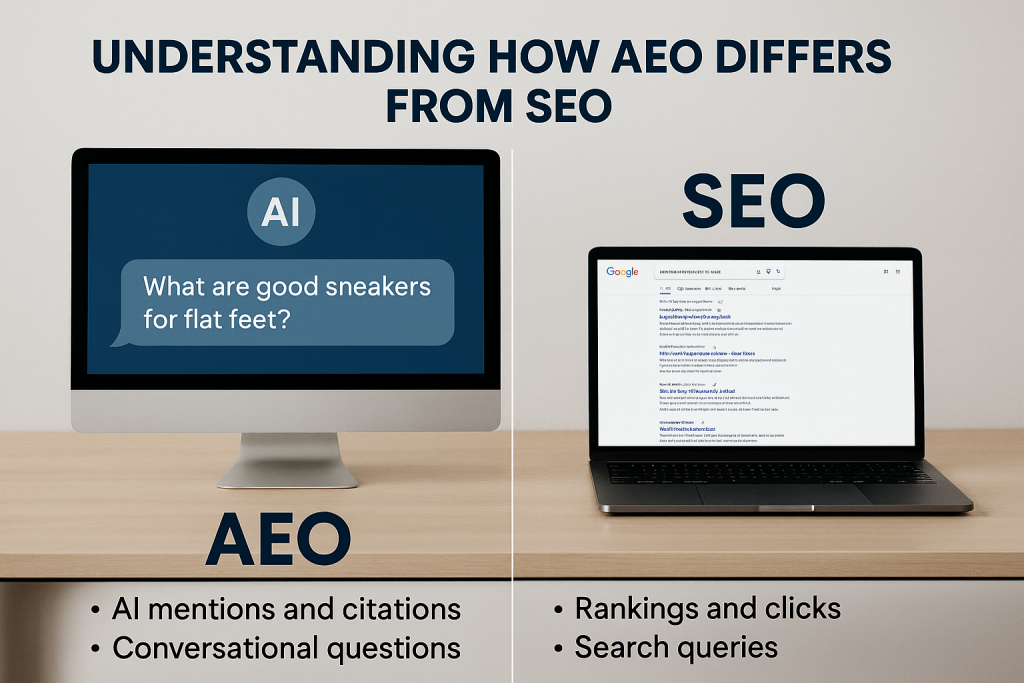
While AEO and SEO share the goal of visibility, their focus and tactics differ. SEO aims to rank your pages on search engine results pages (SERPs) using keywords, links, and technical signals. In contrast, AEO aims to get your content cited by AI tools.
For example:
- SEO success is measured in rankings and clicks, whereas AEO success is measured in AI mentions and citations.
- SEO targets search queries like “best running shoes for flat feet,” but AEO answers conversational questions like “what are good sneakers for flat feet?”
In practice, many tactics overlap (high-quality content, authority links, clear site structure), but AEO adds extra layers. You need to structure content so that large language models (LLMs) can easily extract answers.
This means using question-based headings, clear, concise answers, and even schema markup. In essence, AEO is about being AI-friendly: think about how to answer a user’s question in a way that a chatbot can read, understand, and trust.
Why Answer Engine Optimisation Matters
- Changing search behaviour: AI assistants are increasingly the first stop for answers. Tools like ChatGPT and Microsoft Copilot often present a single, concise response (sometimes with citations) instead of a list of links. Users can get what they need without clicking through, so being in the answer itself is critical.
- High-value traffic: As noted, AI-driven interactions often reflect high intent, as users are actively seeking specific answers or solutions. If a chatbot cites your product or advice, you reach a user who is actively seeking a solution you offer – often at a later stage of the decision process.
- Authority and trust: AI tools tend to pull information from trusted sources. Earning mentions in respected publications or authoritative sites boosts your credibility in their answers, which reinforces your brand authority.
- Future-proofing your strategy: With search engines introducing features like Google’s AI Overviews and voice answers, AEO ensures you stay visible. Gartner predicts that 25% of search traffic will move to chatbots and virtual agents by 2026, so early AEO adopters can secure a first-mover advantage.
In practice, the shift is already visible. For example, after ChatGPT launched, platforms like Stack Overflow reported a noticeable decline in visits as users increasingly turned to AI tools for answers. Yet companies like NerdWallet saw revenue rise even as organic traffic fell, confirming that users aren’t searching less – they’re searching differently. By optimising for answer engines, you tap into this new way people find information and solutions.
How to Optimise Your Content for Answer Engines
Getting your content featured in AI answers requires a targeted approach. Here are key AEO strategies:
1. Earn Authoritative Mentions
AI models pull answers from trusted sources like educational, government, and industry news sites. So, aim to get your brand or content cited on those platforms. These mentions build your AI “footprint.” As Semrush explains, “You earn AI visibility by getting your brand mentioned in places LLMs trust—like Reddit, Wikipedia, and news publications.”. In practice, this means PR outreach, guest articles, and thought leadership pieces on reputable sites.
2. Answer Real Questions Clearly
Identify the questions your audience is asking, use tools like Google’s “People Also Ask,” keyword planners, or AI prompt research. Structure your content to answer each question directly. For example, make the question a heading (H2/H3) and write a concise answer immediately underneath. Then expand with details.
3. Use Structured Data and Clear Formatting
Implement schema markup where possible to label question or answer pairs. Break up text with short paragraphs, lists, and tables. These elements make it easier for an AI to find and cite precise information. In other words, let the AI “see” your answer format. The first heading of this article, “What is Answer Engine Optimisation?”, is a good example – the question is in the heading and answered immediately in the paragraph.
4. Demonstrate Expertise and E-E-A-T
Chatbots favour content that demonstrates real-world expertise. Including credible sources, data, and clear references can improve the likelihood of your content being cited in AI-generated answers.
In practice, write in an experienced tone, share original research or case examples, and make sure authorship is clear. This aligns with Google’s emphasis on Expertise-Experience-Authoritativeness-Trust (E-E-A-T) in content.
5. Keep Content Fresh and Updated
AI tools often favour recent information. According to an AirOps study, about 95% of ChatGPT’s cited sources come from content published or updated within the last 10 months. They also found that pages with a visible “last updated” timestamp get almost double the citations of older content.
To leverage this, regularly refresh your content with new examples, stats, and timestamp updates. Highlight dates (via dateModified schema) so AI knows the answer is current.
6. Maintain a Solid SEO foundation
Remember, AEO builds on SEO. Good SEO (fast site, quality backlinks, clear navigation) underpins your content’s authority. Plus, as some tools can only scrape from the live web, you still want strong search rankings. Our SEO services are designed to grow your traffic and leads through data-led strategies, which complement AEO efforts by improving overall visibility.
The Bottom Line: Putting AEO into Action
To get started, perform an AEO audit alongside your SEO audit. Look at the questions in your niche and check if AI tools already answer them using someone else’s content. Then create or optimise pages to fill those gaps. For example, if a chatbot is answering “how to optimise images” with an answer that doesn’t mention you, create a clear, concise answer on your site and make sure AI can find it.

At Seek Marketing Partners, we integrate AEO principles into our digital strategies. Our data-led SEO and content teams build content ecosystems aligned with your commercial goals. We can help you identify target questions, author authoritative content, and earn the mentions that AI tools trust.
Ready to Boost Your Visibility in the Age of AI?
Talk to us about SEO and content marketing services that include Answer Engine Optimisation (AEO). We work with mid-to-large organisations to solve complex challenges with clear, results-driven strategies. Get in touch with us today and we’ll make sure your answers are where your customers are looking.