
Employee generated content is becoming a core growth driver for mid-size and enterprise organisations – not because it’s trendy, but because it solves real performance problems. Buyers trust people more than brands, organic reach continues to decline, and organisations need credible voices that cut through crowded digital spaces.
Employee content does exactly that. It builds trust, extends reach, and strengthens the entire marketing ecosystem without adding unnecessary production costs or workflow bottlenecks.
In this guide, you’ll find a clear definition of employee content, why it works, the measurable benefits it delivers, how leading organisations build their programmes, and the strategic and operational steps required to implement EGC at scale.
You’ll also see examples, governance considerations, enablement structures, and integration practices that transform EGC from “extra content” into a consistent, performance-driven channel.
What Employee Generated Content Is and Why It Matters to Modern Organisations
Employee generated content refers to content created by employees that shares their insight, experience, or expertise. In B2B, this includes thought-leadership posts, industry commentary, product explanations, event takeaways, and authentic culture stories.
Unlike branded content, which is filtered through corporate messaging, EGC gives audiences direct access to the people behind the organisation. This builds trust, relevance, and credibility. Buying behaviours have also shifted – decision-makers want transparency and practitioner-level insight, not polished advertising. EGC delivers the authenticity and clarity they respond to most.
As a result, organisations are investing more in structured programmes that support and scale employee content. When teams contribute meaningfully, the brand becomes more discoverable, more trusted, and more human.
If you want to strengthen your organisation’s social presence and amplify employee content effectively, explore our Social Media Marketing Services.
The Shift Toward Trusted Voices and Credible Content
Trust is the currency of modern digital marketing, and audiences interpret credibility differently today. They want insight from specialists, clarity from practitioners, and proof from the people who manage, build, or deliver the product or service. This is where employee content outperforms traditional brand messaging.
Audiences trust employees because:
- They speak from direct experience.
- They explain real challenges and real solutions.
- They communicate in a natural, human tone.
- They’re not bound by the polished language of corporate channels.
This shift is especially visible on LinkedIn, where employee insight posts routinely outperform branded posts on impressions, reactions, comments, and click-through rates. The format is informal but informed, technical without being academic, and specific to the problems target audiences actively research.
For organisations, this creates an opportunity to multiply reach and deepen trust without proportionally increasing production overhead. By enabling employees to share what they know, companies unlock an amplification layer that marketing teams cannot achieve alone.
Measurable Business Benefits of Employee Generated Content
Employee generated content isn’t just “nice to have.” It moves real metrics across awareness, engagement, pipeline contribution, recruitment, and brand perception. When implemented with structure and governance, EGC becomes a scalable performance channel.
Here are the core business benefits:
Stronger Brand Trust and Social ProofAudiences trust practitioners more than polished corporate messaging. When employees share expertise, real project experiences, and opinions on industry developments, it signals authority and transparency – two critical drivers of early-stage engagement and buyer confidence. | Significantly Higher Organic ReachEven the strongest brand channels have limited reach compared to the collective influence of employees. Algorithms consistently reward content shared by individuals, which means employee posts naturally outperform branded assets. |
Better Engagement and Performance MetricsEmployee content delivers higher interaction rates across all major social platforms. This translates to more impressions, more conversations, more time spent with the brand, and stronger awareness in key audience segments. | Talent Attraction and Employer-Brand VisibilityAuthentic employee stories – career journeys, team culture, behind-the-scenes insights – help companies attract better applicants and improve perception among candidates. Content from real employees carries more weight than any employer-branding campaign. |
Tangible Impact on Pipeline and Revenue InfluenceHigh-performing organisations map EGC to measurable commercial outcomes. This includes lead quality improvements, increased landing-page activity, higher demo-request volumes following employee posts, and improved nurture performance across social funnels. |
These benefits align directly with how modern organisations measure marketing efficiency: trust, reach, engagement, and conversion influence.
If you’re looking to strengthen brand visibility, credibility, and thought leadership alongside your EGC efforts, explore our Digital PR Services.
Types of Employee Generated Content That Perform Best
There are many ways employees contribute content, but certain formats consistently outperform others, particularly in B2B environments where expertise drives decision-making.
High-performing formats include:
- Short insight posts: Quick commentary on trends, challenges, or practical solutions builds credibility fast.
- Project or experience takeaways: Highlighting lessons learned demonstrates depth and real-world problem-solving.
- Short-form videos: Unpolished, clear explanations often outperform studio-produced brand videos.
- Culture and team content: Helps build employer-brand trust and recruitment visibility.
- Event recaps and learnings: Employees who attend conferences or industry events are ideal sources of timely, relevant content.
Effective employee generated content examples cover a wide range of these formats, each offering unique ways to highlight expertise, authenticity, and the lived experiences that audiences increasingly rely on when evaluating brands.
The key principle is consistency. Employees don’t need to post daily; they need to post meaningfully.

How Organisations Use Employee Posts, Videos, and Thought Leadership Effectively
Successful organisations don’t leave EGC to chance. They structure it. They enable it. They measure it. They treat it as an extension of their content and social strategy.
Common approaches include:
- Encouraging employees to share insights around specific campaigns or themes
- Using EGC to amplify product launches, events, awards, or milestones
- Integrating employee posts into nurture flows or content clusters
- Repurposing top-performing posts into blogs, videos, or newsletters
- Developing internal champions who model best practices
Employee generated content examples from leading organisations usually reflect this structure, offering a mix of insight, culture, education, and brand-aligned storytelling. When done well, employee content becomes an always-on engine that builds awareness and reinforces credibility throughout the buyer journey.
Strong design also plays a key role in elevating these employee stories and making them more engaging. If you need support creating on-brand visuals that enhance your EGC output, explore our Graphic Design Services.
Employee Generated Content Strategy
A strong EGC strategy aligns goals, governance, enablement, and measurement into a cohesive system. Without structure, participation becomes inconsistent, messaging becomes fragmented, and results become impossible to track. A reliable enterprise-level framework includes:
1. Define Objectives and Success Metrics
Start with clarity: what is the organisation trying to achieve with EGC?
Common objectives include:
- Increasing reach and brand discoverability
- Improving thought-leadership visibility
- Strengthening employer-brand perception
- Supporting recruitment campaigns
- Influencing pipeline metrics or accelerating deal velocity
KPIs should be measurable, realistic, and aligned with wider marketing objectives.
2. Establish Governance and Guardrails
Governance protects the organisation without restricting authenticity.
This includes:
- Confidentiality and compliance rules
- Tone and messaging guidelines
- Approved topics and no-go areas
- Escalation paths for sensitive content
Over-restrictive policies kill momentum. Overly loose policies introduce risk. The most effective programmes strike a balance.
3. Equip Employees with Tools, Prompts, and Training
Employees are more willing to contribute content when they know how and where to start.
Enablement assets may include:
- Writing prompts
- Headline and post templates
- Video structure guides
- Platform best practices
- Examples of high-performing formats
Training should be practical, short, and focused on impact and not theory.
4. Launch a Controlled Pilot and Scale Gradually
Start with a small group of advocates, measure performance, refine guidelines, and expand. This approach improves content quality and encourages more employees to participate once they see real results.
Setting Goals, Guidelines, and Governance
Organisations that treat EGC as a structured programme, rather than an occasional initiative, see stronger and more predictable results. Goal-setting and governance ensure content aligns with company values, legal requirements, and brand positioning.
Core governance components include:
- Publishing guidelines
- Confidentiality checks
- Review workflows for specific content types
- Policies on external commentary
- Recommended posting frequencies
- Brand-safe language guidelines
Combine this with transparent measurement – reach, engagement, sentiment, traffic, assisted conversions – and EGC becomes a channel teams can actively optimise.
Knowing what employee generated content is becomes an even more important question at this stage, because clarity around definition, purpose, and boundaries directly affects how employees participate and how confidently they show up online.
Empowering Employees and Choosing the Right Platforms
Employees create better content when they feel confident and supported. This is where practical enablement tools, ongoing training, and simple workflows make the biggest difference.
Enablement practices include:
- Monthly training clinics
- Quick feedback loops
- Recognition for top performers
- Content libraries with pre-approved themes
- Templates for posts, videos, and commentary
LinkedIn is the primary platform for most B2B EGC programmes due to its professional focus and algorithmic preference for individual posts. Organisations may also use short-form video platforms where appropriate, but LinkedIn remains the most efficient channel for reach, credibility, and commercial influence.
Understanding what employee generated content is within this context ensures employees know what matters, what resonates with audiences, and which formats align with brand objectives.
If you want support developing a stronger content engine that works alongside your EGC efforts, explore our Content Marketing Services.
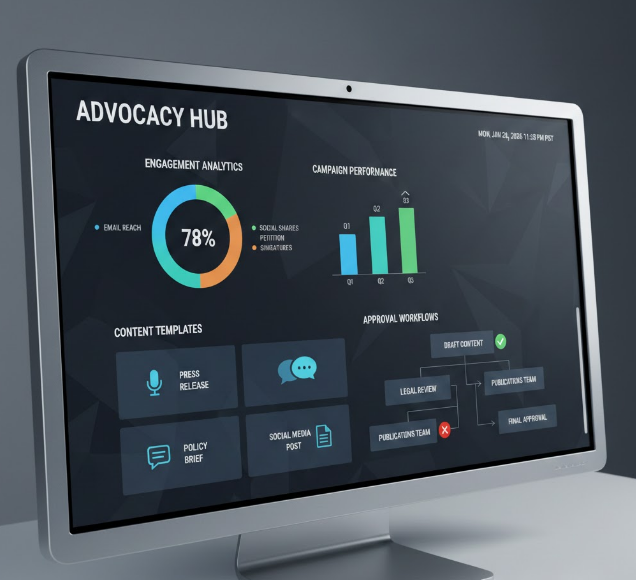
Tools, Workflows, and Best Practices for Employee Content
Scale requires process. Without operational workflows, organisations cannot maintain consistent output or track performance with accuracy.
Essential components include:
- Advocacy tools for content distribution
- Analytics platforms for performance tracking
- Content management systems for storing prompts and templates
- Lightweight approval workflows for sensitive posts
- Reporting frameworks for cross-team visibility
These tools streamline participation, protect brand integrity, and ensure EGC feeds into broader content and marketing strategies.
How to Integrate EGC with Brand, Content, and Social Media Strategies
EGC should never exist in isolation. It works best when integrated into the organisation’s content pillars, campaign themes, and social strategies.
Key integration steps include:
- Mapping employee content topics to brand pillars
- Aligning employee posts with campaign calendars
- Repurposing strong employee insights into long-form content
- Using UTM parameters to track traffic and conversions
- Reviewing monthly performance and scaling formats that deliver results
Integration turns EGC from “employee participation” into a measurable, repeatable growth channel.
To strengthen this integration and improve overall marketing performance, explore our Digital Marketing Services.
Turning Employee Voices Into a Scalable Growth Channel
Employee generated content is a strategic capability that strengthens trust, visibility, and commercial performance across the entire organisation. When employees share real insight and perspective, audiences respond with higher engagement, stronger trust, and clearer intent.
But EGC only performs at scale when it is built on structure: defined goals, consistent governance, practical enablement, and measurement that feeds into wider marketing and brand strategies.
High-performing organisations treat EGC as part of their operating system, not a short-term experiment. They equip employees with the tools and guidance to contribute confidently, integrate EGC into broader content pillars, and refine performance using real data.
When you approach employee content with this level of intention, it becomes a dependable growth lever – one that builds authority, accelerates buying decisions, and humanises the brand in ways traditional marketing cannot match.
If you’re ready to strengthen your organisation’s digital presence, reach out through our Contact Us page.