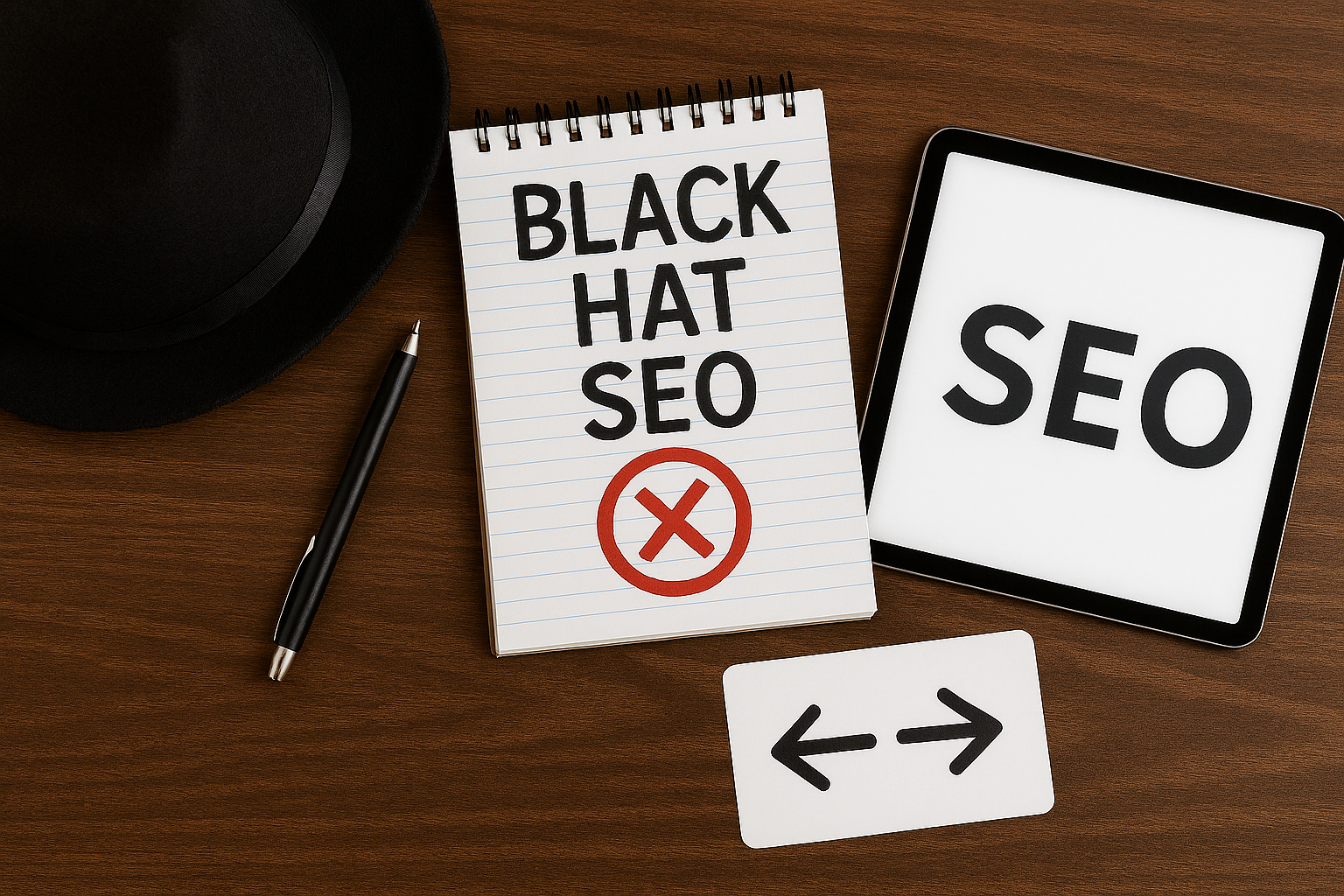
Shortcuts in SEO can deliver quick wins, but they come with long-term risks that damage visibility, credibility, and performance. Climbing search rankings overnight may sound appealing, but black hat SEO tactics often cost more than they deliver.
What is Black Hat SEO?
Black hat SEO is the use of manipulative or guideline-breaking techniques to boost a website’s search engine rankings. These tactics include keyword stuffing, cloaking, and buying backlinks. While they can sometimes deliver quick improvements, search engines are designed to detect and penalise these practices. Sites that rely on these tactics often face reduced visibility, damaged credibility, and long-term setbacks that outweigh any short-term gains.
Common Methods of Black Hat SEO
Keyword Stuffing
Keyword stuffing refers to the practice of overloading a page with repeated keywords to trick search engines into ranking it higher. The content often becomes unreadable for users, reducing its value. Although this was effective in earlier stages of SEO, search engines can now detect it easily and penalise sites that rely on this tactic.
Cloaking
Cloaking is a technique where a website presents one version of content to search engines and a different version to human visitors. The goal is to trick search engines into ranking the page for keywords or topics that don’t match what users actually see. This creates a misleading experience, frustrates visitors, and violates search engine guidelines, often resulting in penalties that damage long-term visibility.
Adding Hidden Text or Links
Hidden text or links are placed in ways that users cannot see them, such as using white text on a white background or embedding links behind images. The purpose is to artificially boost rankings by stuffing extra keywords or backlinks without disrupting the visible design. Google, however, treats this as deceptive. Ultimately, these tactics waste opportunities to provide genuine value and usually harm both visibility and credibility once discovered.
Link Schemes
Buying or exchanging large numbers of backlinks is a common black hat tactic. It attempts to inflate a site’s authority, making it appear more trustworthy to search engines. Google now prioritises natural, high-quality links, making link schemes risky and ineffective. Over time, these patterns become easier to detect, and sites caught using them often face severe penalties that outweigh any short-term gains.
Duplicate Content
Duplicate content is when material is copied from other websites. Instead of offering something original, it recycles existing information that adds no unique value for readers. This tactic is used because it saves time and effort, but it undermines credibility and fails to build authority. Over time, duplicate content can harm both the source and the site using it, making recovery difficult once penalties are applied.
While cloaking, hidden text, link schemes, and duplicate content are among the most common black hat SEO tactics, it’s important to note that there are many other deceptive methods as well. All of these tactics risk penalties and long-term damage to a site’s credibility.
Risks of Black Hat SEO
Though it may seem appealing for quick gains, the risks are severe and long-lasting. Search engines actively monitor sites that use these tactics. The damage can affect rankings, reputation, and overall business growth.
- Search engine penalties
Sites can be de-indexed or pushed far down in results, making them nearly invisible. Once penalised, recovery is slow and requires rebuilding trust with search engines.
- Loss of credibility
Visitors quickly lose trust when they encounter poor or misleading content. This damages brand reputation and reduces customer loyalty.
- Legal issues
Copying or scraping content can lead to copyright violations. This exposes businesses to lawsuits and financial losses beyond SEO penalties.
- Long-term damage
Recovery from black hat practices is difficult, and penalties happen fast. The site’s authority and trustworthiness may never fully return.

Black Hat vs White Hat SEO
SEO strategies fall into two broad categories: black hat and white hat. Black hat focuses on shortcuts that break rules, while white hat emphasises ethical, user-friendly practices. Understanding both helps businesses choose the path that leads to sustainable success.
Black Hat SEO
- Relies on unethical tactics such as keyword stuffing, cloaking, hidden links, link schemes, and duplicate content.
- Provides short-term visibility but risks penalties, loss of credibility, and long-term setbacks.
- Often damages both user experience and brand reputation.
White Hat SEO
- Uses ethical, guideline-compliant methods that prioritise users and long-term growth.
- Builds credibility and authority through sustainable practices that search engines reward.
- Focuses on creating value rather than exploiting loopholes.
Common Methods of White Hat SEO
Quality Content Creation
Producing original, informative, and engaging content that meets user needs is the foundation of white hat SEO. Over time, strong content builds authority, attracts organic backlinks, and establishes long-term credibility.
Proper Keyword Use
Researching and integrating keywords naturally into content ensures that pages align with what users are searching for. Instead of overstuffing, keywords are placed strategically in titles, headings, and body text to maintain readability.
Earning Organic Backlinks
Building relationships and publishing valuable content encourages other sites to link back. These backlinks act as endorsements, signalling to search engines that the content is trustworthy and authoritative. You can check the quality and quantity of your backlinks using tools like the Ahrefs Backlink Checker, which helps identify strong links and spot harmful ones.
Checking Mobile Optimisation
Ensuring websites are responsive and accessible across devices is critical in today’s mobile-first world. A mobile-friendly design improves user experience, reduces bounce rates, and keeps visitors engaged longer.
Improved Site Performance
Enhancing speed, navigation, and usability creates a positive experience that keeps users on the site. Fast-loading pages reduce frustration and encourage visitors to explore more content.
If you want to build a sustainable SEO strategy that protects your rankings and drives long-term growth, speak to our team. We focus on ethical, data-driven practices that strengthen your online presence while protecting your brand’s credibility.
Ready to Move Away from Risky SEO?
Black hat tactics can damage rankings, trust, and long-term growth. Seek Marketing Partners can help you fix what is holding your site back and build a stronger, more sustainable SEO strategy.
Building Sustainable SEO Success
SEO is not just about prioritising your site’s rankings in the short term; it is about building trust and delivering value to users through genuinely useful content. Black hat methods may offer shortcuts, but the risks and penalties make them unsustainable. White hat SEO, though slower, creates lasting authority, credibility, and growth that benefits both businesses and audiences.
Sustainable SEO is about investing in strategies that stand the test of time. Those who commit to ethical practices will not only rank higher but also earn the trust of their audience and search engines alike.